The ball rolls into the pocket, the pins explode, and one is still standing in the back left corner. For a right-hander, few leaves feel more unfair than the 7 pin.
Usually it isn't bad luck. A pocket 7 most often means the ball hit slightly high on the head pin, so the 4 pin flew straight back past the 7. The other common cause is the opposite: a light, weak hit where the 4 pin slid in front of it.
So when you keep leaving the 7, stop looking at the 7 and start watching the 4 pin. Where it goes tells you what your ball did at the pocket, and which way to move.
This guide is written for right-handers. For left-handers, the 7 is the corner pin behind the pocket, the way the 10 is for a right-hander, so our guide on why you keep leaving the 10 pin applies to them, just mirrored.
Which 7 pin are you leaving?
Not every 7 comes from the same mistake. Watch the 4 pin on the next one before you change anything.
- Ringing 7: the 4 pin goes straight back and passes behind or to the right of the 7. The ball hit slightly high or came in with too much angle. First fix: move your feet left and keep your target.
- Weak 7: the 4 pin slides in front of the 7 or drops into the left channel. The hit was light, and the ball lost energy before the pins. First fix: move your feet right and keep your target.
- 7 on a Brooklyn or nose hit: the ball missed the pocket altogether, so the pins scatter unevenly. Check your target and speed before anything else.
- Missed 7 spare: this is a spare problem, not a strike-ball problem. It has its own fix further down.
The first two are the frustrating ones, because they often come from shots that looked good. They also need opposite moves, so guessing wrong makes things worse.

Why does the 7 pin stand on a good pocket hit?
On a right-handed strike, the ball never touches the 7. In USBC's pin carry study, which analyzed 208 high-speed videos, the ball on a textbook strike takes out the 1, 3, 5 and 9 pins. Everything on the left side falls pin on pin: the head pin hits the 2, the 2 hits the 4, and the 4 takes out the 7.
When that chain breaks, the 7 stays. That's why a ball that looks perfect from the foul line can still leave one. A slightly higher or lighter hit on the head pin changes the angle the 2 pin is hit at, and the whole left side moves differently.
It also happens less often than it feels. In USBC's 2021 string pinsetter research, right-handed testers on traditional free-fall pinsetters left a single 7 on 3.1% of first balls. The 10 pin stood on 15.5%.
USBC's in-game adjustment guide reads the 10 pin through the 6 pin. If the 6 goes straight back and misses the 10, you are hitting high. If it goes into the gutter, you are hitting light. A right-hander reads the 4 pin the same way for the 7.
One 7 in a game on a shot that felt right can simply be a pin slightly off spot or a strange bounce on the deck. Two or three on similar shots, with the 4 pin doing the same thing, is a pattern worth reacting to.
Is your ball too strong or too weak for the lane?
A ringing 7 usually means the ball is a little too strong for the line you are playing. A weak 7 means it is too weak or has run out of energy. Often the ball itself is fine, and the lane is what changed.
- Too strong: ringing 7s, 4 pins, the 4-7 and the ball crossing over high on some shots. A ball that hooks hard on a dry backend drives into the head pin with too much angle.
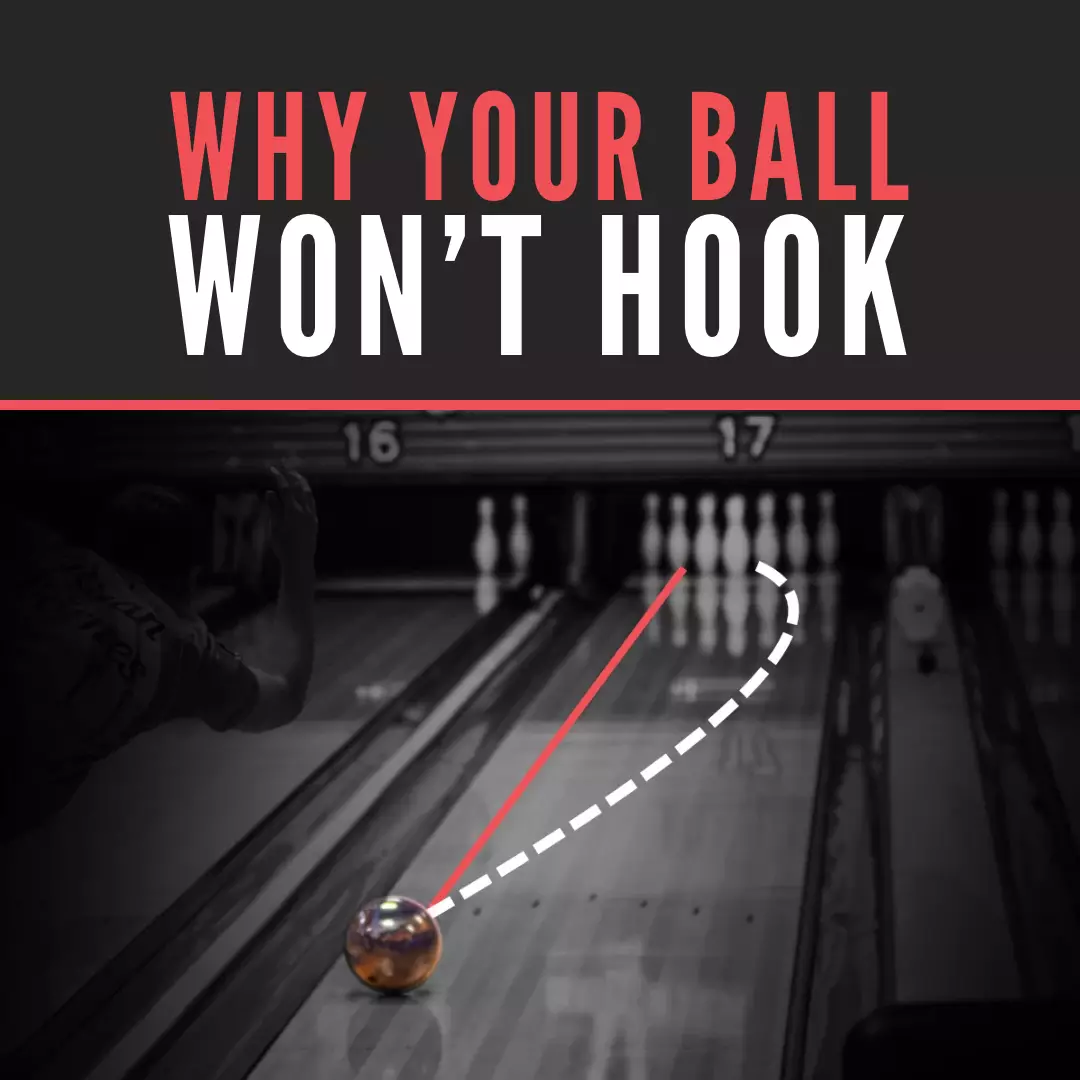
- Too weak: weak 7s, flat 10s, 8-10 and 5-7 splits, and the ball missing the pocket right. A ball that skids too long in heavy oil, or hooks early and rolls out, has little left at the pins. Our guide on why your bowling ball isn't hooking covers the usual causes.
- Worn surface: a ball that has lost its surface after many games reacts weaker and earlier. See our guides on how long a bowling ball lasts and how often to resurface a bowling ball.
The lane keeps changing during a block, which our explainer on bowling oil patterns covers. Rev rate plays a part too: higher-rev players see the ball react more to friction, as our guide to bowling rev rate explains.
What adjustments stop 7 pin leaves?
Start with a small move with your feet and keep your target. My own move after repeated 7s is one board right at most, and then I see what that gives me. Keeping moves small also makes it easier to tell whether the change worked.
Which way to move depends on the 4 pin:
- Ringing 7 (hitting high): move your feet one board left and keep your target, or move your target slightly farther down the lane so the ball hooks a little later.
- Weak 7 (hitting light): move your feet one board right and keep your target, or bring your target closer so the ball reads the lane earlier.
- Bigger moves: use USBC's 2-and-1 rule. For every two boards you move your feet, move your target one board in the same direction.
- Speed: a touch more speed helps against a ringing 7 because the ball hooks later. A touch less speed helps a weak hit. Change speed only after your feet, in small steps. Our guide on how to increase bowling ball speed shows how.
- Ball change: if the moves don't help, switch to a smoother, weaker ball for ringing 7s and a stronger one for weak 7s.
If counting boards is new to you, our guide to bowling lane arrows and boards explains the markings.
Do string pinsetters leave more 7 pins?
In testing, sometimes, depending on how the strings are set up. In the same USBC research, right-handed testers left a single 7 on 3.1% of first balls on free-fall machines. On string machines, it ranged from 3.0% with medium strings to 5.9% with short strings on the pocket side.
I haven't noticed any difference in 7 pins on strings myself. What I do notice is fewer messengers, the pins that fly across the deck and knock down others. With less help from the pin action, you have to be more accurate.
String pinsetters are part of professional bowling now too, so we have to adapt to it.
How do you pick up the 7 pin spare?
I would suggest throwing it straight with a plastic ball. I'm an old-fashioned bowler that way: plastic takes the pattern out of the equation, so making the spare comes down to you, your accuracy and the mental game.
I do see more and more bowlers using reactive balls to pick up corner pins, though.
My setup for the 7 is the opposite of my 10 pin. For the 10, I stand anywhere between boards 30 and 35. For the 7, I like to stand between boards 5 and 10, counting from the right.
On a shorter pattern, I stand a little further left, and on longer I stand a bit more right, but whatever the conditions, the most important thing is not to put much rotation on the ball. Pick your line (for me it is usually close to over the fourth arrow) and just make a confident shot.
USBC Gold coach Michelle Mullen once gave a similar starting point for the 7 with a plastic ball:
- Start right of center, with your slide foot around board 15.
- Aim between the third and fourth arrows.
- Finish around the middle dot at the foul line.
- Close your shoulders, hips and feet so you face the 7, and keep them closed through the approach.
- Follow through at a 90-degree angle to your shoulders.
The most common misses come from opening the shoulders at the line or pulling the ball across your body.
Panagiotis Vardakis has more on the mental side in spares are a feeling, not a formula. And if the 10 pin is the bigger problem in your game, our guide on why you keep leaving the 10 pin is the next stop.
Your Weekly Bowling Digest
The latest bowling news, tips, and gear reviews, all wrapped up in a quick 3-minute read delivered straight to your inbox.
FAQ
Why do I keep leaving the 7 pin?
Most often the ball is hitting slightly high, so the 4 pin flies straight back past the 7. The other common cause is a light hit where the 4 pin slides in front of it. Watch the 4 pin to tell which one you have.
What is a ringing 7?
A ringing 7 is a 7 pin left on a shot that hit the pocket, where the 4 pin flew around it. It usually means the hit was a touch high or the ball came in with too much angle.
Should I move left or right after leaving the 7 pin?
For a ringing 7, move your feet left and keep your target. For a weak 7, move right. Keep the move small, as one board is often enough. These directions are for right-handers.
Is leaving a 7 pin a bad shot?
Often it's a good shot that didn't carry. A single 7 leaves you a one-pin spare, but repeated 7s on similar shots are a sign to make a small move.
What ball should I use for the 7 pin spare?
A plastic spare ball thrown straight is the most reliable option, because it doesn't react to the oil. Some bowlers use a reactive ball for corner pins, but plastic leaves only your accuracy to worry about.
Do string pinsetters leave more 7 pins?
Some setups do. In USBC testing, string machines with short strings on the pocket side left the 7 nearly twice as often as free-fall machines (5.9% versus 3.1%), while medium strings showed no real difference.
Do left-handers leave the 7 pin?
Yes. For left-handers, the 7 is the corner pin behind the pocket, like the 10 for right-handers. They read the 4 pin the same way a right-hander reads the 6 pin for a 10.