If you keep missing spares, the cause is usually not your aim. Most missed
spares come from throwing the strike ball on the strike line at a spare, so
the ball hooks or reacts to the oil and drifts off a pin that should have been
easy.
A plastic spare ball thrown straight, plus a simple system
like 3-6-9, fixes the majority of misses for league bowlers.
The rest depends on three things: whether your feet and target are set up for the spare, whether your speed and swing stay the same as on a strike shot, and how you handle the shot mentally. Pressure turns a calm swing into a steer, and a steer is the most common way a good spare line still misses.
The key idea is that a spare is a different shot from a strike. On a strike
you want the ball to hook and drive through the pocket. On a spare, especially
a single corner pin, you want the opposite: a ball that goes exactly where you
send it. Once you treat spares as their own shot, the numbers improve fast.
As we explain in our guide to
what a good bowling average is, converting more spares is the quickest way to add 10 to 20 pins.
Why Do I Keep Missing Easy Single-Pin Spares?
You miss easy single pins mostly because your strike ball and strike release are built to change direction, and a single pin gives you no margin for that. A bowling ball is up to about 8.6 inches wide and a pin about 4.8 inches at its widest, so on a single pin the centre of the ball can be only about 6 boards either side of the pin before it misses completely.
Coaches usually list these common reasons to poor spare shooting, especially for beginners:
- Drifting on the approach. Bowlers walk away from their intended path, usually toward the middle, which cuts the angle on corner pins.
- Changing ball speed. Slowing down to be "careful" lets the ball hook more; rushing throws off balance.
- Steering the follow-through. Pushing the arm toward the pin at the last moment pulls the ball off line.
- Decelerating the swing. A soft, guided swing is less accurate than a free one.
- Shoulders not lined up with the key pin. If your body faces the headpin, the ball tends to go there.
- Changing the release instead of the ball. Their advice: switching balls is a better strategy than changing your hand position, unless you are very good at it.
From my experience, the misses that hurt the most are the ones where I picked the right line and still missed by a board or two. Almost every time, when I think it through afterwards, I eased up on the swing because the pin looked easy.
The data block below sums up the usual causes and the matching fix.
Why Spares Miss and the Fix
How Many Pins Does a Missed Spare Cost?
A missed spare usually costs you about 10 pins on the scoresheet, because you lose the bonus ball as well as the pin you left. If you leave one pin and convert it, the frame is worth 10 plus your next ball. If you miss it, the frame is worth only 9.
The spare math shows why this matters so much. A bowler who throws no strikes at all but knocks down 9 pins with every first ball and makes every spare scores 190. Miss three of those spares and the same game drops to about 160. That is the gap between a solid league average and a struggling one, without a single strike changing.
This is also why improving bowlers often find that spares, not strikes, drive their first big jump. We go through the timelines in how long it takes to get good at bowling.
Should You Use a Plastic Ball for Spares?
Yes, for corner pins and most single-pin spares a plastic ball is the easiest upgrade you can make. Plastic covers have very little friction with the lane, so the ball goes almost straight and reacts much less to the oil pattern than a reactive strike ball.
Use a polyester or plastic ball for corner pin spares if your strike ball hooks too much and you have trouble holding the line to the spare. On a fresh house shot the middle of the lane is oily and the outside is dry, so a reactive ball thrown at the 10 pin often crosses into the dry boards and hooks away before it gets there. A plastic ball ignores most of that.
My own routine is simple: anything that is not a pocket split or a multi-pin leave that needs hook, I pick up the spare ball.
A few practical points:
- A plastic ball does not need to be expensive or new. Fit matters more than the cover, so drill it with the same span as your strike ball.
- Use the same weight as your strike ball if you can. A lighter ball changes your timing.
- For multi-pin leaves, like buckets, many bowlers still use the strike ball, because some hook helps carry.
If you are still building your arsenal, our guide on how to choose the right bowling ball explains how plastic, urethane and reactive covers differ.
What Is the 3-6-9 Spare System?
The 3-6-9 system is a way to shoot every spare from your strike target by moving only your feet: 3 boards for the pin one away from the headpin, 6 boards for two away, and 9 boards for the corner pins. You keep looking at the same arrow and walk a straight line toward the key pin.
The key pin is the pin closest to you in the leave. For right-handers, spares
on the right side of the lane mean moving your feet left, and spares on the
left side mean moving your feet right. Left-handers do the mirror image.
The table of moves is below, using the standard right-handed
version.
3-6-9 Moves for Right-Handers
Move your feet, keep your strike target. Left-handers reverse the direction.
The system works best with a ball that goes where you aim, which is another
reason it pairs well with a plastic spare ball.
If 3-6-9 does not
move you far enough on your lanes, the same guide suggests a larger step
pattern such as 4-8-12. We cover the full method, with a chart, pros and cons,
in
Mastering Spare Shooting pt. 1: the 3-6-9 system.
If you prefer to keep your feet still and move your eyes
instead, read
the 2-4-6 spare system.
How Do I Stop Missing the 10 Pin and 7 Pin?
For right-handers, shoot the 10 pin cross-lane from the left side of the approach with a straight plastic ball, and the 7 pin cross-lane from the right side. Shooting across the lane gives you the most lane width to work with and keeps the ball away from the gutter on the side of the pin.
The 10 pin is the classic miss because a reactive ball thrown at it crosses into the dry outside boards and hooks into the gutter, or never gets there at all. Thrown straight from around the left edge of the approach, the ball travels across the lane at an angle, so being a board or two off still often clips the pin.
The first thing I usually check when I miss a 10 is my feet at the foul line. If I finished a couple of boards right of where I started, I walked toward the pin instead of along my line, and that was the miss.
The 7 pin is the mirror image for right-handers. A common miss is pulling it left by opening the shoulders. Square your shoulders to the 7, keep the swing free and let the ball roll through. Our 7 pin guide says it plainly: throw it straight with a plastic ball.
Leaving these pins over and over is a separate problem from missing them. If your strike ball keeps leaving a single corner pin, see why you keep leaving the 10 pin and why you keep leaving the 7 pin.
Does Lane Oil Affect Spare Shooting?
Yes, but much less with a plastic ball. A reactive ball reads the oil pattern, so the same spare line can work in game one and miss in game three as the oil moves. A plastic ball barely reacts, which is why most coaches recommend it for corner pins.
If you do use your strike ball on a spare, watch how your strike line is
changing. When you have moved left to follow the breakdown on strike shots,
the spare line moves with it.
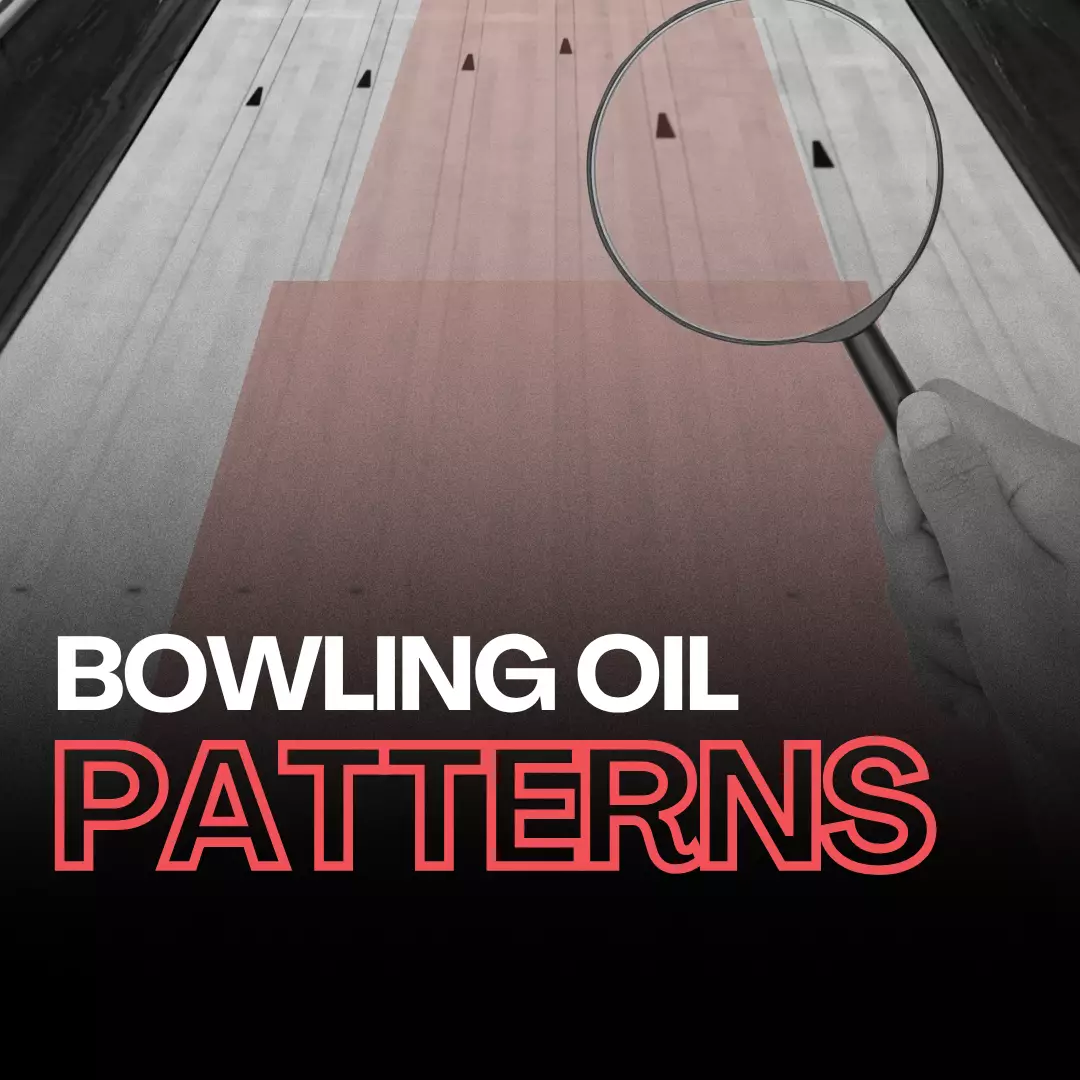
We explain how patterns change
through a session in our guide to
bowling oil patterns, and how to read those changes in
in-game lane adjustments.
Why Do I Miss Spares Under Pressure?
You miss under pressure because tension makes you steer: you slow the swing, guide the ball and look up too early. In Bowling Psychology, Dean Hinitz writes that "even at the professional level easy spares are missed at crucial times", and that if you cannot stand to miss, the pressure will make you "shovel and steer" (Human Kinetics excerpt).
His fixes are practical:
- Commit before you step up. Do not roll a spare shot until you know the strategy you are using will work.
- Visualize, then feel. Picture the ball crossing your arrow, then take a practice swing to feel the shot.
- Keep your eyes on the target. Watch the ball cross your mark before you look at the pins.
Something that works for me in league is a short spare routine that is the same every time: pick the ball, set the feet on the board, one look at the arrow, go. When I rush and skip a step because I am annoyed about the strike shot that didn't go well, that is when I miss.
Coach Panagiotis Vardakis goes further and argues that spare shooting is mostly a mental skill. Read his view in Spares Are a Feeling, Not a Formula, and see how to build bowling routines for a full pre-shot and spare routine.
How Should I Practice Spares?
Practice spares on purpose, with the same ball and routine you use in league, and spend a real share of each session on them. Most bowlers practice by throwing at a full rack and only shoot the spares that happen to come up.
A simple session that works for league bowlers:
- Warm up on strikes to find your strike target for the day.
- Shoot corner pins only. Alternate 10 pin and 7 pin attempts with your spare ball. On a full rack, aim at the corner pin as if it were standing alone.
- Add the 3-6-9 moves. Shoot each key pin from its stance (3, 6 and 9 boards) to the same arrow.
- Finish with pressure. Set a target, for example making a set number of 10 pins in a row, and start again if you miss.
- Write it down. Note which spares you missed and on which side.
I like to finish practice with the 10 pin, because it is the shot I must trust the most. If I make 10 out of 10, I leave with a better mood every time. For how to set goals for a practice session, see There Is No Room for Strikes in Training.
How to Fix Your Spare Shooting This Week
If you want one plan, use this:
- Get a plastic spare ball that fits your hand.
- Pick one system (3-6-9 or 2-4-6) and use it for every spare.
- Keep your strike-shot speed and a free swing on spares.
- Walk straight toward the key pin and square your shoulders to it.
- Watch the ball cross your arrow before you look up.
- Track misses for three league nights to see your real pattern.
Your Weekly Bowling Digest
The latest bowling news, tips, and gear reviews, all wrapped up in a quick 3-minute read delivered straight to your inbox.
To put this into practice, start with the full chart and walkthrough in our step-by-step guide to the 3-6-9 spare system.
FAQ
Why do I always miss the 10 pin?
For right-handers, the 10 pin is usually missed because a reactive ball hooks into the dry outside boards or the gutter. Throw a plastic ball straight across the lane from the left side of the approach and keep your speed up.
Is it bad to use your strike ball for spares?
Not always. A strike ball can help on multi-pin leaves where some hook carries pins, but for single corner pins a plastic ball is more reliable because it does not react to the oil.
Should I throw spares harder?
Throw spares at your normal strike speed, not slower. A bit more speed with a plastic ball is fine, but forcing it usually costs accuracy and balance.
Where should I look when shooting spares?
Look at the arrows, not the pins. With 3-6-9 you keep your strike arrow and move your feet; with 2-4-6 you keep your feet and move your target.
What percentage of spares should I make?
Single-pin spares should be the ones you make most often. Track your own conversions over a few league nights, split by single pins and multi-pin leaves, and work on whichever side you miss more.
Do left-handers use the 3-6-9 system?
Yes. Left-handers use the same 3, 6 and 9 board moves in the opposite direction, so the 7 pin is their cross-lane corner from the right side of the approach.