A modern reactive bowling ball usually stays close to its best for roughly 100 to 300 games, according to manufacturer guidance. With regular cleaning, oil extraction and resurfacing, many balls stay useful for 300 to 600 games or more before they need replacing. A plastic spare ball can last for years, often until it cracks or gets badly chipped.
So the real answer is: it depends on what the ball is made of, how much you bowl and how well you look after it.
Bowling balls are constantly absorbing oil and taking hits from pins, ball returns, pinsetters and normal use, so their performance naturally changes over time. A ball rarely "breaks" from normal bowling. It slowly stops doing the job you bought it for. That's why bowlers talk about balls "dying" rather than wearing out.
How Long Does a Bowling Ball Last by Type?
Not every bowling ball ages the same way. The coverstock, the outer shell that touches the lane, decides most of it. Our guide to what bowling balls are made of explains the materials in more detail.
Coverstock Lifespan Comparison
The reactive figures come from Storm's own ball maintenance guide. Storm lists maintenance, oil absorption rate, bowling style (rev rate, speed, tilt) and games bowled as the main factors.
These are guide numbers, not a countdown. Two identical balls can age very differently in the hands of two different bowlers.


Why Do Bowling Balls "Die"?
Reactive resin covers are built to grip the lane. Under a microscope, the surface has tiny peaks and valleys that create friction when the ball meets oil.
MOTIV explains that two things happen over time:
- Lane oil soaks into those microscopic valleys.
- Normal use wears down the peaks.
The result is less friction. The ball skids further, hooks less and hits the pocket with less energy.
This is why a reactive ball that felt strong on a fresh house shot can feel flat a season later. The ball didn't change shape. Its surface and the oil inside it did.
How Many Games Before a Bowling Ball Loses Its Hook?
Sooner than most people think, at least a little. From my experience, a ball performs like new for the first several games. How long that lasts depends a lot on the ball itself, the lane conditions and how the bowling center maintains its lanes. After that, you need to look after it properly to keep or restore that reaction.
The manufacturer ranges above describe when performance drops noticeably. Small changes start much earlier, and serious bowlers usually feel them first.
A few things speed the process up:
- Bowling on heavy oil. More oil on the lane means more oil going into the cover.
- High rev rate. More rotations means more of the cover touches the lane on each shot. Our rev rate guide covers this.
- Skipping maintenance. Oil left on the ball after a session keeps working its way in.
- Heavy use. A ball used for practice, league and tournaments gets old much faster than a ball used once a month.
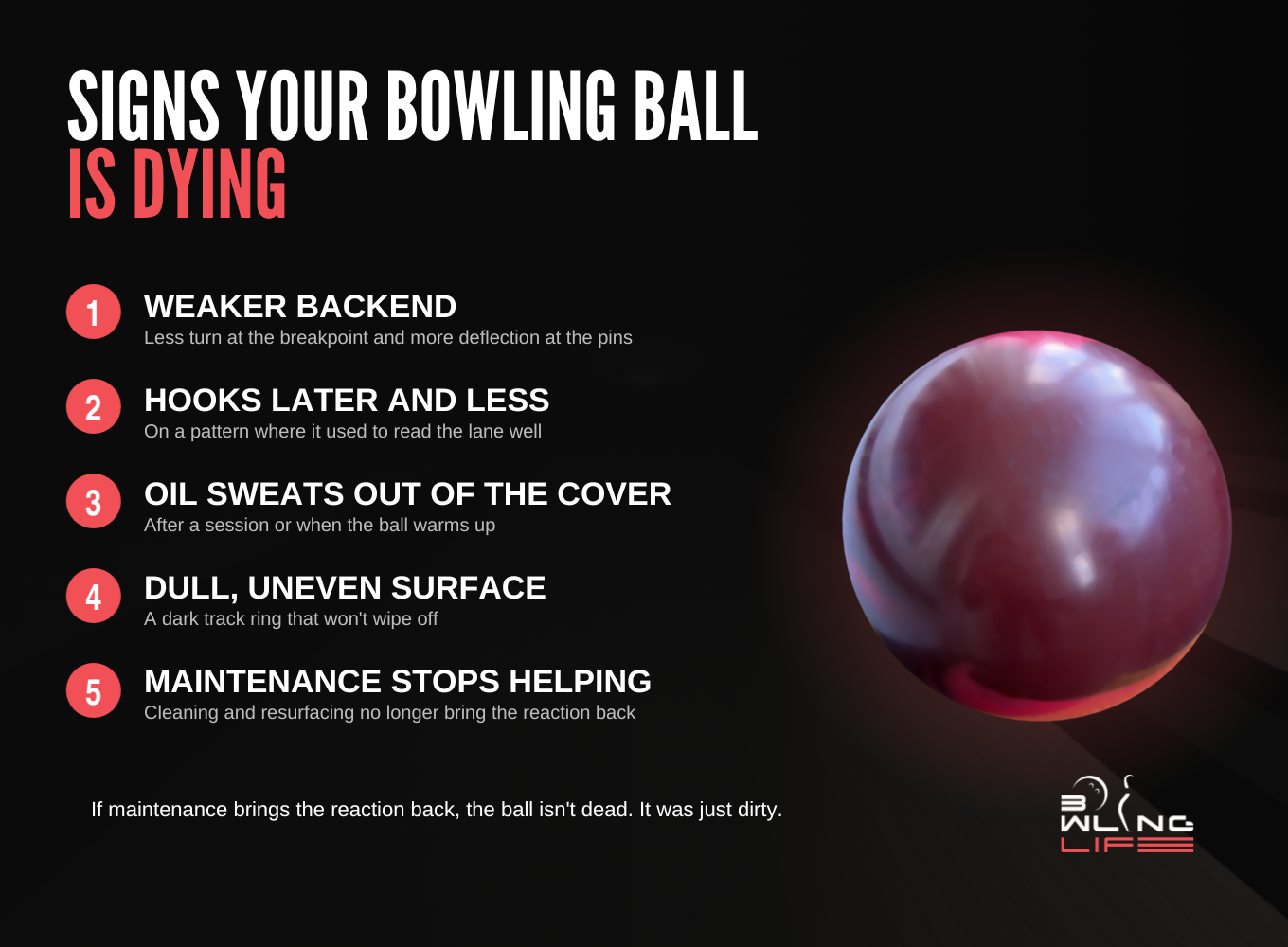
The first thing I usually notice is a weaker backend motion. For me, that is the easiest change to spot. In general, a fading ball doesn't turn over at the breakpoint the way it used to, and shots that used to carry start leaving corner pins.
How Long Does a Bowling Ball Last in Years?
Games matter more than years. A ball's age in years depends almost entirely on how often you bowl.
Here is a simple illustration using Storm's 300-game mark as the point where a reactive ball has usually lost a noticeable amount of its original reaction:
Time to Reach 300 Games
How fast different bowler types accumulate games on a ball:
These are rough examples, not rules. Maintenance can stretch them, and heavy oil can shorten them.
It also explains why serious bowlers seem to buy new equipment constantly. They're not always chasing marketing. Their balls simply reach 300 games much faster.
The last one is the most important. A ball that comes back after maintenance isn't dead. It was just dirty. Not every tired bowling ball needs a funeral.
Can You Bring a Dead Bowling Ball Back to Life?
Often, yes. I've had balls I thought were finished come back after maintenance. Proper maintenance can make a huge difference and often brings a lot of performance back. You just need to know the basics of how to do it properly, or take the ball to a pro shop.
MOTIV says the same thing based on its own testing. A clean and resurface "will restore the performance back to like-new" when a ball starts losing reaction.
Manufacturers give slightly different maintenance intervals:
Storm vs. MOTIV Guidelines
My own routine is more frequent than that. I clean my bowling balls after
every practice session or tournament squad. I refresh the final surface after
roughly every 10-12 games to keep the reaction as consistent as possible.
A full resurface comes after around 24-48 games, depending on how
much I use the ball, the bowling center I play in and whether the ball has
picked up any specific damage that needs to be removed. That's my personal
routine for competitive bowling, not an official standard.
I do most of it myself with a bowling ball spinner. We did the math on whether owning one pays off in is a bowling ball spinner worth it. For basic cleaning, our guide on how to clean a bowling ball at home walks through it, and our best bowling ball cleaners list covers the products.
If you'd rather use a pro shop, prices depend on the shop and the service. In Europe, you can pay anything from a few euros to around €50. Either way, it is still much cheaper than buying a new bowling ball.
When Should You Replace a Bowling Ball?
Maintenance cannot fix everything forever. Bowling balls gradually lose performance because of oil absorption and normal wear.
Storm suggests replacing a ball when:
- several resurfaces no longer help,
- the ball shows core separation or cracking,
- or it has logged 300-600+ games.
For me, the clearest signs that it's time to retire a ball are cracks that make it unusable, or surface wear so heavy that even the serial number is becoming hard to read.
Another useful test: a ball has reached the end of its life when it is no longer effective for what you had been using it for. But that doesn't always mean throwing the bowling ball away. An older strong ball can move down your arsenal and become a lighter-oil option. Our bowling ball arsenal guide explains how those roles fit together.
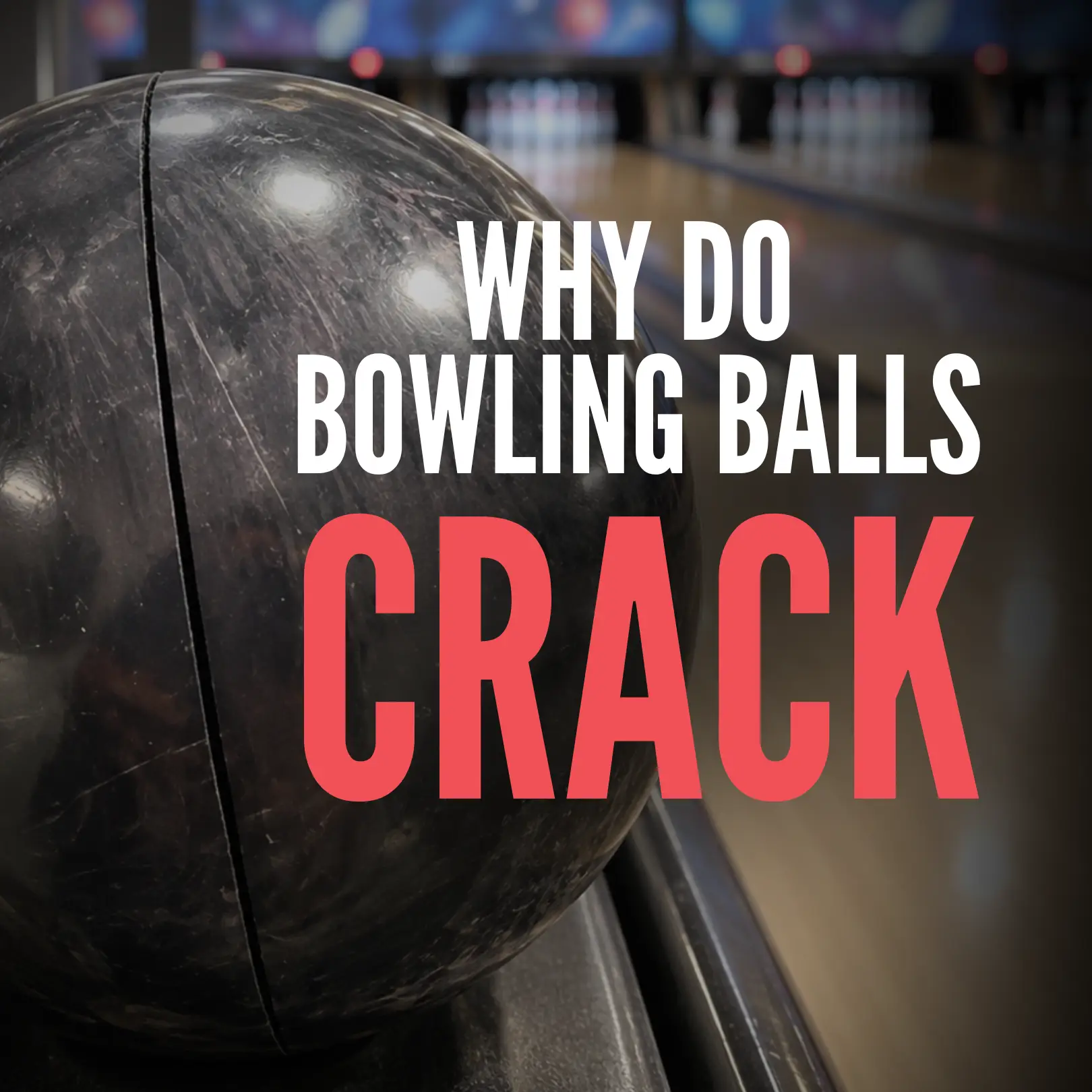
Cracks are a different story. Depending on where the crack is and how long it is, the ball may no longer be legal for USBC competition. Our article on why bowling balls crack explains what can and can't be repaired.
When a ball really is finished, it doesn't have to end up in the landfill. Here's what you can do with it: can a bowling ball be recycled?
Do Urethane Bowling Balls Last Longer?
In terms of oil, usually yes. Storm notes that urethane absorbs far less oil than reactive resin and needs less frequent oil extraction.
But a urethane ball's competition life now depends on the rules where you bowl.
From January 1, 2026, USBC restricted slow oil-absorbing high-performance balls at its national tournaments:
- They are not allowed at events such as the U.S. Open, USBC Masters and PWBA Tour events.
- Some national events allow them only if they meet the 78D hardness minimum.
- League play has no new restriction.
- Urethane balls manufactured before August 1, 2022 are no longer eligible for national tournament use, regardless of hardness.
In Europe, the picture is different. The European Bowling Federation dropped the 78D rule for EBT events, so all IBF/USBC-approved balls are allowed at every EBT stop from the 2026 season.
So an older urethane ball can still be a perfectly good league ball while being illegal at a US national event. Our USBC urethane verdict article has the full background, and our best urethane bowling ball guide covers current options.
How Long Do Plastic Bowling Balls Last?
Plastic (polyester) balls are the longest-lasting balls you can buy. Their reaction doesn't depend on oil absorption, so they don't "die" the way a reactive ball does.
My current plastic spare ball is three years old, and I'm not thinking about replacing it anytime soon. Plastic balls are much harder, absorb much less oil and are supposed to go straight anyway. As long as it stays round, legal and does the job, I keep throwing it.
Even the warranties hint at this. Storm gives its plastic Mix and Ice balls a two-year limited warranty, while its other balls get one year.
If you're shopping for one, see our best bowling ball for spares guide.
How to Make Your Bowling Ball Last Longer
- Wipe the ball between shots with a microfiber towel.
- Clean it after every session, before oil has time to soak in.
- Refresh the surface regularly instead of waiting until it feels dead.
- Extract oil when the reaction drops, especially if you bowl on heavy patterns.
- Store it sensibly. Avoid car trunks, cold garages and direct heat.
- Rotate your arsenal so one ball doesn't take every shot of every session.
On storage, I bring my bowling balls inside if overnight temperatures fall below 5°C (41°F) or rise above 25°C (77°F). That's my own conservative habit, not a manufacturer specification.
Your Weekly Bowling Digest
The latest bowling news, tips, and gear reviews—all wrapped up in a quick 3-minute read delivered straight to your inbox.
When a ball is truly done, our best bowling balls guide is the place to start looking for its replacement.
FAQ
How many games does a bowling ball last?
A reactive bowling ball usually performs close to its best for about 100-300 games, according to Storm. With regular cleaning, oil extraction and resurfacing, many stay useful for 300-600 games or more before replacement.
Do bowling balls lose their hook over time?
Yes. Reactive covers absorb lane oil and their surface wears down, which reduces friction. The first sign is often a weaker backend. Cleaning, oil extraction and resurfacing can restore much of the lost reaction.
How often should you resurface a bowling ball?
Storm recommends every 60-80 games, while MOTIV suggests about every 50 games. Competitive bowlers often refresh the surface much more often to keep the reaction consistent.
Can a dead bowling ball be revived?
Often, yes. A ball that has lost reaction because of oil and surface wear can usually be brought back with oil extraction and resurfacing. If several resurfaces don't help, it's probably time to replace it.
How much does it cost to resurface a bowling ball?
It depends on the pro shop and the service. In Europe, prices range from a few euros to around €50, which is still much cheaper than buying a new bowling ball.
How long do plastic bowling balls last?
Plastic balls can last many years because their reaction doesn't depend on absorbing oil. They're usually replaced only when they crack, chip badly or no longer fit.
Do urethane bowling balls last longer than reactive balls?
Urethane absorbs far less oil, so it keeps its reaction longer. However, some urethane balls are restricted at USBC national tournaments from 2026, and urethane balls made before August 1, 2022 are not eligible at those events.