In modern competitive bowling, success relies on an athlete's ability to read
lane transitions and execute real-time physical and tactical adjustments.
Unlike static sports where environmental conditions remain constant, bowling
lanes undergo continuous transformation.
As I say to all my
students, the lane environment dictates both technique and tactical execution.
A bowler cannot force a static style onto a changing lane. Instead, tactical
decisions must be made by understanding the specific oil pattern, lane
topography, and traffic created by competitors on the same pair of lanes.

High-level bowling strategy requires athletes to observe the shots of those
bowling ahead of them. Recognizing who you follow on a lane provides critical
foresight into how and where oil breakdown will occur.
By
evaluating the ball motion, ball speed, and coverstock aggressiveness of
preceding players, an athlete can anticipate carrydown or friction patches
before executing their own delivery, turning passive observation into a
distinct competitive advantage.

Mastering the Break Point Zone
At the foundation of lane play is the concept of the Break Point. Technical
bowling theory defines the break point as the furthest outside board that the
ball reaches down the lane before changing direction and hooking back toward
the pin deck.
For example, a bowler targeting an entry angle toward
the pocket may send the ball out to the 5th board at 45 feet.
However, elite athletes avoid treating the break point as an isolated,
microscopic point on a single board.
Theory highlights that
athletes must treat the break point as a Break Point Zone. Rather than
fixating on pinpoint precision at board 5 at exactly 45 feet, successful
strategists manage a target window—such as boards 4 to 6 between 44 and 46
feet downlane.
Establishing and controlling this break point zone
allows bowlers to maintain pocket margin of error even as oil conditions
degrade throughout a match.
The Five Strategic Levers of Ball Motion
When a ball deviates from its optimal path—whether hitting light, high, or leaving pin carry issues—the athlete must modify its trajectory. From my point of view, bowlers possess five distinct levers to influence the break point and shape overall ball motion:
1. Line Adjustments
Line adjustments involve shifting the physical trajectory of the ball across
the lane surface. This includes moving the feet on the approach
(stance/laydown position) or altering the visual targets across the arrows and
focal points.
By shifting target lines laterally while holding
ball selection, release axis, and speed constant, an athlete moves the ball
into cleaner oil or earlier friction to realign entry angle.

2. Equipment and Coverstock Selection
A ball’s surface texture and coverstock composition dictate its interaction with lane friction. The fundamental rule of equipment adjustment is straightforward:
-
Low Friction (Oily Lanes): Increase coverstock friction
(use lower grit sanding pads or matte solid reactive covers) to force
earlier traction.
- High Friction (Dry/Burned Lanes): Decrease coverstock friction (use polished, pearl reactive, or higher grit covers) to allow the ball to skid smoothly through the heads.
Changing equipment along the exact same target line enables athletes to alter the ball motion without forcing physical adjustments to their swing.
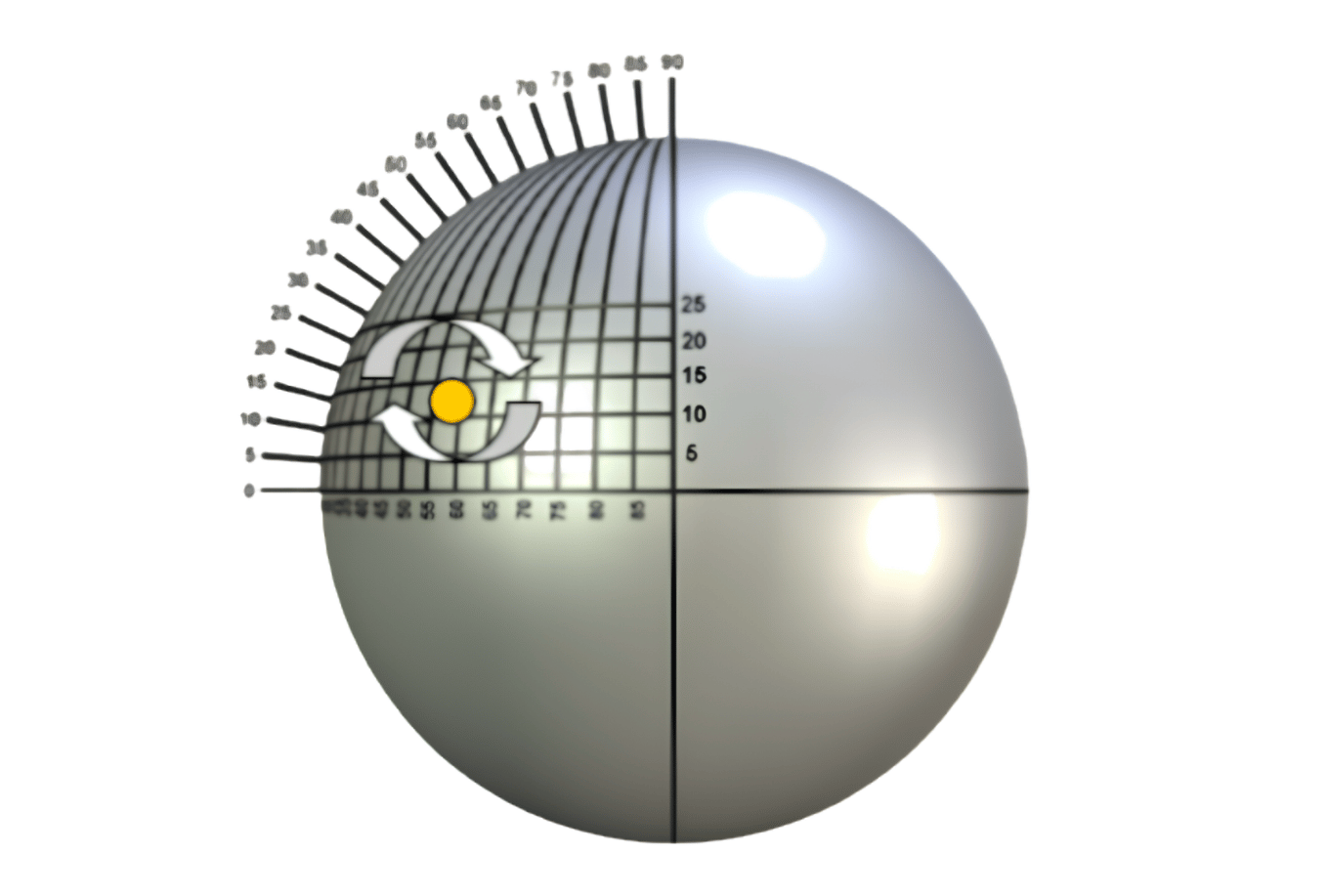
3. Axis Manipulation: Axis Rotation and Axis Tilt
Altering hand position at the release changes the rotation parameters of the ball:
-
Axis Rotation: The horizontal angle of the ball's
rotational axis relative to the intended line. Ranging from 0° (forward
roll) to 90° (side roll), adjusting axis rotation changes backend sharpness.
Increasing axis rotation (e.g., shifting from 20° to 60° or 90°) moves the
break point closer to the pins and creates a more aggressive, angular turn
toward the pocket.
- Axis Tilt: The vertical angle of the rotational axis relative to the lane surface (ranging from 0° flat spin to 90° helicopter spin). Increasing axis tilt (e.g., from 3–15° to 30–45°) delays the ball's transition between phases, pushing the break point closer to the pins while smoothing out the directional change.
4. Ball Speed Control
Ball velocity directly governs time-to-target and friction exposure.
Increasing launch speed forces the ball to slide further down the lane,
delaying hook response and shifting the break point closer to the pins.
However, excessive speed reduces the total side-to-side hook
potential. Conversely, slowing ball speed allows friction to act earlier,
pulling the break point closer to the foul line.
5. Revolution Rate (Revs)
A single revolution represents one full 360-degree rotation of the ball around its axis. Higher revolution rates supply greater energy transfer and directional change capability. Rev rate is heavily influenced by hand action during release: extending the duration that the fingers remain in the ball after the thumb exits transfers maximal mechanical energy into rotational torque.
The Cardinal Rule of Single-Variable Adjustments
A fundamental tenet of competitive bowling tactics is the single-variable discipline:
Always make adjustments based strictly on shot results, and never alter two variables together.
If a bowler changes both their target line and their equipment at the same time, it becomes impossible to determine which variable caused the resulting motion. By isolating changes—adjusting only the target line, only the ball surface, only the axis rotation, or only the release speed—the athlete establishes a clear diagnostic feedback loop.
The sole exception to this rule occurs during extreme "burned lane" conditions, where oil breakdown is so severe that incremental changes fail. In such emergency scenarios, an athlete may execute a complete system reset, moving lines, changing balls, and modifying speed simultaneously to stay competitive.
Frame-by-Frame Diagnostic Logging
Professional bowlers track their game adjustments systematically using diagnostic log tables. By recording break points, target boards, laydown boards, equipment choices, axis angles, speed, and pin carry results frame by frame, athletes eliminate guesswork.

Strategic Conclusion
Mastering in-game adjustments transforms bowling from a test of mechanical repetition into a high-level game of tactical chess. By viewing the break point as a dynamic zone, systematically applying the five levers of ball motion, enforcing single-variable testing discipline, and maintaining diagnostic frame logs, athletes can navigate any lane pattern with confidence and precision.
Your Weekly Bowling Digest
The latest bowling news, tips, and gear reviews, all wrapped up in a quick 3-minute read delivered straight to your inbox.
Subscribe Now