A dirty bowling ball is a "dead" ball. If your favorite reactive resin piece is skipping past the pocket or hitting the pins with no energy, you probably don't need a new ball - you just need to pull the oil out of the pores.
At BowlingLife, we’ve transitioned through various styles - from traditional one-handed to high-rev two-handed play - and we know that lane oil is the enemy of performance. In this 2026 guide, we’ve narrowed down the top USBC-approved bowling ball cleaners that actually restore that factory "tack" and keep your gear reacting the way it should.
Quick Picks
Lane Ghost Bowling Ball Cleaner
Extreme hook restoration for reactive balls.
View PriceSome links here are affiliate links. They help support the site at no extra cost to you.
Why Proper Cleaning Restores Your Hook
Every time your ball hits the lane, the coverstock acts like a sponge, soaking up oil and dust. This buildup creates a "slick" layer that prevents the ball from biting into the lane surface. Over time, these pores become clogged, resulting in a lazy backend and weak pin carry.
Leave it long enough and the ball can feel completely dead. Our guide on how long a bowling ball lasts explains when maintenance can bring it back and when it's time to replace it.
It’s not just your high-performance gear, either. Even your spare ball needs regular maintenance to ensure it stays predictable on dry boards. Regular cleaning with the right formula doesn't just improve your scores - it extends the life of your $200+ investment by preventing the coverstock from becoming brittle.
Finding the Right Bowling Ball Cleaner
We’ve tested sprays, foams, and gels across various lane conditions to see which ones actually deliver. Every pick on this list is USBC-approved, meaning you can use them in sanctioned league and tournament play without worry.
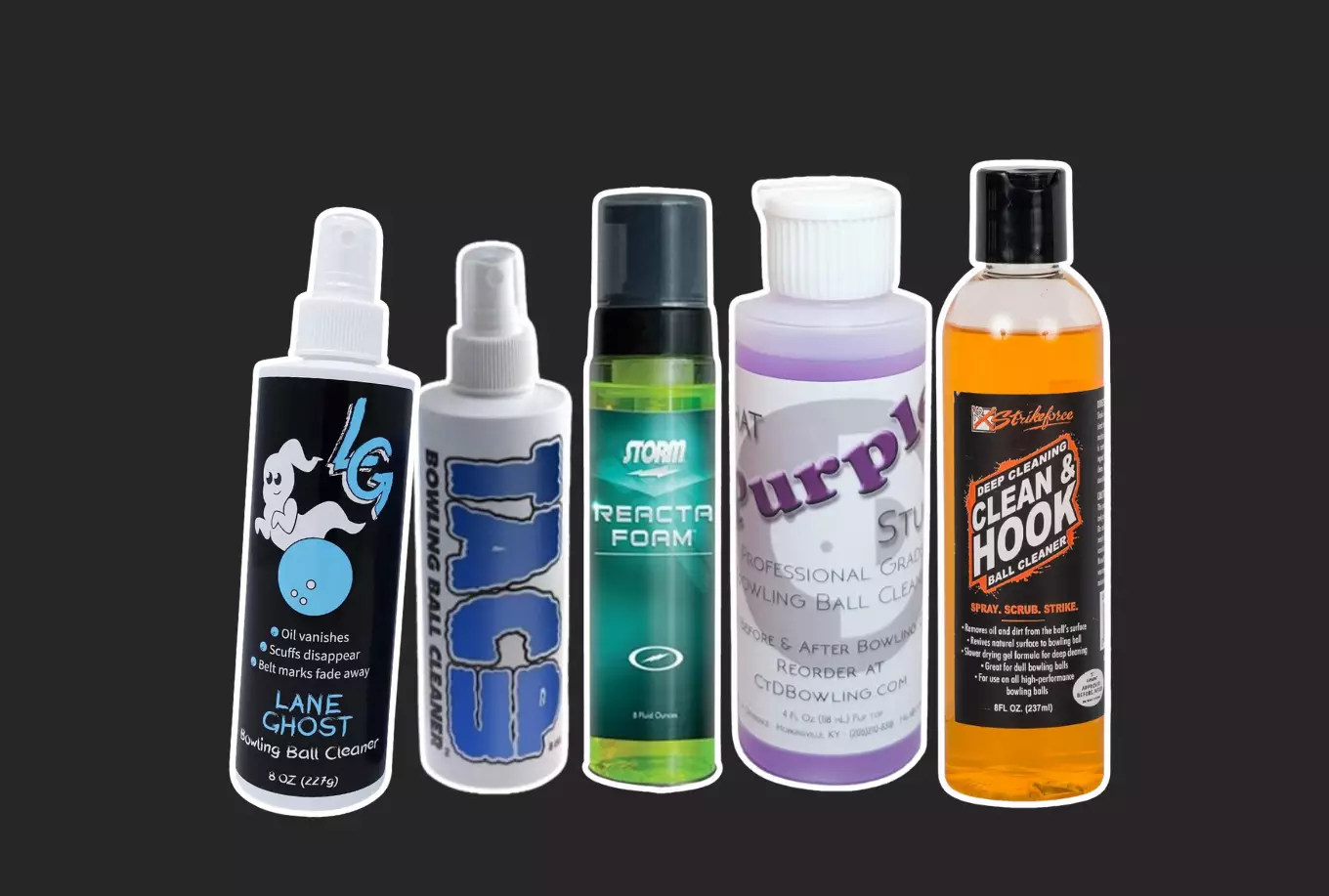
Whether you need a daily degreaser for your urethane gear or a deep-cleaning foam for your heavy-oil reactive balls, here are our top bowling ball cleaner picks for 2026.
#1 Lane Ghost – Best Overall for Reactive Balls
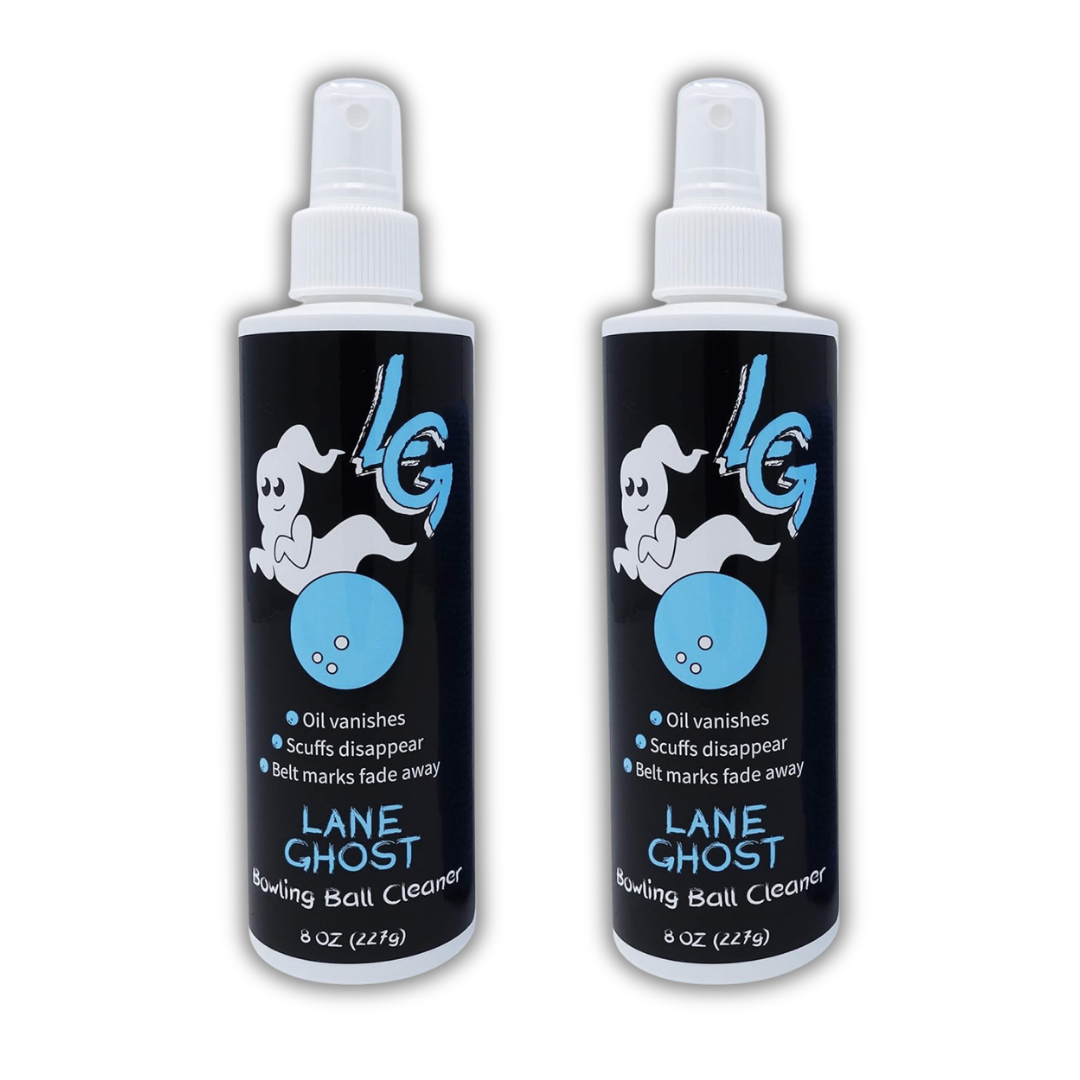
There is a reason Lane Ghost is a best-seller on Amazon. In our testing, this formula strikes the perfect balance between being a strong degreaser and a tack-restorer. It doesn't just clean the surface; it pulls the oil out of the pores so your reactive ball 'reads' the lane like it's brand new. For competitive league players who need consistent motion, this is our top recommendation for 2026.
Pros
- Exceptional at restoring that "squeaky" tacky feel.
- Great at removing dirt, even those gross belt marks
- Best quality-price ratio
Cons
- Spray nozzle can occasionally mist wide.
#2 That Purple Stuff – Best for Consistent Performance
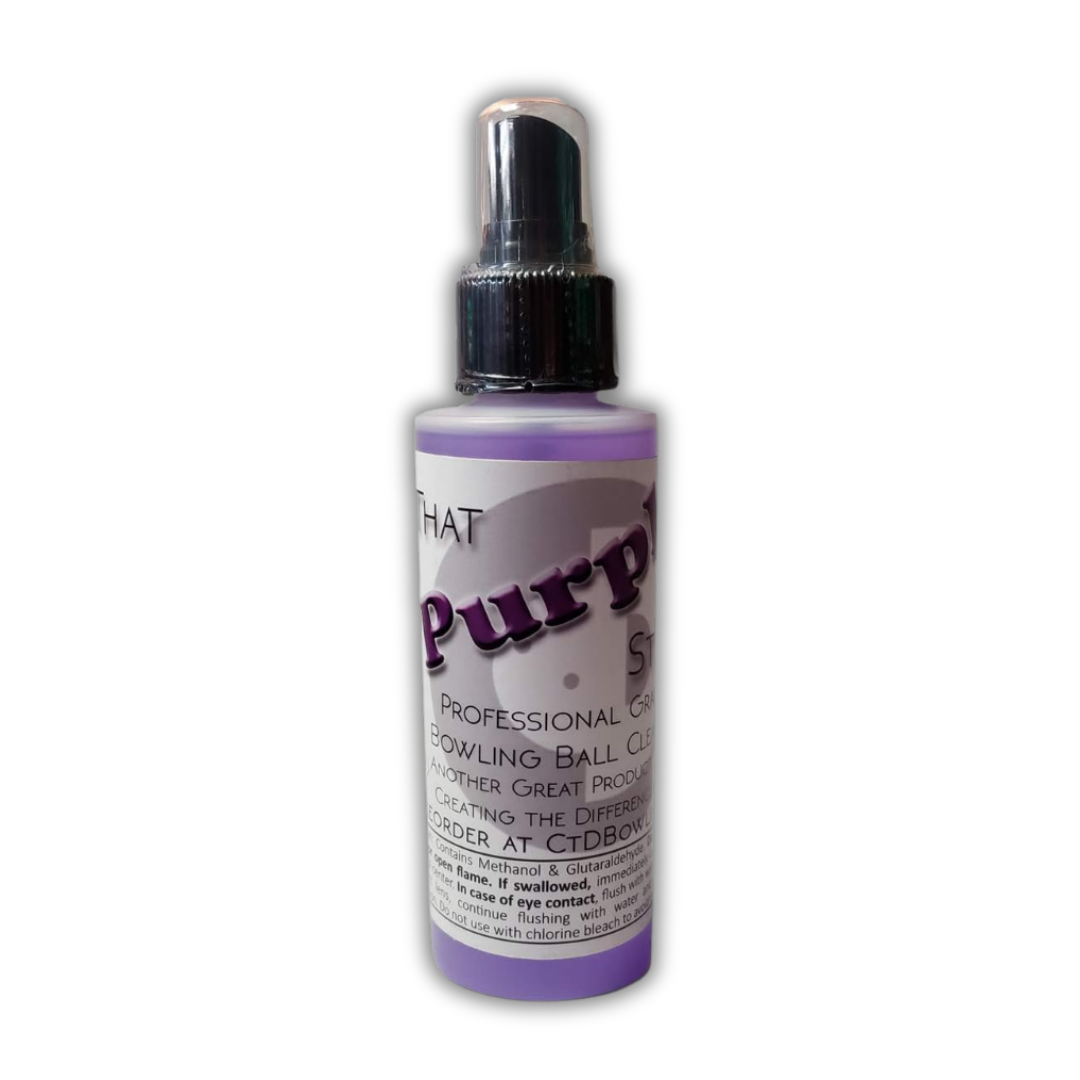
If you follow the professional circuit, you’ve likely seen the purple bottles. What we love about That Purple Stuff is that it isn't a "harsh" solvent. It’s formulated to lift lane oil and dirt while keeping the surface of your ball stable. It’s one of the few cleaners that makes the ball feel "fresh" without adding an artificial, sticky film. It’s a staple for any bowler who values technical consistency.
Pros
- Safe for all coverstocks (Plastic, Urethane, and Reactive).
- Trusted by top-tier professionals for tournament play.
- Restores tackiness without changing the ball's intended motion.
Cons
- Higher price
- Best results require a high-quality pad (like a CtD Pad).
#3 Hammer Urethane Magic – Best for Urethane Bowling Balls
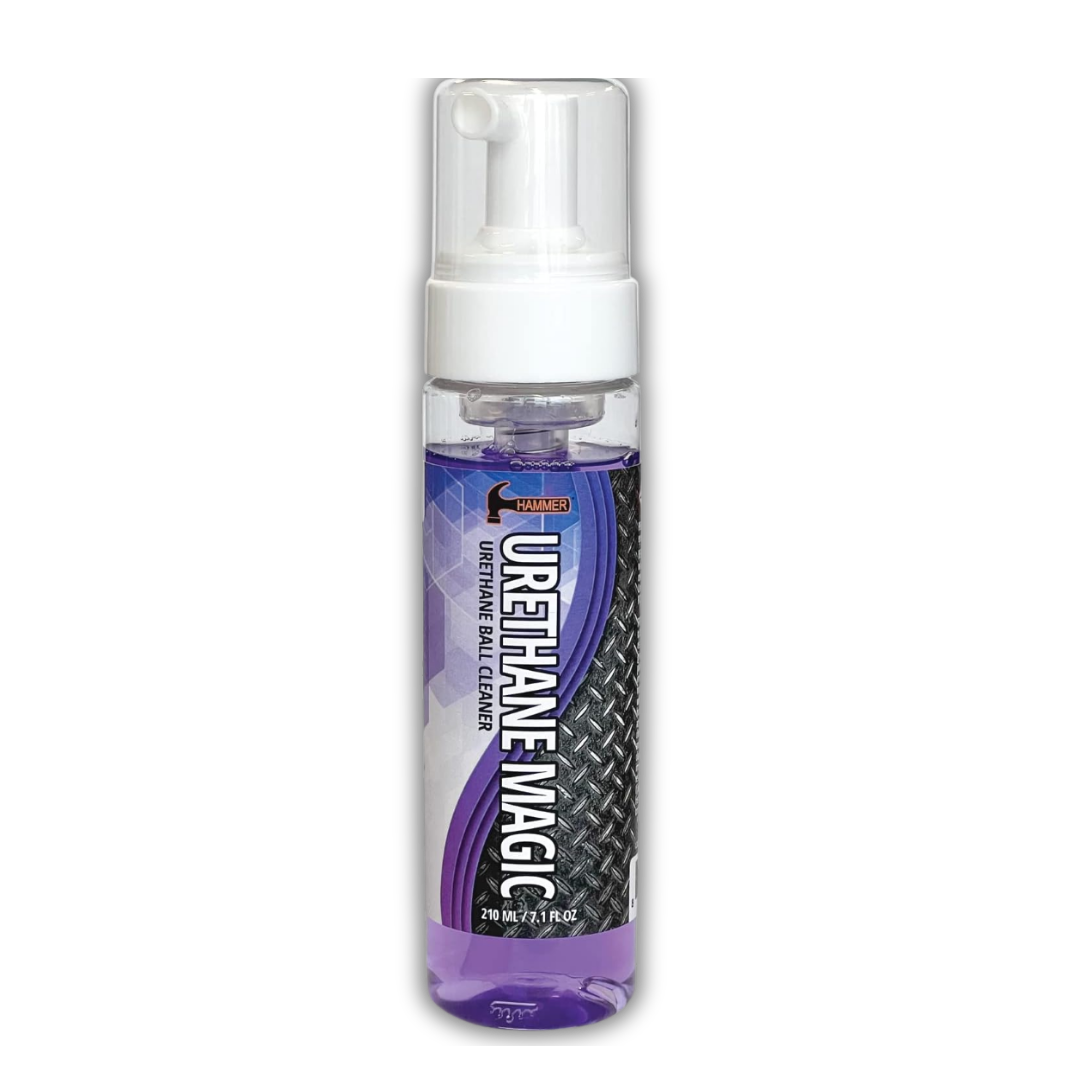
If you throw a Purple Hammer or any high-performance urethane, you know that oil doesn't soak in - it just sits on top like a slick film. We love Urethane Magic because it’s specifically formulated to cut through that surface oil without adding the artificial gloss that many "all-purpose" cleaners do. It keeps your urethane reading the mid-lane exactly how it was designed. Plus, the grape scent is a massive improvement over the chemical smell of most bag staples.
Pros
- Optimized for urethane chemistry to maintain early hook motion.
- Great visual match and scent for the "Purple Hammer" fan base.
- Efficient at removing stubborn surface-level lane oil.
Cons
- If you don't like grapes - this isn't for you.
- The 7oz bottle is smaller than some standard 8oz or 12oz sprays.
#4 Tac Up – Best for Daily Maintenance & Grime
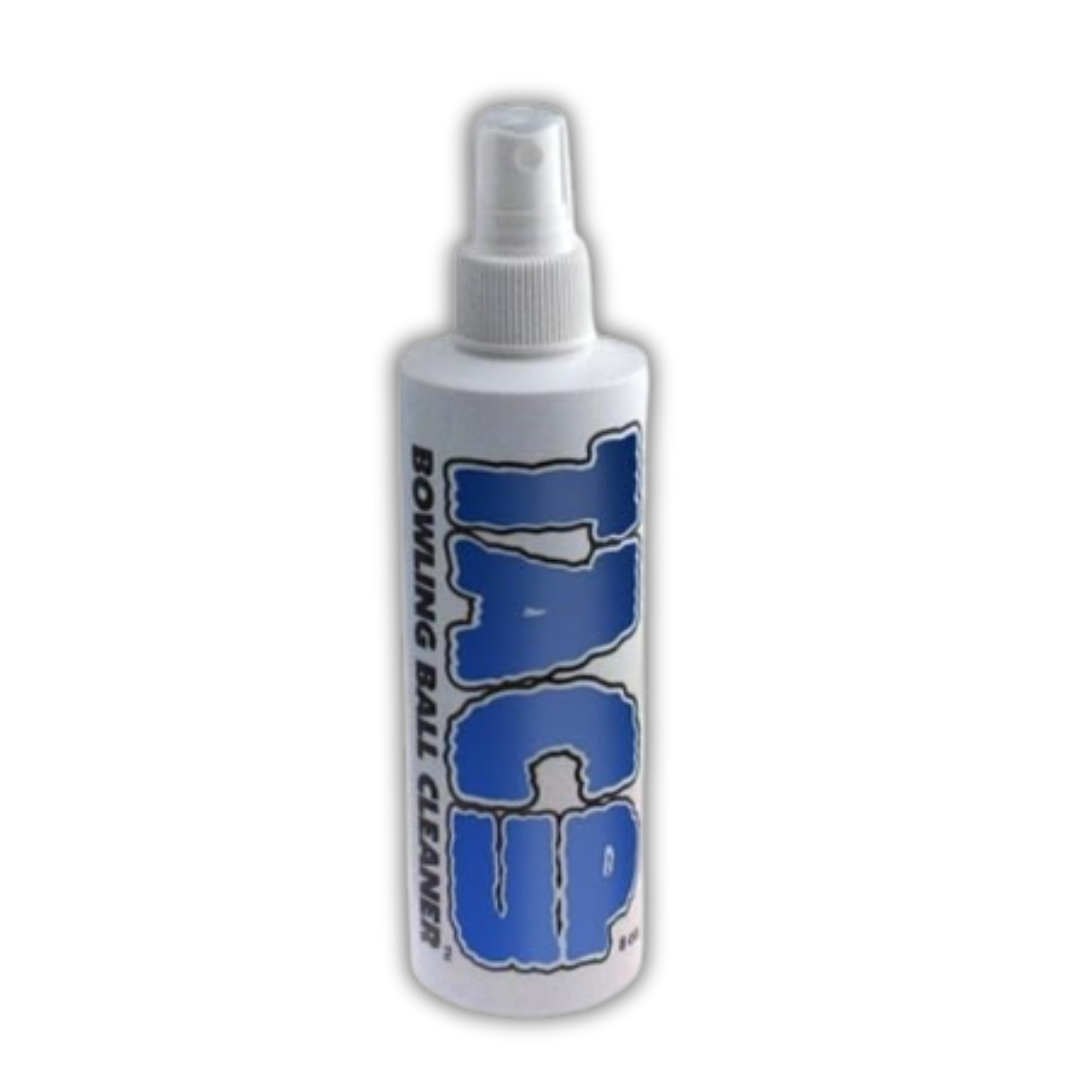
Tac Up is the "Old Reliable" in our bags. Because it was developed by MSCC - a company that specializes in industrial degreasers - it handles the "dirty" side of bowling better than almost any other product. If your ball return is leaving black belt marks or if you play on lanes with high-volume oil, Tac Up cuts through the mess instantly. It’s the fastest way to get your ball back to a clean, ready-to-hook state without overthinking it.
Pros
- Excellent at removing physical scuffs and house-return grime.
- Very fast drying time - spray, wipe, and you're done.
- Reliable performance on every type of bowling ball.
Cons
- Stronger industrial/chemical scent than citrus-based alternatives.
- Leaves the ball clean, but doesn't offer the extreme "sticky" tack of some performance sprays.
#5 Storm Reacta Foam – Best No-Mess Formula
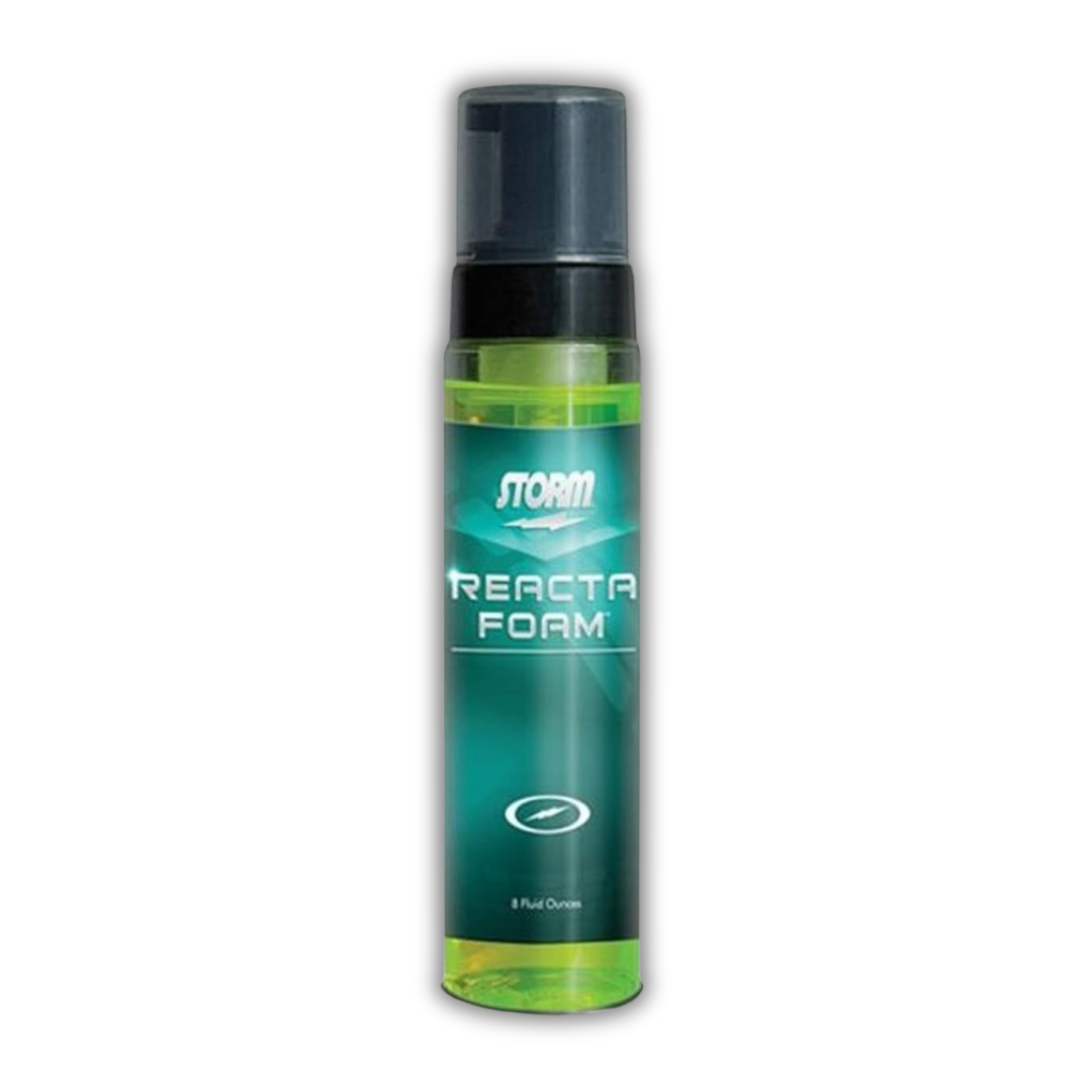
If you’ve ever sprayed a liquid cleaner and had the mist land on your sliding shoe, you’ll appreciate Reacta Foam. Because it’s a thick foam, it stays exactly where you put it. This "dwell time" allows the cleaning agents to sit on the coverstock longer, which we find helps lift oil out of the pores of high-performance reactive balls much more effectively than thin sprays. It's a cleaner way to work.
Pros
- Zero overspray - ideal for use in the bowling center.
- The foam penetrates the surface better for a "deep clean" feel.
- Very economical; the bottle lasts longer than most liquid sprays.
Cons
- Requires a few extra seconds to wipe completely dry.
- The pump can occasionally get stuck if the foam dries around the nozzle.
#6 KR Strikeforce Clean & Hook – Best for Deep Grime
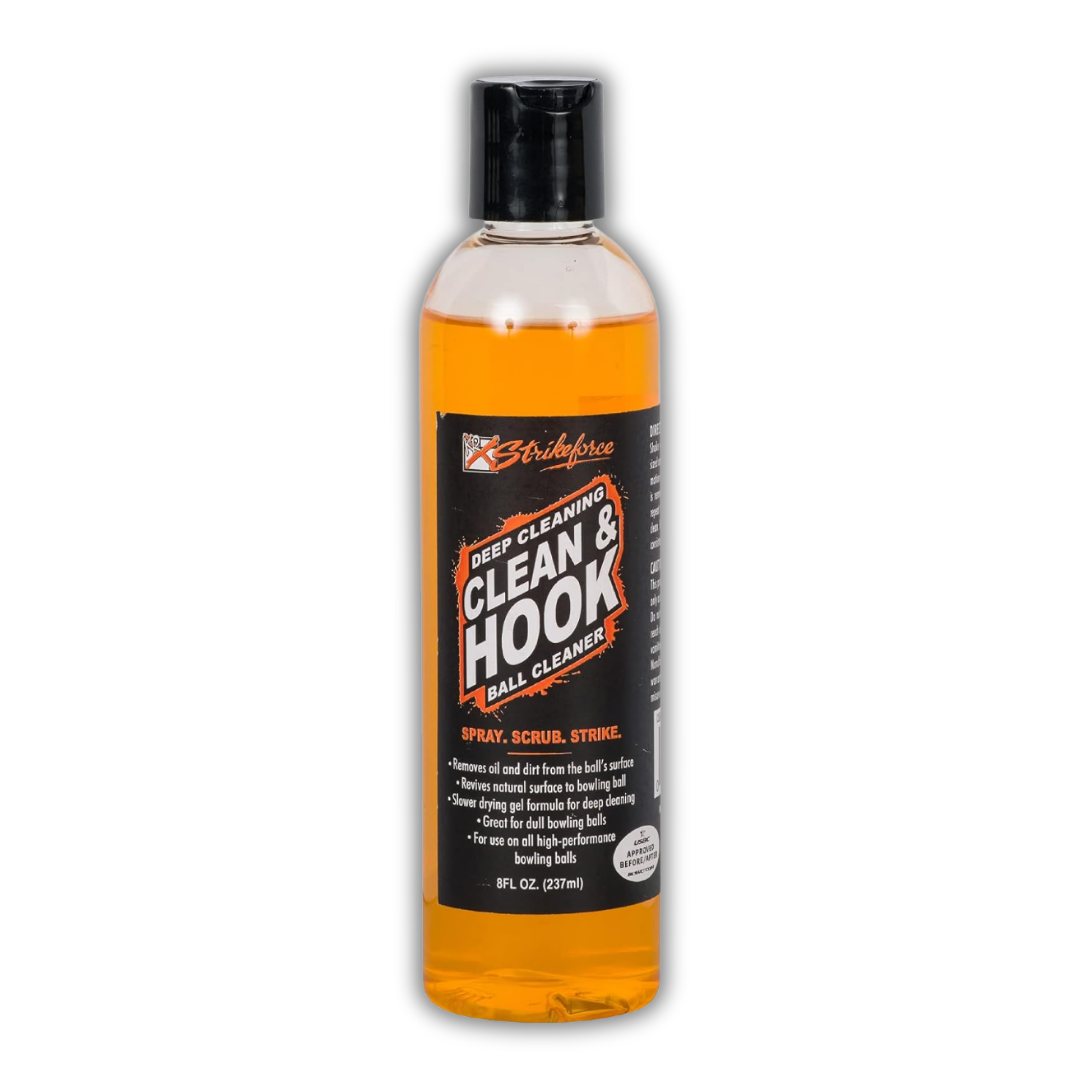
When a ball has been "neglected" for a few weeks, or if you throw a heavily sanded ball (like 500 or 1000 grit), standard sprays can sometimes feel too weak. Clean & Hook is a bit more viscous. It 'grips' the surface texture of the ball and draws out the lane oil that gets trapped in the valleys of a rough coverstock. It takes a bit more elbow grease to wipe off than Tac Up, but the amount of dirt it pulls out is honestly impressive.
Pros
- Best in class for cleaning rough or sanded surfaces.
- Provides a very high level of "tack" once dry.
- Works well on old balls that have lost their reaction.
Cons
- Can feel a bit "slimy" during the application process.
- Needs a very clean microfiber towel to buff out completely.
How to Choose a Bowling Ball Cleaner
Not every bowler needs the same setup. To get the best results, match the formula to your specific equipment and how often you play.
-
Liquid Sprays (Best for Daily Use):
Sprays like
Lane Ghost or
Tac Up are designed for
speed. They evaporate quickly, making them perfect for a fast wipe-down
immediately after your league session.
-
Foams (Best for Deep Cleaning):
Because foam "clings" to the ball longer, it has more time to lift oil out
of the pores. We recommend a foam like
Storm Reacta Foam
after long practice blocks or high-volume tournaments.
-
Gels & Hybrids (Best for Sanded Balls):
If you throw "dull" gear (sanded to 500 or 1000 grit), liquids often run off
before they work. A thicker gel like
KR Strikeforce Clean & Hook
stays in the "valleys" of the coverstock to pull out deep-seated oil.
- The USBC Rule: Never use a cleaner that isn't USBC Approved. Using unapproved chemicals can permanently damage your ball’s surface and lead to disqualification in sanctioned play.
Deep Cleaning: When a Spray Isn't Enough
Even with perfect maintenance, your ball will eventually become "oil-logged." When you notice your ball is no longer doing it's thing and pocket hits are weak, it’s time for a deep extraction.
Option 1: The "Home Soak" (Budget Friendly)
You can draw oil out at home using a simple warm water bath. Fill a bucket with warm (not boiling!) water and a few drops of grease-cutting dish soap (like Dawn). Submerge the ball for 15-20 minutes. You will actually see the oil "sweat" out and float to the surface. Important: Ensure you tape over the holes or dry them thoroughly afterward to prevent the core from absorbing moisture.
Option 2: Personal Revivor Machines (The Pro Choice)
If you want to avoid the mess of a water bath, a dedicated machine like the
Pyramid Phoenix Revivor is the gold standard.
These machines use controlled infrared heat to safely "sweat" the oil out of
the pores without the risks of water damage. It’s a worthwhile investment for
any serious bowler with a multi-ball arsenal.
FAQ
Can I make a homemade bowling ball cleaner?
We strongly advise against it. While "Windex" or "Simple Green" are common DIY myths, they often contain chemicals that can leech the plasticizers out of your ball, making the coverstock brittle and prone to cracking. Stick to approved formulas to protect your $200 investment.
When exactly should I clean my ball?
The best habit is to clean your gear immediately after your last game. Once the oil sits on the ball for a few hours, it travels deeper into the coverstock, making it much harder to remove. Note: Under USBC Rule 11.b.2, you generally cannot use any liquid cleaners once competition has started.
Are wipes as good as sprays?
Wipes like Storm Reacta Wipes are excellent for travel and convenience. They are great for a quick surface clean, but for restoring that "tacky" hook-enhancing feel, a dedicated liquid spray and a fresh microfiber towel are usually more effective.
Final Conclusion: Keep Your Hook Strong
Using a quality cleaner isn't just about keeping your bag looking nice; it’s about maintaining the "physics" of your shot. Oil buildup reduces friction, and less friction means less hook.
Whether you choose the performance of Lane Ghost, the industrial strength of Tac Up, or the specialty care of Hammer Urethane Magic, the most important thing is consistency. Clean your gear after every session, and you’ll find that your ball reaction stays sharp and predictable all season long.