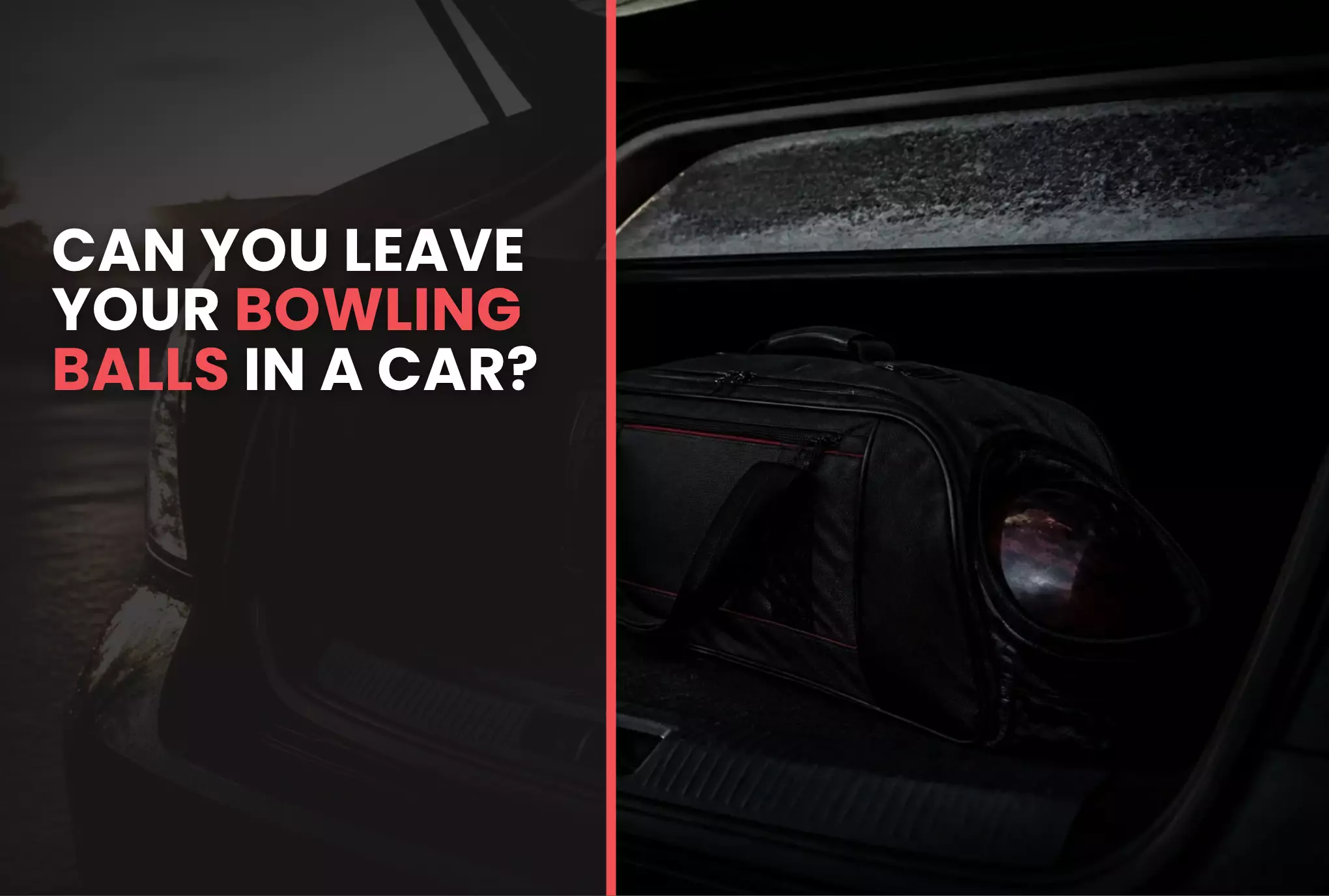
For many bowlers, the car is a second storage room. The bowling bag rides to league
night and to tournaments, and sometimes it stays in the trunk until the next
one. So can you leave a bowling ball in the car?
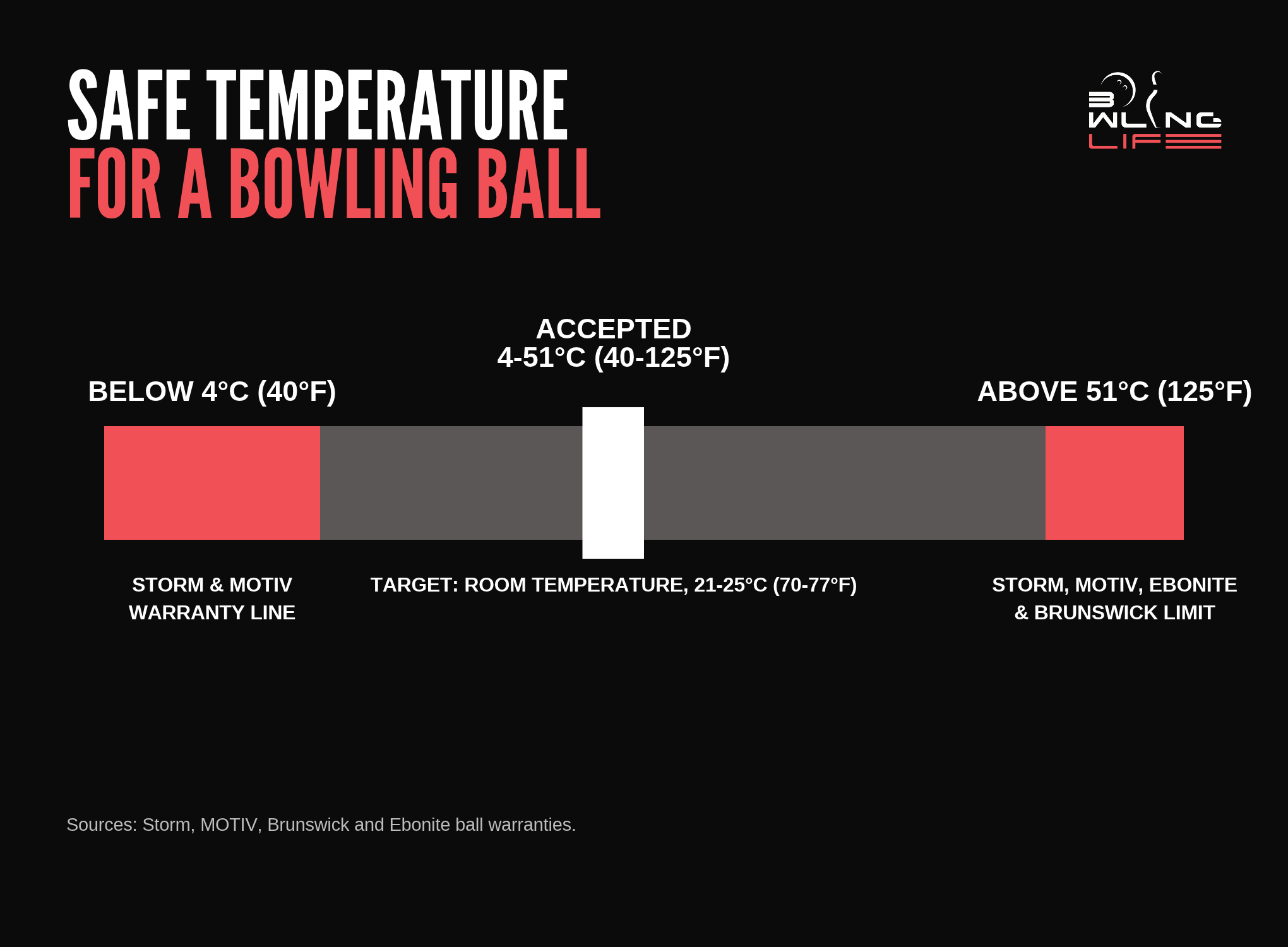
Short trips are fine. A bowling ball in a hot car only gets into trouble when it is left there long enough to pass 125°F (about 51°C), the limit the big manufacturers write into their warranties.
On the cold side, Storm and MOTIV draw the line at 40°F (about 4°C). Driving to the bowling center and back will not hurt your ball, but leaving it in the trunk through a summer afternoon or a freezing night can lead to cracks, a softer cover and oil sweating out of the shell.
So the answer is: it depends on how hot or cold the car gets, and how long the ball stays there.
A bowling ball is not one solid lump. It is a dense core wrapped in a
coverstock (our guide to
what bowling balls are made of
explains both), often with inserts and glue in the holes.
Every
one of those parts expands and contracts with temperature at its own pace. The
damage comes from big swings, and from throwing a ball before it has settled
back to room temperature, not from one warm drive home.
What Does Heat Do to a Bowling Ball?
Heat softens the coverstock and pulls absorbed oil to the surface. Push it far enough and the shell can crack as the core and cover expand at different rates.
The clearest data comes from the
USBC Hardness Research Report. USBC put 10 balls (seven urethane, three reactive) in a hot car trunk
measuring 119 to 130°F (48 to 54°C) for about five hours.
The ball
surfaces reached as high as 105°F (41°C). Every ball dropped below the 72D
hardness specification once its surface went above 98°F (37°C), and a
significant number were still below 72D after two hours back at room
temperature. They returned to spec only once they were fully back at room
temperature.
What heat does, in short:
- Softens the cover. USBC found a direct link: as temperature goes up, hardness goes down. Urethane reacted more than reactive resin, but both changed.
- Makes the ball "sweat". Oil is coming out of the shell when a ball is taken out of hot temperatures.
- Stresses the core and shell. The core expands and contracts with every big temperature swing. Keeping the ball near room temperature limits that.
- Voids the warranty. Brunswick exclude damage from warming a ball above 125°F (51°C).
Heat is not always the enemy, which is where people get confused.
Oil extraction machines use warm air on purpose, as our guide to
cleaning a bowling ball with a revivor
explains. The difference is control. A revivor holds a set temperature. A car
parked in the sun does not.

What Does Cold Do to a Bowling Ball?
Cold makes the core and cover contract, and they do not contract at the same rate. That uneven movement puts stress on the weakest spots in the shell, and on a drilled ball the weakest spots are the holes.
Storm's ball warranty guide lists "extreme temperatures, both hot and cold" among the things that make cracking more likely. It adds that modern reactive balls are more prone to cracking than traditional urethane because of what the coverstock is made of. The USBC's winter advice is simply to keep balls in warmer areas to avoid cracking or "phasing", a discoloration that usually turns the coverstock white.
Why do cracks so often start around the thumb hole? Manufacturers do not publish where cracks begin, but their warranty terms point straight at the holes:
- It is the biggest hole in the ball. More material is removed there than anywhere else, so the shell around it has the least support.
- It often holds a slug or insert. Storm notes that grips held in with glue often produce hairline cracks, and that inserts fitted with a notch under the surface create a weak spot.
- Edges matter. Brunswick excludes damage from thumb and finger holes that were not properly beveled, and from bridges narrower than 1/4 inch.
Add a cold snap to any of those and a small stress point can become a visible crack. For the full list of causes, see our guide on why bowling balls crack.
As a two-handed bowler, I don't have a thumb hole to worry about. But that alone does not make my equipment immune. I still have finger holes with glued finger inserts, so the holes are the first place I would look if a ball had been through a cold night.
How Hot Does a Car Get in Summer?
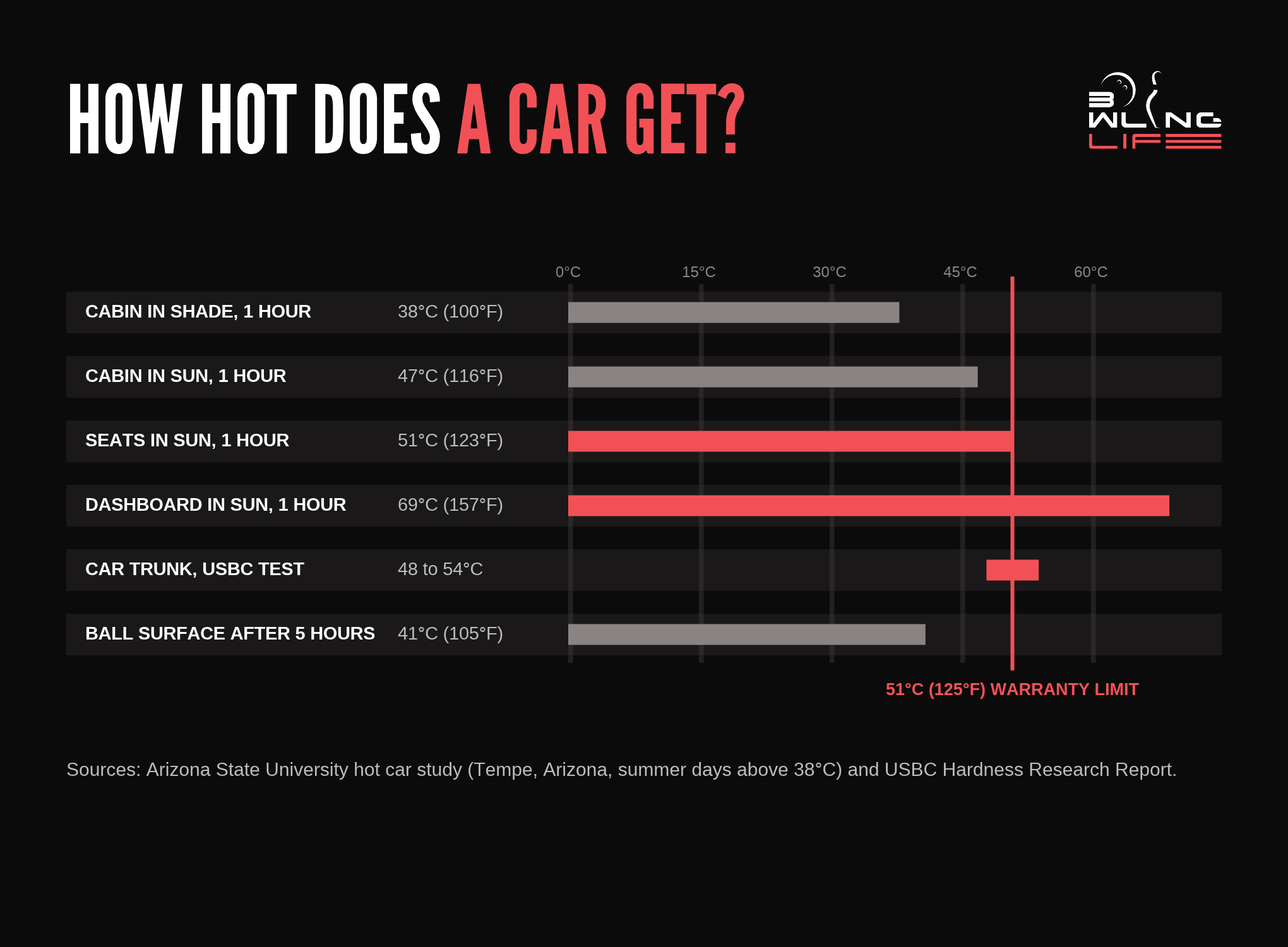
Hotter than most people expect, and fast. In very hot weather, some surfaces in a car parked in the sun pass the 125°F (51°C) within an hour.
An Arizona State University study measured cars parked for one hour on summer days above 100°F (38°C) in Tempe, Arizona. These are numbers from a very hot climate, but they show how much hotter the inside of a car gets, and how much shade helps:
Vehicle Heat Accumulation
Measured interior and surface temperatures under summer heat:
Two things stand out. First, shade helps a lot: the shaded cabin stayed around 16°F (9°C) cooler than the one in the sun. Second, a ball warms up more slowly than the air around it. After five hours in a trunk of up to 130°F, the USBC balls reached 105°F at the surface. That is why a quick stop is not a problem, while a whole day parked in the sun is.
Where the ball sits matters too. A ball on a seat or the rear shelf in direct sun is a different story from a ball in a bag on the floor.
What Is the Safe Temperature Range for a Bowling Ball?
Between about 40°F and 125°F (4°C to 51°C) is the range the big brands accept, and room temperature is the target.
USBC tests hardness at 70 to 77°F (21 to 25°C), which is a good picture of where a ball is at its "normal".
Ball Temperature Limits
Manufacturer operational thresholds and official warranty specifications:
Read these as the edges, not the comfort zone. A warranty limit tells you where the manufacturer stops taking responsibility. It does not mean a ball kept just inside those limits for weeks is in good shape.
My own rule sits right on that cold line. In winter, I leave my balls in the car trunk only if it stays around 5°C (41°F) or warmer outside.
The inside of a parked car stays very close to the outside temperature, so that is what the balls get too. If the forecast says it might drop lower, I take them home.
It is my own habit, not a manufacturer rule, but it lines up well with the 40°F (4°C) warranty limit. And in all my years of bowling, I have never had a ball crack in a car or because of it. Maybe that is luck, but I think the rule helps.
Do You Need to Warm Up a Cold Bowling Ball?
Yes. Let a cold ball get back to room temperature before you throw a single shot with it.
That is the National Bowling Academy's advice on preventing cracked bowling balls: get to the center a little early and let the ball warm up. A cold, contracted shell takes a heavy hit every time it meets the pins, the pit and the ball return.
No manufacturer gives an exact warm-up time. The USBC test gives a hint from the other direction: balls taken out of a hot trunk still had not fully recovered their hardness after two hours at room temperature. Plan on more than a few minutes.
- Bring the ball inside in its bag and leave it zipped while it warms. The bag slows the change.
- Keep it away from heaters and air vents. Storm lists air vents blowing directly on the ball as a cracking risk.
- Do not speed things up with an oven, hot water or a hair dryer.
Bringing the balls home on cold nights has another bonus. I don't have to bowl with cold bowling balls the next morning - on a freezing morning that is an extremely unpleasant feeling.
Can You Leave a Bowling Ball in the Car Overnight?
In mild weather, one night will not ruin a ball. In a freezing winter or a heat wave, bring it inside.
Bowling balls generally does not crack just because you forgot to bring it in from the trunk once. The risk builds with repetition and extremes.
The type of ball matters too. Modern reactive balls are more prone to cracking than urethanes, while USBC found urethane covers soften more in heat.
Does Oil Inside the Ball Make Temperature Damage Worse?
Bowling coach Panagiotis Vardakis thinks it does. When I asked him about temperature damage, he went straight to the oil a ball soaks up over time.
"I think extreme temperatures, high or low, cause the materials to change
state. They either swell too much or shrink too much. Both create more
pressure than the materials can handle, so we get cracking," Panagiotis
Vardakis said.
Coach also pointed out where the crack usually starts.
"Most of the time, the crack starts from the pin of the ball, which is the fourth element of the ball's structure, together with the core, the filler and the outer surface. So the first part that detaches from the whole structure is the pin."
For Panagiotis, the most important thing is keeping your balls properly maintained and de-oiled.
"The absorbed oil mostly stays in the filler, like a fifth chemical in a liquid state, and it changes more in extreme temperatures. So a ball full of stored oil is more likely to crack. In my opinion, the oil causes cracking even when the ball sits still for a long time. I believe it makes the filler that holds the core softer, so gravity makes the core slip down and the materials start to separate."
His practical advice is easy to follow. Heat already pulls absorbed oil to the surface, which is why a ball sweats after a hot trunk. Keeping the ball clean and taking the oil out regularly costs little, and our home bowling ball maintenance guide shows how to do it.
How to Store and Transport a Bowling Ball in Summer and Winter
Keep it at room temperature and away from big swings. That covers most of it.
In summer
- Take the bag out of the car when you park for more than a short stop.
- If the ball has to stay in the car, park in the shade and keep the bag on the floor. Never leave it on a seat or the rear shelf.
- If a ball has been in a hot car, let it cool to room temperature before you clean or throw it. It may sweat oil, so wipe it down once it has cooled.
- Do not use the car as an oil extractor. Use a controlled method from our home bowling ball maintenance guide.
In winter
- Bring the bag inside overnight when it will be close to or below freezing.
- Get to the center early and let the ball warm up in the bag before practice.
- Do not store balls in an unheated garage or shed for the winter.
- Keep balls off cold concrete. MOTIV warns that a hard floor concentrates stress on one small point and can crack the cover.
Where you keep the balls between sessions matters as much as the car. Most of the time my balls stay at the bowling center, in the storage room for players, where the temperature is steady. The car only comes into it when we travel to an event, and that is when the 5°C rule kicks in.
For travel, a good roller bag makes it easy to bring the balls in and out, and our bowling bag guide covers what to look for. For small extras like a towel and a ball cup, see our list of must-have bowling accessories. Our crack guide also explains how I store my bowling balls in more detail.
If you are not sure whether a ball has been hurt by heat or cold, a pro shop can check it. Temperature is also one of several things that shorten a ball's life, and our guide on how long a bowling ball lasts covers the rest.
Your Weekly Bowling Digest
The latest bowling news, tips, and gear reviews, all wrapped up in a quick 3-minute read delivered straight to your inbox.
FAQ
Can you leave a bowling ball in a hot car?
For a short trip, yes. Manufacturers such as Storm, MOTIV, Brunswick and Ebonite draw the line at 125°F (about 51°C), so avoid leaving a ball in a car parked in the sun for hours. Park in shade and keep the bag on the floor.
Can you leave a bowling ball in a cold car?
Storm and MOTIV exclude exposure below 40°F (about 4°C). My own rule is to leave balls in the trunk only if it stays around 5°C (41°F) or warmer outside, and to take them home if the forecast is colder.
Will a bowling ball melt in a hot car?
No. In USBC's trunk test at up to 130°F (54°C), the ball surfaces reached 105°F (41°C) and the covers softened, but nothing melted. The real risks are a softer cover, oil sweating out and cracks from repeated swings.
Does temperature change a bowling ball's hardness?
Yes. USBC found that as temperature goes up, hardness goes down, with urethane affected more than reactive resin. The balls returned to spec once they were fully back at room temperature.
What does it mean when a bowling ball sweats?
Sweating is oil coming out of the shell after a ball has been in heat. Wipe the ball down once it has cooled to room temperature, and give it a proper clean before you bowl with it.
Does a bowling ball warranty cover cracks from heat or cold?
Usually not. Storm and MOTIV exclude exposure above 125°F or below 40°F, and Brunswick and Ebonite exclude warming a ball above 125°F (51°C). A pro shop can still tell you whether a crack looks like a defect or damage.
Why did my bowling ball turn white in the cold?
That is called phasing, a discoloration of the coverstock that usually turns it white. The USBC links it to cold and advises keeping balls in warmer areas in winter.