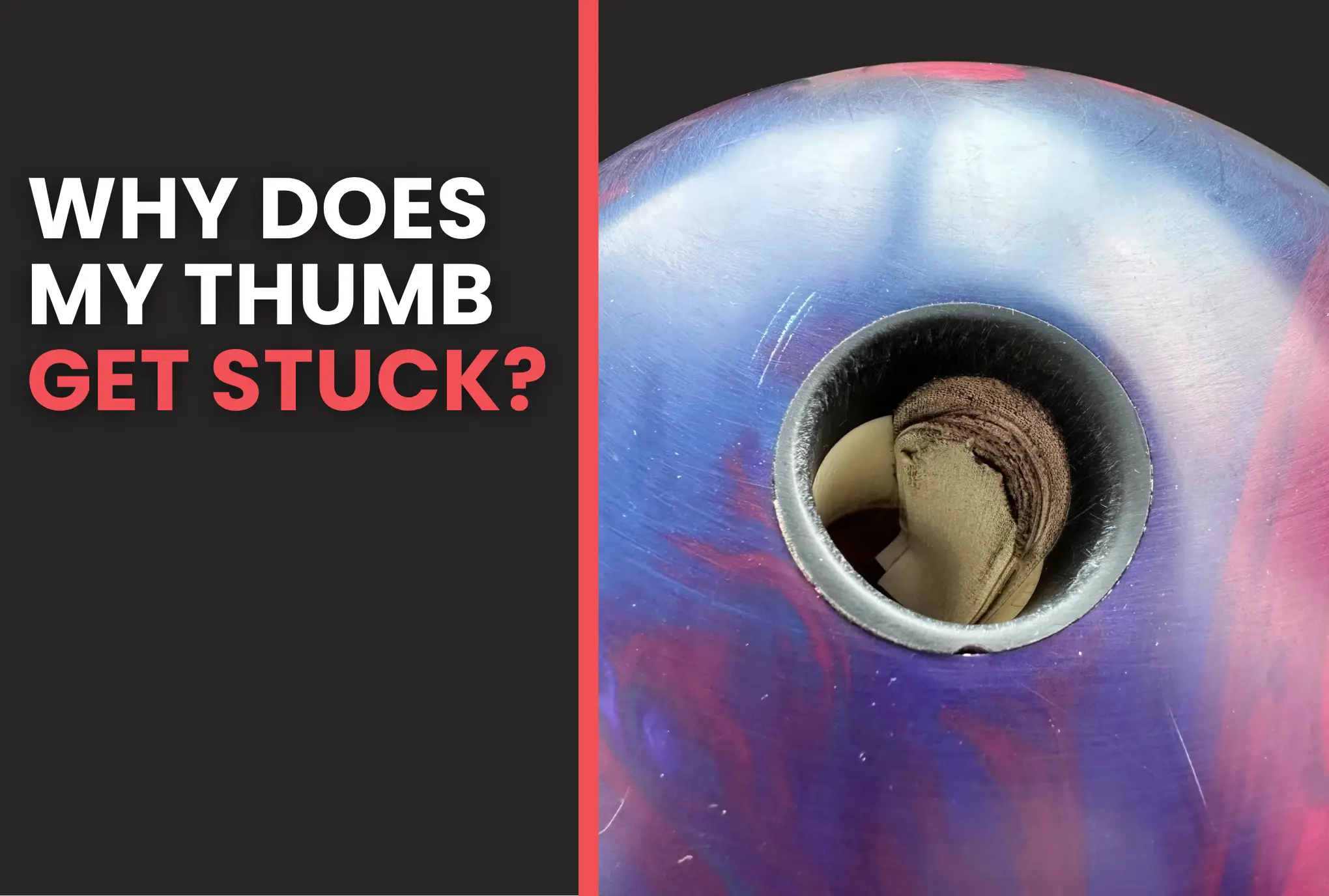
Your thumb usually gets stuck in your bowling ball because of fit: a thumb hole that is too tight, or a pitch or span that holds the thumb in the ball too long.
Swelling, too many layers of tape and squeezing the ball at release turn a small fit problem into a hang-up on almost every shot.
The fix depends on whether the problem is the hole, your hand or your release, and most bowlers have a bit of all three. I went through all of it with my own thumb, and in the end I solved it in the most drastic way possible. But more on that later.
The International Bowling Pro Shop and Instructors Association (IBPSIA) splits a ball fit into three parts. It gives hole size about 20% of a good fit, pitch 40% and span 40%. So if your thumb hangs up, the size of the hole is only one of the places to look.
What Does a Stuck Thumb Look Like?
A sticking thumb makes the ball come off your hand late, which usually shows up as extra loft and a miss to the inside.
I remember a very good article by coach Tyrel Rose, where he described this well: the thumb sticks, the ball gets lofted farther onto the lane, and it misses the target, usually to the inside.
Typical signs:
- The ball lands further down the lane than you intended, often with a loud thud.
- You pull shots inside your target, left of it for a right-hander.
- The thumb feels like it is dragging on the back or bottom edge of the hole as it comes out.
- Skin on the inside of the thumb or the knuckle gets raw, blistered or callused.
- The feel of the hole changes from one session to the next, or even from game to game.
The opposite problem, dropping the ball early, is the other half of the same story. A hole that feels comfortable but lets the ball fall off the hand is often a sign that you have opened it up too far trying to fix sticking.
Is My Thumb Hole Too Tight, or Is My Thumb Swelling?
The National Bowling Academy says the thumb hole should feel loose but still be snug enough that you can release the ball without gripping it, and the thumb should go in completely.
If the thumb sticks from the first shot every time, the hole is probably too tight or the pitch is wrong. If the fit changes during the day or during the session, your thumb is changing size and the fit needs adjusting as you play.
Keep in mind that hands also shrink in the cold and swell in the heat, so the same ball can fit differently on different days.
Time of day matters too. From my own experience, early morning squads are where the thumb gives you the most trouble. Your thumb is almost always a bit swollen first thing in the morning, as the fluid in your lymphatic system is still sitting in the tissue. You have to take out most of your tape just to get your thumb into the ball. Then, as you bowl and the hand gets moving, the thumb shrinks and you have to put the tape back in.
This is especially common among older bowlers. This is my own observation, not a medical rule, but if you bowl morning squads, expect your fit to change during the block.
Why Is Your Thumb Sticking?
Identify when the hang-up happens to find the right fix:
When you get a ball drilled, ask your pro shop operator to drill the thumb hole for your hand at its largest, when it is most swollen, and then use tape on the days it is smaller. That way you remove tape as the thumb swells instead of being stuck with a hole that is too tight during the game.
If swelling itself is the main problem, our guide to thumb swelling in bowling goes through the causes and how to manage it during and after a session.

How Do Pitch and Span Affect Thumb Release?
Pitch is the angle of the hole and span is the distance between the thumb and finger holes. Together they make up about 80% of a fit under the IBPSIA weighting, and either one can hold the thumb in the ball too long.
Thumb pitch comes in three directions:
- Forward pitch angles the hole toward the middle of the grip. It helps the thumb stay in a little longer, which suits bowlers who drop the ball early. Too much of it can make the thumb hang.
- Reverse pitch angles the hole away from the middle. BowlingBall.com's pitch guide says it "helps your thumb exit the ball quickly at the moment of release", so pro shops often add reverse pitch when a thumb sticks.
- Lateral pitch tilts the hole left or right. It changes how the thumb sits against the side of the hole and how easily you stay behind the ball.
An MDM Bowling Coaching column on BowlersMart notes that most modern grips use more forward pitch on the thumb and more reverse on the fingers. It also warns that a pitch which keeps your hand out of a relaxed position forces you to grab the ball, and that more grip pressure results in inconsistent releases and possible injuries.
Span matters just as much. A span that is too long stretches the hand and pulls the thumb against the hole. A span that is too short bunches the hand and makes you squeeze. For a fingertip grip, USBC suggests the gripping edge of the finger holes should sit about halfway between the first and second joints of your fingers.
The shape of the hole matters as well. A round hole drilled for an oval thumb can be tight at the sides and loose front to back at the same time. Many pro shops shape the hole or fit a thumb insert so it follows the shape of your thumb.
How Do You Adjust Thumb Tape During a Session?
Add tape when the thumb feels loose and remove it as the thumb swells. You should not need more than one or two pieces of tape to get the fit right. If you need much more, the hole itself is the wrong size.
How tape works in practice:
- Front tape (on the side of the hole toward the finger holes, against the pad of the thumb) tightens the fit and is the usual place to start.
- Back tape (against the thumbnail side) also tightens the hole and changes how the thumb rests. Use it carefully, because it pushes the thumb forward.
- Remove one piece at a time. When the thumb starts to stick mid-session, take out the most recent piece first, then test with a couple of shots.
- Replace worn tape. Old tape peels at the edges and can catch the skin as the thumb exits.
- Carry spare tape and a tool to remove it, so changes take seconds between frames.
Tape can go inside the hole, inside an insert or around the outside of an insert. Our list of must-have bowling accessories covers insert tape, and for protecting the skin on the thumb itself, see our guide on kinesiology tape for bowlers.
My advice for anyone who bowls with the thumb: pay attention to what your thumb is telling you. If it felt tight in the first frames this morning, it will probably feel different by the third game. For some bowlers this constant taping is no big deal. For me it was frustrating, because there is already so much to think about in bowling.
Should You Stop Using Your Thumb Altogether?
For most bowlers, no. Fixing the fit, the tape and the grip pressure solves the problem. But it is an option, and it is the one I chose.
I had a thumb injury and kept bowling on it because I had to. That meant
widening the thumb holes on my whole arsenal. Once the thumb healed, the holes
were far too big, and I needed up to 12 pieces of tape at once to make them
fit again. Then the swelling would change and the whole cycle started over.
I got tired of jumping back and forth between tape and a swollen
thumb, so I decided to bowl without the thumb.
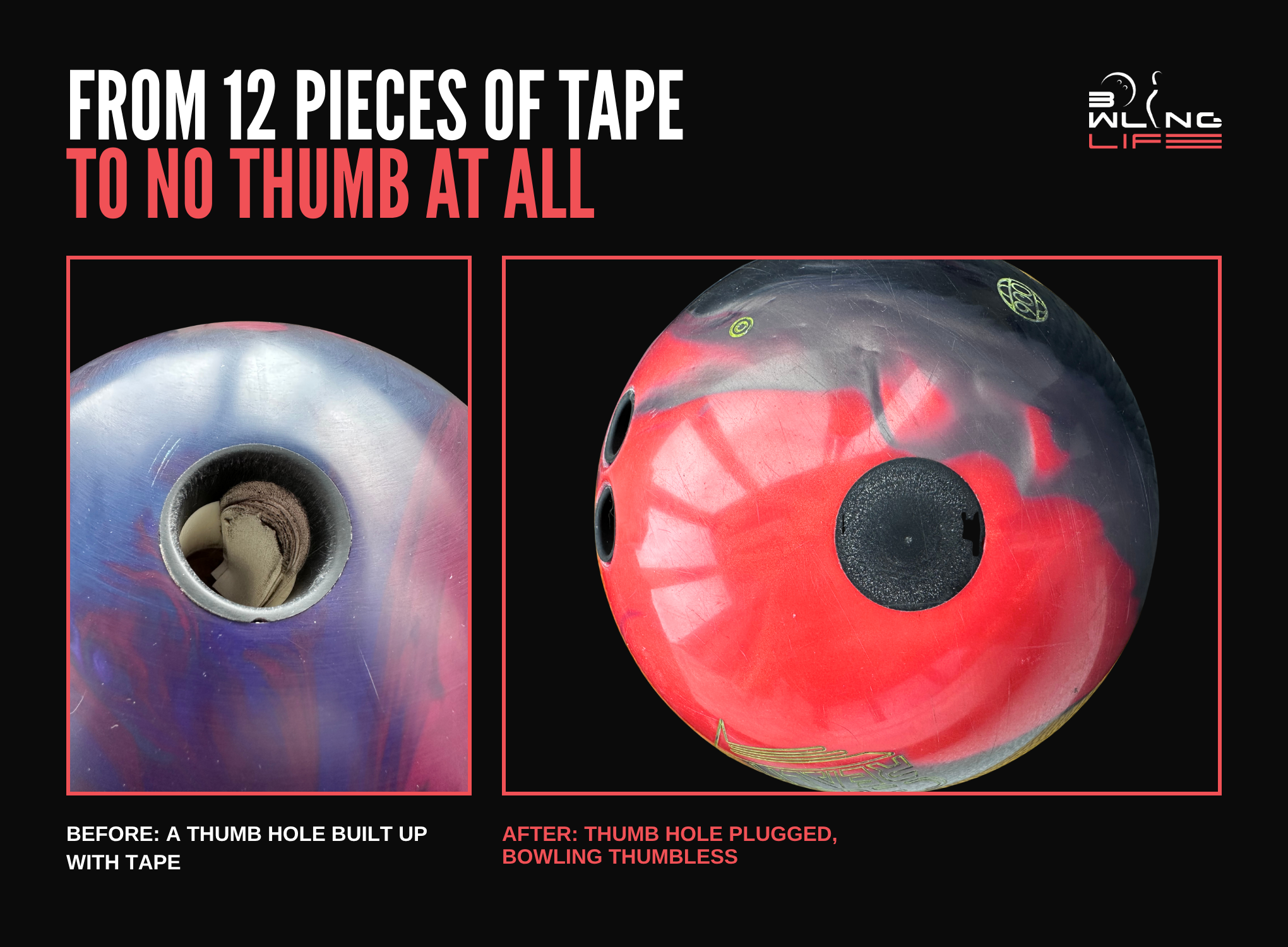
Learning a whole new way to play takes time, and nobody should switch styles just because of one bad time. But for me, the problem is gone. My thumb is completely fine, and I no longer have to put 12 pieces of tape in every ball before I go bowling. There is so much to worry about during a game. Removing one problem for good was worth it.
If your thumb keeps changing size no matter what you do, or an injury has made a consistent fit impossible, going thumbless is worth discussing with a coach. If not, work through the steps below first.
What Release Habits Make the Thumb Hang Up?
Squeezing the ball is the most common one. The tighter you grip, the more the thumb presses against the hole and the later it comes out.
Habits that make the thumb hang:
- Gripping to hold the ball up. If the fit is loose or the ball is too heavy for you, you squeeze to keep it on the hand. Our bowling ball weight guide helps check the second part.
- Turning the hand early. Rotating before the bottom of the swing drags the thumb sideways against the hole.
- Late timing. If the ball is behind your slide, the thumb exits as the ball is already rising, which adds loft.
- Forcing revs with the thumb. Trying to add spin with the thumb instead of letting the fingers lift the ball. Our rev rate guide explains where rotation actually comes from.
A simple check: feel the thumbnail against the back of the hole as you swing. If you can feel it there, you are not squeezing. A steady pre-shot routine also helps, because grip pressure often creeps up when you rush.
Can Skin, Sweat and Temperature Make Your Thumb Stick?
Yes. Sweaty or dry skin changes how the thumb slides out of the hole, and temperature changes the size of your thumb, so the same fit can work one week and stick the next.
- Sweaty hands: use a hand conditioner or drying product that keeps the grip dry without leaving it tacky.
- Dry skin: hand rosin or a grip cream adds traction. Be careful not to overdo it, because too much traction can make the thumb grab.
- A dirty hole: oil, rosin and old tape glue build up inside the hole and add friction. Clean the thumb hole regularly, as described in our guide to bowling ball maintenance at home.
- Sharp hole edges: a sharp exit edge can catch the skin. Pro shops can bevel the edge slightly, and rounding the edge of the thumb hole also reduces pressure on the thumb.
Skin damage and sticking feed each other. A sore spot makes you grip differently, and the new grip rubs somewhere else. If the skin is already broken, our guide on bowling skin rips covers how to protect it.
When Is a Sticking Thumb a Health Problem?
If you have numbness or tingling at the tip of the thumb, it may be more than a fit issue. The Sports Injury Clinic describes bowler's thumb as compression of a nerve on the inside of the thumb, "often due to a tight-fitting thumb hole in the bowling ball".
Signs to take seriously:
- Numbness or tingling in the tip of the thumb.
- Pain on the inside of the thumb or in the web between the thumb and index finger.
- Weakness when pinching.
- A tender lump on the inside of the thumb.
The Sports Injury Clinic lists rest, fixing a thumb hole that is too small, protecting the thumb and changing the grip as first steps. If symptoms last or keep coming back, stop bowling and see a doctor or physiotherapist. Bowling through an injury can also leave you with a ball that no longer fits once you heal, as I found out. Our article on bowler's thumb has more on the causes and prevention.
How to Fix a Thumb That Sticks: Step by Step
Work from the simplest fixes to the biggest. Most sticking thumbs are solved in the first three steps.
- Clean the hole and your thumb. Remove old tape, glue and rosin, and dry your hand before you bowl.
- Check your tape. If you are using more than a piece or two, remove layers until the thumb goes in fully and comes out without dragging.
- Relax your grip. Feel the thumbnail on the back of the hole and let the ball come off your hand at the bottom of the swing.
- Track when it sticks. First shot, morning squads only, after a few games, or only on hot days. The pattern points to the cause, as the chart above shows.
- Visit a pro shop for a fit check. Ask them to look at hole size, shape, pitch and span, not just to open the hole. Opening a hole without checking the pitch can swap sticking for dropping.
- Consider an insert. A thumb insert or a hole shaped to your thumb gives a more consistent exit and is easier to change later.
- Work on timing with a coach if the fit checks out and the thumb still hangs. Early rotation and late timing are hard to see on yourself.
Once the thumb comes out cleanly, the ball should land closer to the foul line and hit your target more often. If you still miss to the same side afterwards, our guide on why you keep leaving the 10 pin covers the next set of small changes.
Your Weekly Bowling Digest
The latest bowling news, tips, and gear reviews, all wrapped up in a quick 3-minute read delivered straight to your inbox.
FAQ
Why does my thumb get stuck in my bowling ball?
Usually because the hole is too tight or the pitch and span hold the thumb in too long. Swelling, too much tape and squeezing at release make it worse, so check all of them before you open the hole.
How tight should a bowling ball thumb hole be?
Loose enough to come out without effort, but snug enough that you can hold the ball without squeezing. The thumb should go in fully, and you should not need more than one or two pieces of tape to fine-tune it.
Should I make my thumb hole bigger if my thumb sticks?
Not straight away. Remove tape and clean the hole first, then have a pro shop check pitch and span. A hole opened too far makes you squeeze to hold the ball, which can bring the sticking back.
Why is my thumb tighter in morning squads?
In my experience, the thumb is often slightly swollen early in the morning before the hand has been moving, and it shrinks as you bowl. Start with less tape and add pieces back during the block as the fit loosens.
Why does my thumb stick more later in a session?
Your thumb can swell as you bowl, especially in warm conditions, so a hole that fits at the start gets tighter. Fit the hole for your thumb at its largest and use tape for the smaller days, then remove tape as you swell.
Does thumb pitch cause the ball to hang?
It can. Forward pitch keeps the thumb in the ball longer and too much of it can cause hanging, while reverse pitch lets the thumb exit sooner. A pro shop can change the pitch with a plug and redrill or an insert.
Can you bowl without putting your thumb in the ball?
Yes. Many bowlers play thumbless, either one-handed or two-handed. It takes time to learn, so it is usually a last resort, but it removes thumb fit problems completely. I switched after an injury left me needing up to 12 pieces of tape in my thumb holes.
Is a thumb that sticks the same as bowler's thumb?
No. Sticking is a fit and release problem, while bowler's thumb is irritation of a nerve on the inside of the thumb. A tight thumb hole can cause both, so numbness or tingling is a reason to fix the fit and see a doctor.