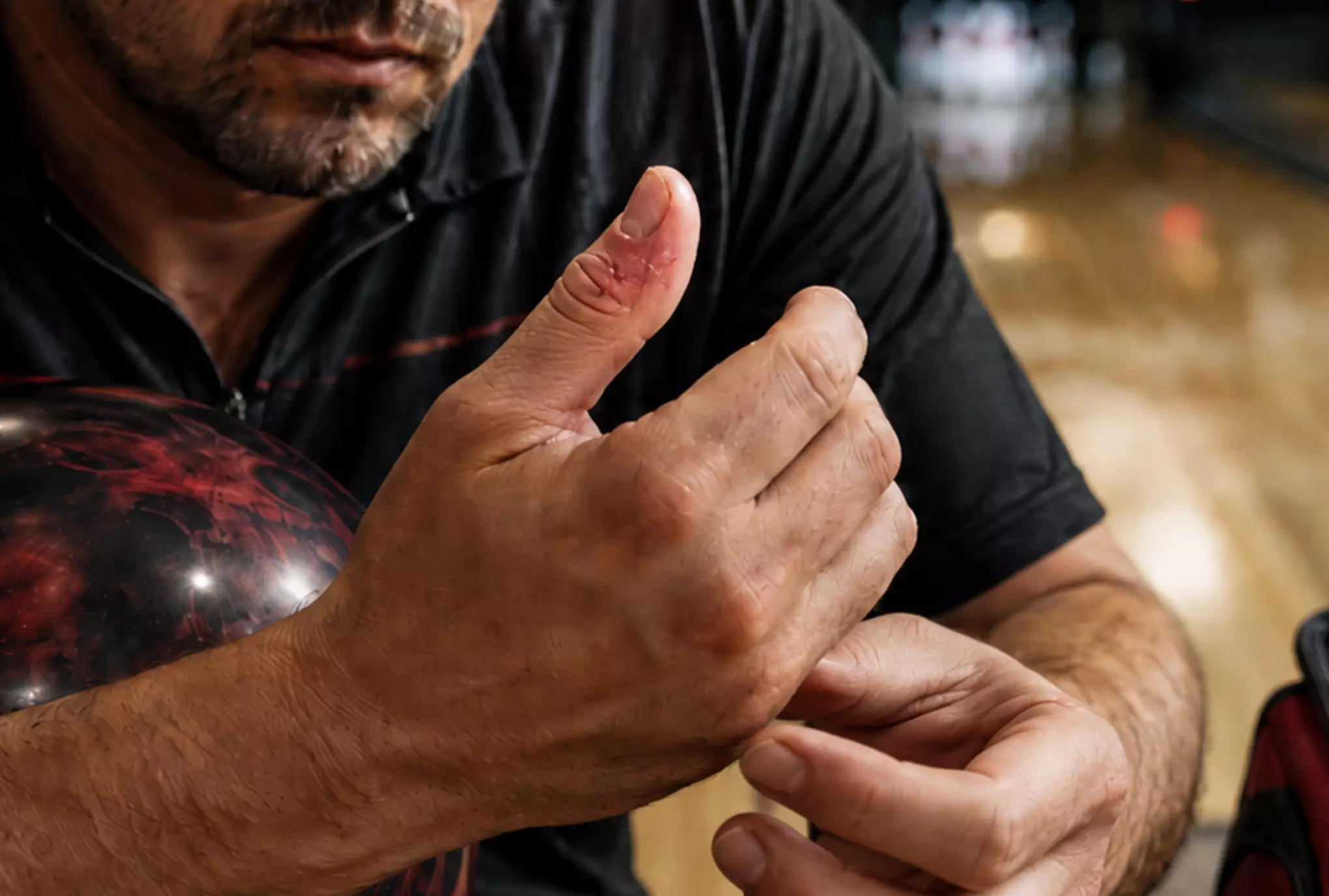
You can tell how common bowling skin rips are by opening almost any serious bowler’s accessory bag. Somewhere between the stuff there is usually a bottle of liquid bandage, a roll of protective tape or both.
Those products are there for a reason. One long tournament block, one release that catches the thumb or one finger insert that suddenly feels wrong can leave the hand burning—and sometimes bleeding.
Covering the damage may get you through the next game, but it does not explain why the same spot keeps opening. A recurring bowling thumb blister or finger rip is often a warning that friction, ball fit, swelling or grip pressure needs attention.
This guide explains what may be happening, how to protect the skin during competition and how to reduce the chance of facing the same painful problem next week.
Please note: This article offers general information for minor friction injuries. It does not replace advice from a doctor, pharmacist or other qualified healthcare professional.
The earlier you react, the easier the problem is to control. Use the condition of the skin—not the tournament situation—to decide what comes next.
Immediate Action Protocol
Use the condition of your skin—not the tournament situation—to decide your next step:
A small, flexible callus is not automatically a problem. It can be the skin’s normal response to repeated pressure.
Trouble begins when the callus becomes thick, dry, painful or cracked. Do not peel it. Regular moisturizing can help keep hardened skin flexible.
Why Does Bowling Tear the Skin?
The thumb and fingers do more than touch the ball. They support its weight, help control the swing and must leave the holes cleanly during the release. Every shot creates pressure, rubbing and shear—the sliding of one layer of tissue against another.
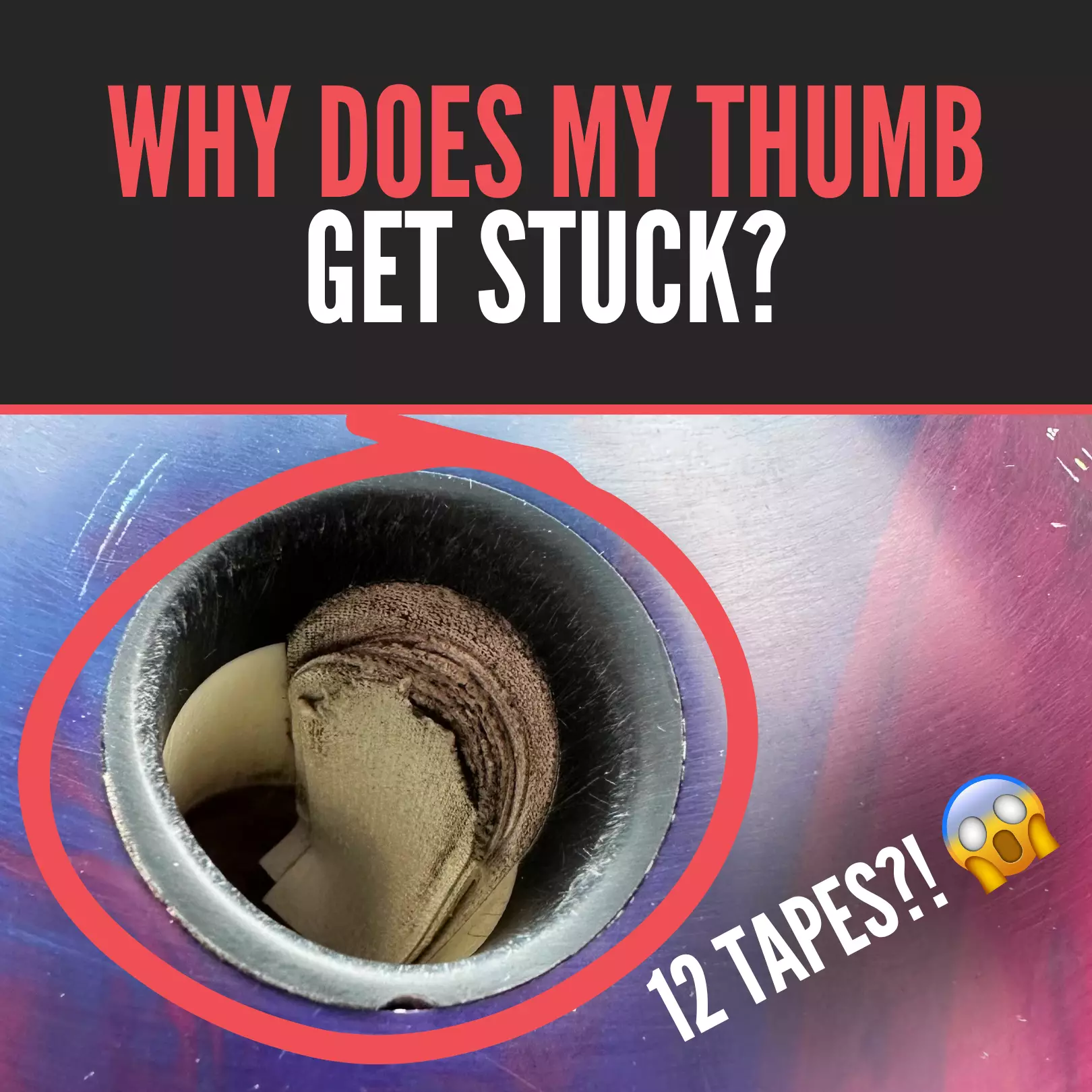
Raw skin on the thumb often comes from a thumb that drags on its way out of the hole. See why your thumb gets stuck in the ball for the fit and release fixes.
A skin rip is therefore not always caused by one terrible shot. It can develop after hundreds of small stresses hit the same point until the skin can no longer tolerate them.
Common contributors include:
- A thumbhole that is too tight, too loose or shaped poorly for the thumb
- A span or pitch that does not suit the bowler’s hand
- Sharp, damaged or badly sized finger inserts
- Squeezing the ball or bending the thumb inside the hole
- Swelling, sweat and humidity
- Cold weather, dry skin or stiff calluses
- A sudden increase in the number of games bowled
- Tape adhesive or another product irritating the skin
Conditions can also change during the day. A thumb may be smaller during the first game and swollen by the sixth. That is why a fit that felt perfect in practice can become uncomfortable later in a tournament.

Repeated Skin Rips Often Point to Ball Fit
If the same area tears again and again, the first question should not be which tape to buy. It should be whether the ball fits correctly.
A secure fit should allow the hand to stay relaxed. When the thumbhole is too loose, many bowlers squeeze because they fear dropping the ball. When it is too tight, the thumb may drag or hang. An unsuitable span can stretch the hand, while the wrong pitch can affect how the thumb and fingers leave the ball.
Thumb shape matters too. Most thumbs are not perfect circles. A round hole may pinch a wider, oval thumb at the sides while leaving too much space at the front and back. The ball can then feel tight and loose at the same time. The bowler squeezes to fill the empty space, slows the release and adds even more friction.
Take the problem ball to a qualified pro shop and show the exact location of the damage. Explain when the discomfort starts, whether the thumb swells and whether the ball hangs or slips. Those details are more useful than simply saying, “My thumb hurts.”
The Squeeze Cycle
Squeezing is not always just a mental mistake. It often begins because the ball does not feel secure.
The bowler grabs the ball to stop it from falling. The thumb bends, the ball leaves the hand later and the release becomes less predictable. After losing confidence in the release, the bowler squeezes even harder on the next shot. That is the squeeze cycle.
It can damage the skin and the scorecard at the same time. A ball that does not leave the hand freely may hang, fall off early or come off differently from shot to shot.
Tape can help, but different tape solves different problems:
- Tape inside the thumbhole changes the size and feel of the fit.
- Protective tape on the skin places a barrier between the hand and the ball.
- Slick tape may help the thumb slide out faster.
- Textured tape adds grip and may help some bowlers relax the hand.
Any tape placed on the thumb also makes the thumb larger. Recheck the fit before throwing another shot and remove tape from inside the ball if the hole has become too tight.
What the Location of the Damage May Tell You
The location of a rip cannot diagnose a fit problem by itself. However, it can give a pro shop operator a useful place to start.
Where Is Your Rip Located?
These are clues, not rules. Two bowlers can damage the same area for different reasons, so avoid sanding, drilling or changing finger hole based on a chart alone.
How to Prevent Bowling Skin Rips
Prevention begins before the skin opens. If one spot regularly becomes hot or sore, do not wait for blood before taking it seriously.
- Have the thumbhole shape, size, pitch, span and bevel checked.
- Replace finger inserts that have become hard, sharp or damaged.
- Use tape to fine-tune a changing fit instead of squeezing the ball.
- Protect a known friction point before a long block begins.
- Adjust the fit as the hand swells or shrinks during competition.
- Keep calluses smooth and flexible rather than thick and brittle.
- Moisturize after bowling, not immediately before play.
- Increase training volume gradually when returning from a break.
- Stop and investigate as soon as the skin starts burning.
Tournament bowlers may also benefit from an interchangeable thumb system. Using the same insert across several balls can make the feel more consistent, while carrying more than one size provides options as the thumb changes.
A pro shop may recommend a legal vent hole in some cases to reduce the vacuum effect in the thumbhole. This is not a home modification. Equipment rules can vary, and the work should be completed by a qualified professional.
What to Do When the Skin Is Already Ripped
Once the skin opens, you are caring for a wound—not merely adjusting release feel.
- Wash your hands.
- Stop any bleeding with gentle pressure from clean gauze or cloth.
- Rinse the wound with clean running water and clean around it with mild soap.
- Pat the area dry with clean gauze or a clean towel.
- Cover it with a sterile, non-stick dressing or suitable plaster.
- Do not resume bowling if the wound is still bleeding or cannot remain safely covered.
Do not pour rubbing alcohol, hydrogen peroxide or iodine into the wound. These products can irritate damaged tissue. If water is unavailable, use only a sterile wipe intended for broken skin.
Leave the roof of a closed or burst blister in place when possible. It helps protect the raw skin underneath. A hydrocolloid blister dressing can protect the area and reduce discomfort while it heals.
Liquid bandage may be suitable for some small, shallow splits after the wound has been cleaned, the bleeding has stopped and the skin is completely dry. Follow the product instructions. Do not pour it into a deep, dirty, infected or gaping wound, and do not use household glue as a substitute.
The Emergency Tournament Decision
Every competitive bowler understands the temptation to patch the hand and keep going. If the damage is minor, clean and no longer bleeding, a properly applied dressing or protective tape may reduce further friction. But the repair must not make the thumbhole dangerously tight.
Can You Keep Bowling?
Before stepping back onto the approach, confirm all 5 checkpoints:
- Bleeding has completely stopped
- Wound is clean and fully covered
- Dressing won't shift during release
- Thumb enters and exits without forcing
- Pain is not worsening
If the answer to any of those questions is no, stop. No cut line or league point is worth turning a small rip into a deeper injury.
Help the Skin Recover After Bowling
Keep minor wounds clean and covered while they heal. Change the dressing when it becomes wet or dirty.
For intact but dry skin, use a moisturizer after bowling and give the hand time away from friction. Avoid greasy creams immediately before play because they can change grip and release feel.
A Note About Zinc Cream
Zinc cream is one of my personal off-the-lanes options when the surrounding skin feels dry or irritated.
Zinc is involved in normal skin repair, but that does not prove an ordinary zinc cream will make a bowling rip heal faster. Research on topical zinc and wound healing is mixed and generally examines wounds very different from a minor bowling abrasion.
Treat zinc cream as a personal skin-care product, not a miracle cure. Follow its instructions, do not use it on an open wound unless the product is meant for that purpose, and ask a pharmacist if you are unsure.
Build a Bowling Skin-Care Kit
A compact kit can prevent desperate decisions in the middle of a tournament. Consider carrying:
The Skin-Care First-Aid Kit
Essential items for every tournament bag
What Not to Do
- Do not tear away the skin covering a blister.
- Do not seal dirt, sweat or lane residue inside a wound.
- Do not use household super glue on damaged skin.
- Do not force a swollen or taped thumb into a tight hole.
- Do not keep bowling through active or worsening bleeding.
- Do not cut calluses with a razor or other sharp tool.
- Do not keep adding tape while ignoring a recurring fit problem.
- Do not share towels when you have an open wound.
When Should You Stop Bowling and Get Help?
Stop bowling and seek medical advice if the wound is deep, gaping, contains debris, causes numbness or will not stop bleeding with direct pressure. You should also get help if you notice signs of infection, including:
- Spreading redness or discoloration
- Increasing warmth, swelling or pain
- Pus or other drainage
- Red streaks
- Fever or feeling unwell
- A wound that repeatedly opens or does not heal
Take extra care and seek advice earlier if you have diabetes, poor circulation or a condition or treatment that affects your immune system.
Sources and Further Reading
- American Academy of Dermatology: How to prevent and treat blisters
- American Academy of Dermatology: How to treat minor cuts
- American Academy of Dermatology: How to treat corns and calluses
- NHS: Blisters
- NHS: Cuts and grazes
- MedlinePlus: Liquid bandage guidance
- BMJ Nutrition, Prevention & Health: Review of zinc and wound healing
Your Weekly Bowling Digest
The latest bowling news, tips, and gear reviews—all wrapped up in a quick 3-minute read delivered straight to your inbox.