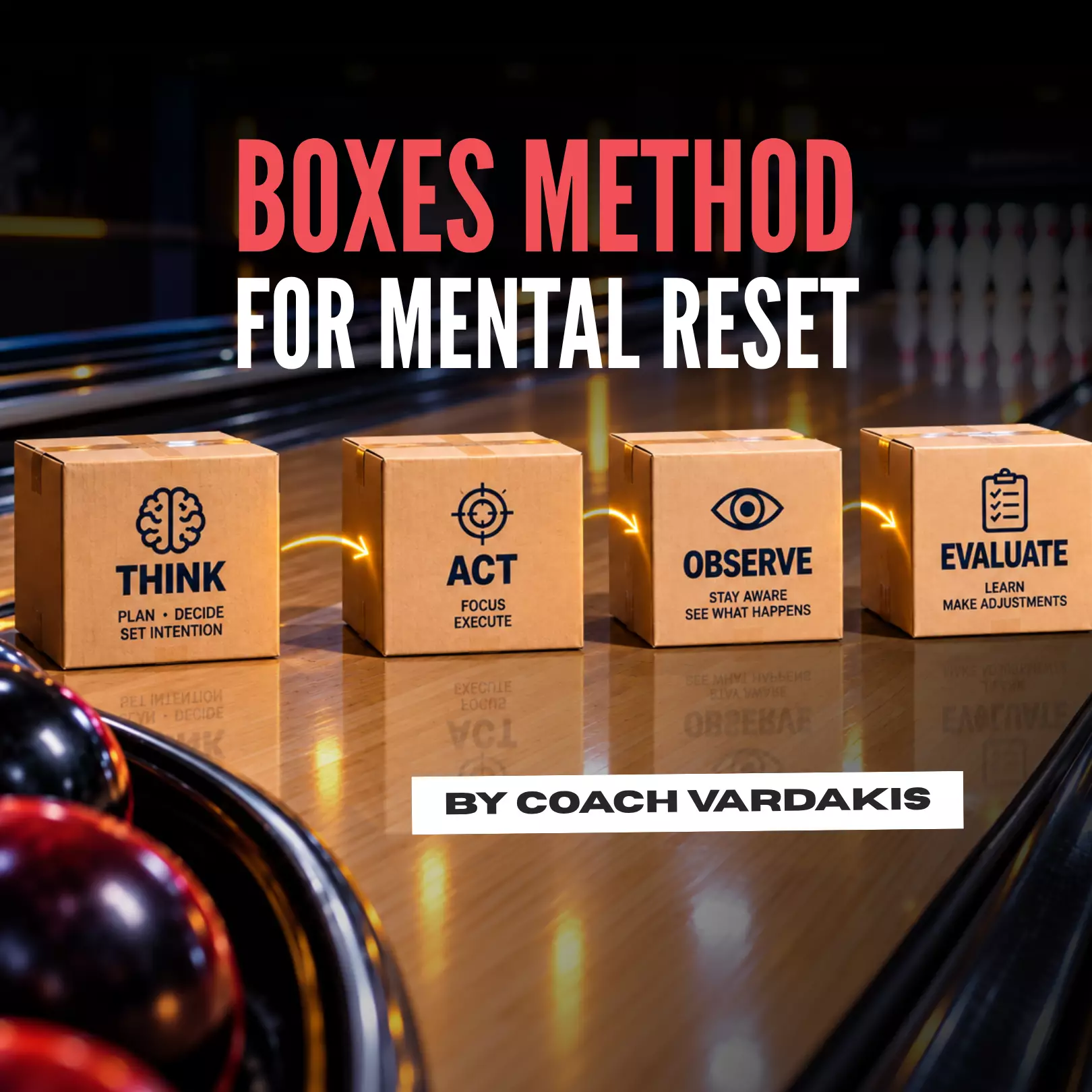
One of the most common technical mistakes I see in bowling athletes of all levels, from beginners to elite competitors, is not being late.
It is being too early.
Too early with the body.
Too early with the swing.
Too early with the release.
It usually comes from good intentions. The bowler wants control. They want to prepare. They want to “hit the pose.”
But bowling is not a sport of forced poses. It is a sport of timing, sequence, and flow.
When you try to get into the shot too early, you destroy the natural synchronization between body and swing. And that synchronization is what creates consistency.
This is not just a technical observation. It reflects my coaching philosophy, built through years of studying athletes, observing elite players, and refining what truly works.

The Shot Is a Sequence, Not a Position
One of the biggest misconceptions in bowling technique is the belief that you must actively place your body into correct positions.
In reality, the best shots are not forced. They are allowed to happen.
When you watch elite players like Jason Belmonte or EJ Tackett, you do not see them forcing positions early. Their motion builds progressively. The correct positions appear naturally at the correct moment.
Here is the principle I teach: Positions are the result of timing, not the goal of timing.
When you chase positions too early, you break the kinetic chain.
How to Read Oil Patterns and Build a Smart Line Play
Stop treating pattern sheets like abstract art. EBF Level 3 and USBC Bronze Coach Panagiotis Vardakis breaks down how to turn confusing oil graphs into a winning first-shot strategy.
- ✓ Use the "Guide of 31" to instantly find your exit point.
- ✓ Stop asking where to stand - build your line from the breakpoint backward.
- ✓ Match the line to your ball speed and rev rate, not your ego.
What “Too Early” Actually Looks Like
1. Bending Too Early
This is extremely common. You bend your upper body forward during the first or second step because you want to prepare for the release. The result is loss of balance, reduced leverage, restricted swing freedom, muscle tension, and a forced release.
Your body should lower gradually through knee flex and step progression. It should not drop early because you are trying to “get ready.” Early bending is often a response to fear of missing the shot.
2. Starting the Swing Too Early
Another major issue is forcing the pushaway too early or too aggressively.
Instead of allowing the swing to fall naturally with gravity at the correct timing point, you try to start it. This creates early timing, loss of synchronization, muscling the ball, and reduced power transfer. The swing should not move independently. It should respond to the body’s motion.
The swing is a reaction, not an isolated action.
3. Getting Under the Ball Too Early
Many athletes try to set their hand under the ball from the top of the swing. This is one of the most damaging habits I see.
The correct hand position at release is not something you hold from the beginning. It develops naturally as the swing approaches the release zone. When you try to hold that position early, you create tension in the forearm, wrist, shoulder, and fingers.
Tension destroys consistency. Relaxation builds repeatability.
4. Releasing Too Early Mentally
Sometimes the mistake is not physical. It is mental.
You jump ahead to the release before your body arrives there. You think about rotation. You think about target. You think about the result.
Great bowling happens in the present moment. Anticipation creates tension.
Why This Happens
In my experience, making shots too early usually comes from four causes:
- Trying too hard. You want the perfect shot, so you try to control every detail. Ironically, more control often creates less control.
- Lack of trust in timing. You do not trust that body and swing will arrive together naturally, so you force the synchronization.
- Misunderstanding technique. Many players see photos of correct positions and try to copy them directly instead of recreating the motion that produces them. Educational systems provided by the USBC or EBF consistently emphasize timing, balance, and rhythm, not forced positioning.
- Anxiety and pressure. Under stress, athletes rush internally, even if their feet move at the same speed. That internal rush creates early tension.
The Real Goal: Let the Shot Build
My philosophy is simple. The shot should build progressively from start to finish. It should not jump to the end.
Let the Shot Build
- ✓ Start relaxed
- ✓ Initiate a smooth pushaway with timing
- ✓ Allow the swing to fall naturally
- ✓ Let the body lower progressively
- ✓ Arrive at release naturally
- ✓ Let the ball come off the hand instead of forcing it
The release is the result of everything before it. It is not something you create independently.
Feeling “Late” Might Mean You Are On Time
Many athletes need to feel slightly late in order to be correctly timed. Because most players are early, what feels late is often correct timing.
Correct timing feels smooth rather than rushed. The body arrives first. The swing follows. The release happens effortlessly. No forced acceleration is required. Effortless shots are almost always the most repeatable.
A Simple Test
After a shot, ask yourself:
Did I make the shot happen, or did I let it happen?
If it felt forced, you were probably early.
If it felt natural and simple, timing was likely correct.
✗ If it felt forced, you were probably early.
✓ If it felt natural and simple, timing was likely correct.
A Drill That Restores Sequence
One of the best drills I use is the short and slow motion approach.
Perform the approach at 50 percent speed and from 50 percent distance. This removes the ability to rush. It teaches patience, timing awareness, and relaxation. You begin to feel how the swing and body synchronize naturally.
Then gradually increase speed and distance while maintaining the same sequence.
My Core Philosophy
I do not teach athletes to force positions. I teach them to trust sequence.
I do not teach them to control the release. I teach them to control the process that leads to the release.
Consistency is not built by forcing the end. It is built by respecting the order of movement.
Final Message
If you recognize yourself in this mistake, do not worry. It is extremely common and completely fixable.
Start with one focus: patience.
Let the shot develop. Do not rush into it. Do not try to control it too early. Allow your body and swing to work together.
Great bowling does not happen when you try harder. It happens when you trust the sequence.


About the Author Panagiotis Vardakis
Panagiotis Vardakis is an experienced bowling coach and educator whose
involvement in the sport spans more than two decades. His work combines technical coaching, long-term player development, and
equipment knowledge, supported by his experience as a professional coach and
pro shop specialist.
Throughout his coaching career, he has guided athletes to national and
international success across European competitions, coaching players from
Greece, the United Kingdom, Malta, Slovakia, Cyprus, and Bulgaria.
A significant part of his work is dedicated to youth development, where he focuses on structured training environments that support both athletic progress and personal growth.
Vardakis is currently involved in youth-oriented projects through BYC in Slovakia and continues to work with athletes, clubs, and organizations through coaching programs, clinics, and educational initiatives across Europe.
For coaching-related questions or inquiries, Coach Vardakis can be contacted via email at p.vardakis@gmail.com or visit www.byc.sk