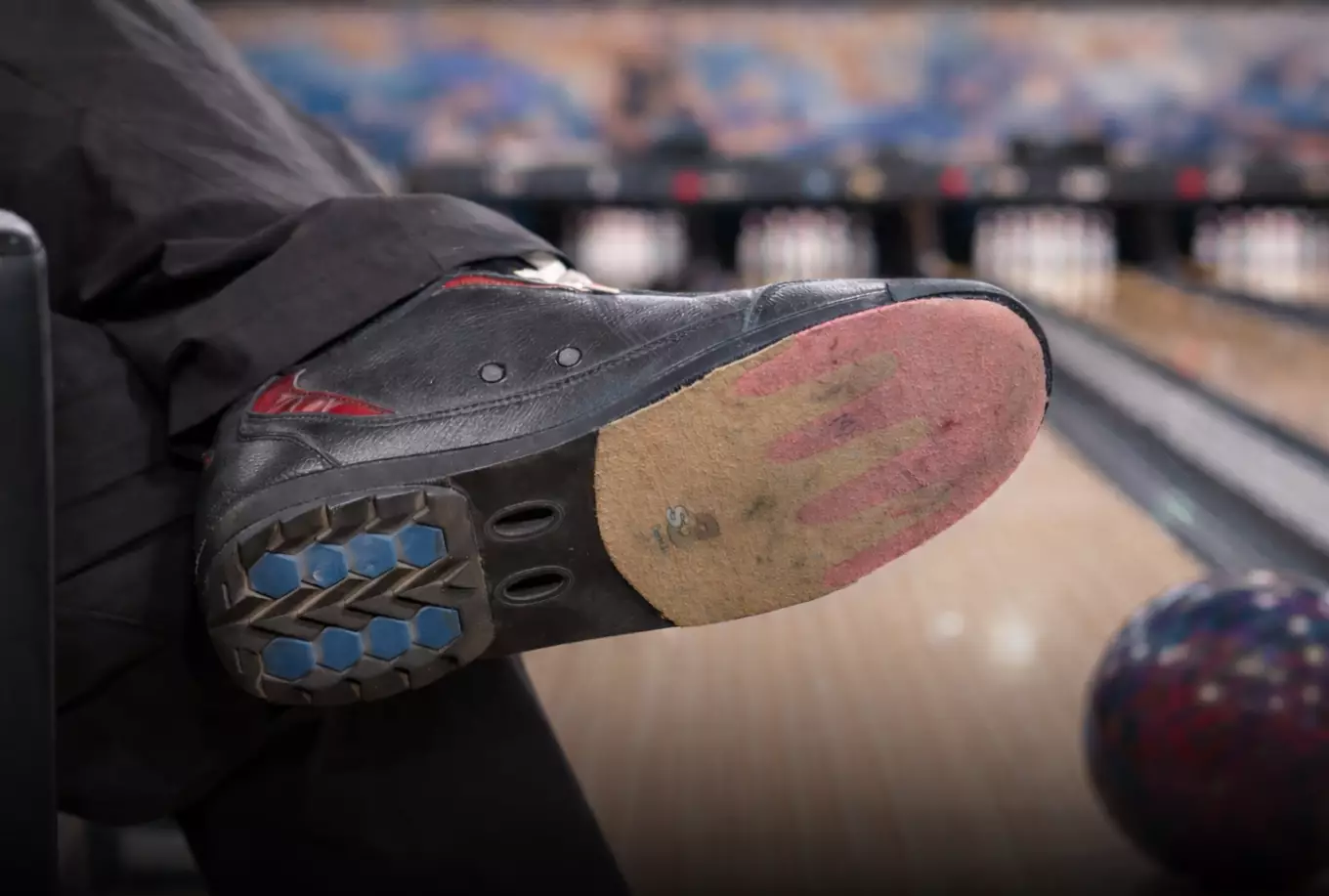
You step up to the foul line expecting a smooth glide, but instead, your foot feels like it just stepped in wet cement or takes off like you are wearing banana peels instead of bowling shoes.
Let’s face it, there are few things more frustrating in bowling than an unpredictable approach.
In this guide, we will break down exactly what makes an approach sticky or slippery, how to adjust your footwear to fix it safely, and why old-school hacks like baby powder will only get you in trouble.

Why a Consistent Bowling Approach Matters
If the approach is too slippery, even your best shot might not count if you step on the foul line. If it is too sticky, your sliding foot can stop too soon and throw off your timing, balance, and target. In the worst cases, it can even lead to a serious injury.
A consistent slide is the foundation of good performance. If you cannot trust your feet, you cannot trust anything else.
What Causes a Sticky Bowling Approach?
A sticky bowling approach happens when there is too much friction between your shoe and the floor. This abrupt stop kills your momentum and is tough on your knees.
There are various reasons why a sticky bowling approach happens. Here, we will cover the most common ones.
High Humidity
Humidity is the top enemy of a good slide. When the humidity percentage inside a bowling center rises above 50 percent, moisture settles onto approach panels, making them feel tacky. This is very common in the summer if the air conditioner is off or during rainy weather.
Spills and Dirty Shoes
Not every bowling alley is strict with its rules, so many casual visitors walk into the restroom or the bar area without shoe covers. Most of the time, they step into something.
Even a single drop of water - or something nastier - on the bottom of your slide sole can cause you to stop dead at the foul line.
Center Maintenance Issues
If a center does not dust its approaches, dirt mixes with humidity and creates that dark residue on your sliding sole that is so hard to remove.

What Causes a Slippery Bowling Approach?
A slippery bowling approach lacks friction. Instead of a controlled stop, your foot keeps sliding.
Dust and Cold Weather
In the winter, heating systems dry out the air inside the bowling center. Low humidity combined with everyday dust buildup creates a slick surface.
The Dangers of Slide Powder
Often, a slippery approach is not the bowling center’s fault. It is caused by the bowlers who bowled there before you.
When bowlers use slide powders, they leave powder particles on the approach. The good news is that they are easy to remove with a clean cloth.
How to Fix Bowling Approach Problems
You cannot control the weather or the bowling center’s air conditioning, unless you know how to ask nicely, but you can control your equipment.
Use a Wire Shoe Brush
A wire shoe brush is a mandatory accessory for any bowler. It allows you to change the texture of your slide sole on the fly and keeps your soles clean.
Here is a trick many bowlers do not know. You can change how much your shoe slides depending on how you brush the sole.
If you are sticking: Brush your sole firmly from front to back, from toe to heel. This raises the fibers of the material and creates more slide.
If you are slipping: Brush your sole lightly from side to side. This creates slightly more friction.
Wear Shoe Covers
Never leave the bowler’s area without putting on shoe covers, even if you are just running to grab a ball you left in a locker or heading for a quick stop in the restroom. This simple habit helps ensure you never track water, grease, or dirt onto the approach.
Upgrade to Interchangeable Soles
The ultimate long-term fix is buying performance bowling shoes with interchangeable soles and heels.
These shoes use a hook-and-loop system, like Velcro, so you can remove your slide pad and replace it with one that matches the current conditions.
Understanding Interchangeable Soles and Heels
Major bowling shoe brands like Dexter, KR Strikeforce, and 3G use a numbering system for their soles and heels. Once you learn the scale, adjusting your slide takes seconds.
- Low numbers (2 - 4): Provide the most grip. Use these on dry, slick winter days or very dusty approaches.
- Medium numbers (5 - 8): The standard factory setup. Great for normal conditions.
- High numbers (9 - 13): Provide the most slide. Use these on humid, sticky summer days or tacky synthetic lanes.
If your slide does not feel the way it should, simply peel off your standard sole and switch to a slicker or tackier one.
Top Picks: The Best Bowling Shoes for Men & Women
A proper slide and stable foundation are the most important investments you can make for your game. We have tested and rounded up the best options on the market right now.
The Truth About Slide Powder and USBC Rule 12
Walk into any bowling center and you might see someone using baby powder, Easy Slide, or another sliding product on the bottom of their shoe.
It is an effective way to create more slide. But it some ways it might become illegal, and we do not recommend relying on this. And here is why.
Under USBC Rule 12, bowlers are not allowed to take away the possibility of normal conditions for other players. This includes applying any foreign substance directly to the approach, using sliding products on shoes in a way that transfers residue onto the approach, or using soft rubber soles or heels that rub off on the floor.
Products like Easy Slide, talcum powder, pumice, soap stone, or rosin are not automatically illegal. The issue starts when they are used improperly and leave residue behind. And this happens often.
If that residue changes the normal sliding conditions for other bowlers, the bowler must stop using the product. And if another player complains that the approach has become too slippery, a league officer can step in and require the bowler to discontinue its use.
That is why these products are always risky. Even if the person using them feels they applied them correctly, all it takes is to hear one complain from another bowler and all your sliding strategy goes to the trash.
A much safer solution is to use a wire shoe brush, interchangeable soles and heels, or a slide sock. These options help you adjust your slide without changing the approach conditions for other players.
Your Weekly Bowling Digest
The latest bowling news, tips, and gear reviews—all wrapped up in a quick 3-minute read delivered straight to your inbox.
BowlingLife Expert Viewpoint
Every bowler loves to blame the approach when they stick or slip, but the truth is that approach conditions are a shared responsibility.
Yes, bowling centers need to manage their humidity and dust their floors. But as bowlers, we also have to take ownership of our footwear.
Using slide powder on your shoes is an outdated fix that puts other bowlers at physical risk. Modern bowling technology has already solved this problem.
Invest in a wire shoe brush, buy a pair of shoes with interchangeable soles, and learn the numbering system. When you carry your own friction adjustments in your bag, you give yourself the best chance to create a consistent and safe slide.