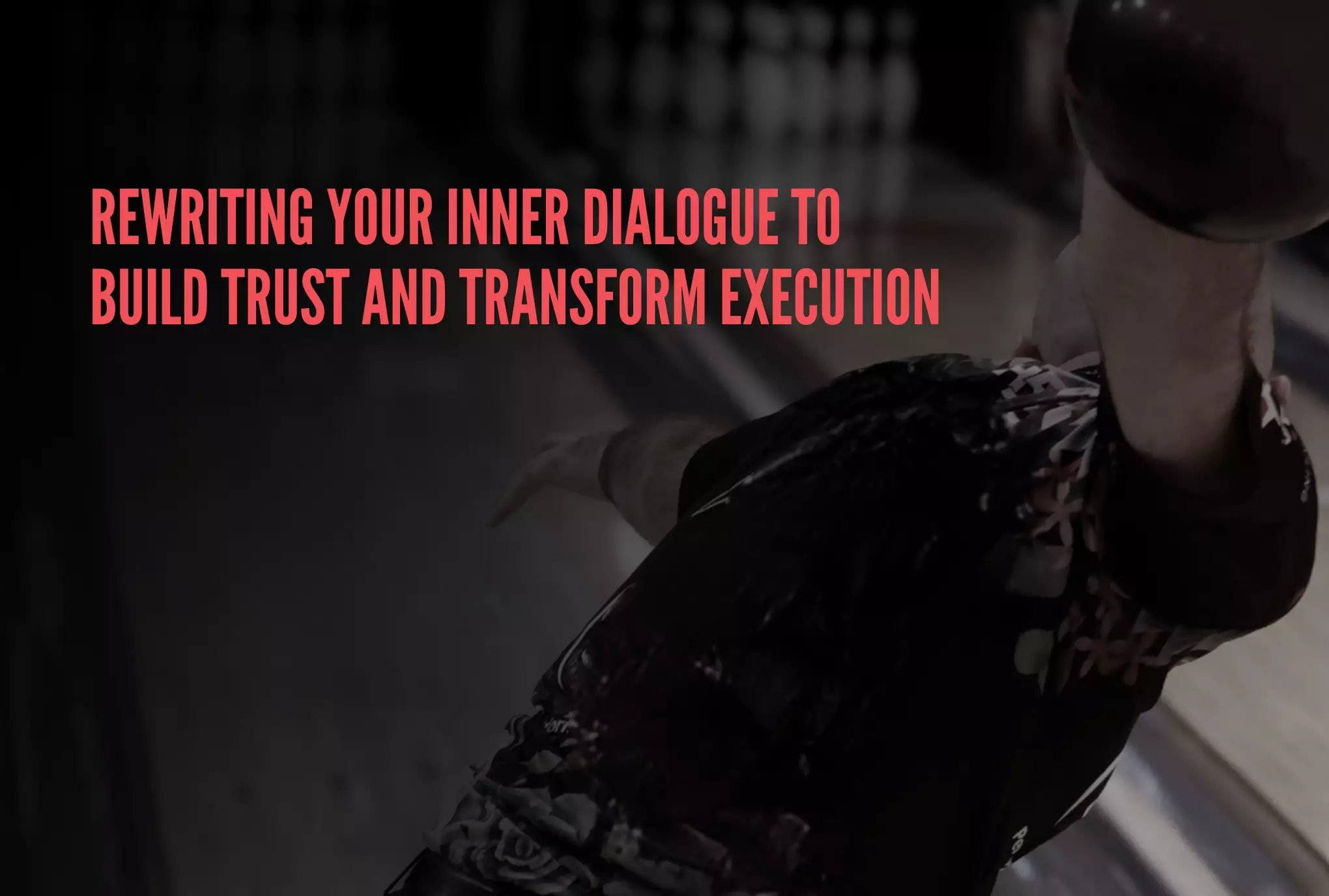
Outside, the summer heat was unbearable. Walking into the bowling center felt like stepping into another world.
I calmly sat down in a chair to wait for my coaching sessions to begin. There were only two or three players on the lanes, but one of them, practicing alone, caught my attention.
Not because I wanted to watch him, but because I couldn’t help overhearing his self-talk after every shot. It looked like he was trying to coach himself, so I found myself observing a very unsuccessful coach working with an even more unsuccessful player - all in one person. They simply couldn’t find common ground.
The player I was watching was literally bullying himself after every shot. Even the good ones were dismissed as “just a coincidence” and nothing seemed good enough for him to give himself even a small pat on the back. After two hours, he was sweating, red-faced and left the bowling center in a very angry mood.
This wasn’t the first player I’ve seen talking to himself this way. We all know players like this - they’re everywhere around us. But this was probably the worst example I had observed over a long period of time.
Self-talk is a huge part of my coaching because it can completely change a player’s performance. But it doesn’t affect only the player standing on the approach. Healthy self-talk creates a completely different emotional world off the lanes as well.
Suddenly, your relationship with yourself begins to change. Trust and confidence grow and a new, very close friendship with yourself begins.
The moment you stop fighting yourself and start doing the exact opposite - supporting yourself and cheering yourself on, becoming your own biggest fan - even the situations that usually feel like disasters become opportunities to learn. They become valuable experiences that help you avoid the same mistakes in the future because you and your mind are finally working together instead of against each other.
But let’s be honest. Writing it down on paper sounds easy. Replacing a negative inner voice with a supportive one is one of the hardest things you can do.
It doesn’t happen overnight. It’s a process - a long process - but in the end, it brings one of the greatest rewards.

How Do You Start?
If you’ve never paid attention to self-talk before, don’t start with yourself. Start by observing others.
Watch how players behave during competition - whether it’s bowling, tennis, golf or any other individual sport. That’s where self-talk is often the most visible because athletes have to rely entirely on themselves.
Have you ever seen a bowler throw a shot, miss the strike and still clap for themselves? That’s pure inner support.
Or a tennis player who turns away after losing a point and quietly talks to themselves before the next serve? What do you think they’re saying? They’re protecting their inner environment, keeping it positive so they can fully focus on the next point instead of wasting energy on the previous one.
Once you begin noticing these moments in others, it becomes much easier to recognise your own self-talk.
That’s where the real work begins.
There is no universal formula that works for everybody. As I mentioned before, the goal is to develop a healthy relationship with your mind. Think about your relationships in everyday life.
You don’t communicate with every friend in the same way because every relationship is different. The same applies to your mind. You have to find a way of speaking to yourself that works for you - one that helps quiet the negative thoughts instead of feeding them.
This relationship takes time to build. It requires patience, consistency and a willingness to practice, even when it feels uncomfortable. Your goal isn’t to silence your mind completely. Negative thoughts will always appear from time to time. Your goal is to become the stronger voice in that conversation.

Self-Talk Examples
Focus / Process: “One shot at a time”, “Focus on execution”, “Trust your game”
Reset / Recovery: “Reset”, “Next one”, “Let it go”
Confidence / Energy: “You’ve got this”, “Stay strong”, “Be confident”
And just like in every relationship, there will be challenges. Let’s not pretend that even the best friends in the world never disagree. The important part is not the conflict itself - it’s how they find their way back to each other.
The same applies to you and your mind. The key is to find your own reset button after a tense moment knocks you out of your comfort zone or breaks your concentration. Maybe it’s a small clap after a shot. Maybe it’s a few encouraging words to yourself, a smile or even a quick laugh. Or perhaps you need a short walk or a brief conversation with your coach to clear your head and start fresh. Observe yourself and discover what works best for you.

Building a Routine Plan
Another important question is: How can you reduce the chances of negative thoughts taking over?
One of the most effective tools is having a clear plan for your game and trusting that plan. Build a routine that you follow before, between and after every shot. A routine gives your mind a job to do, leaving less room for doubt, frustration and unnecessary overthinking.
Once you create your routine, you have to practice it - first during training sessions and then during competition.
At the beginning, you may be able to follow it for only a few frames. Gradually, those few frames become a full game and eventually the entire tournament. If you stay patient and consistent, your routine will become second nature and negative thoughts will have far fewer opportunities to take control because your mind will already be focused on the next step of your process.
We’ll talk more in detail about routines and building a game plan in another article. For now, let’s keep it simple and start with one small habit.
Why Is It So Hard to Lose?
By Lenka Sulkova
Losing is an inevitable part of sports, yet it remains one of the toughest emotional hurdles for bowlers. Explore the psychology of handling defeat, reframing setbacks, and turning tough losses into personal growth.
Tonight, before you go to bed, think of one positive thing from your day - whether it happened during practice, competition or simply in everyday life. Write it down in a diary or on a piece of paper and leave it somewhere you’ll see it in the morning.
When you wake up, read it out loud. Allow yourself to feel proud of yesterday’s achievement, no matter how small it may seem. Let it remind you that you are moving forward. That one morning smile can become the first step toward building a healthier relationship with your mind and perhaps the first seed of your future success.
Remember, you are the one person who will always be with yourself - during every practice session, every tournament, every success and every disappointment. Make sure that voice is helping you grow, not holding you back. Become the stronger voice in that conversation, because every great performance starts long before the ball leaves your hand.
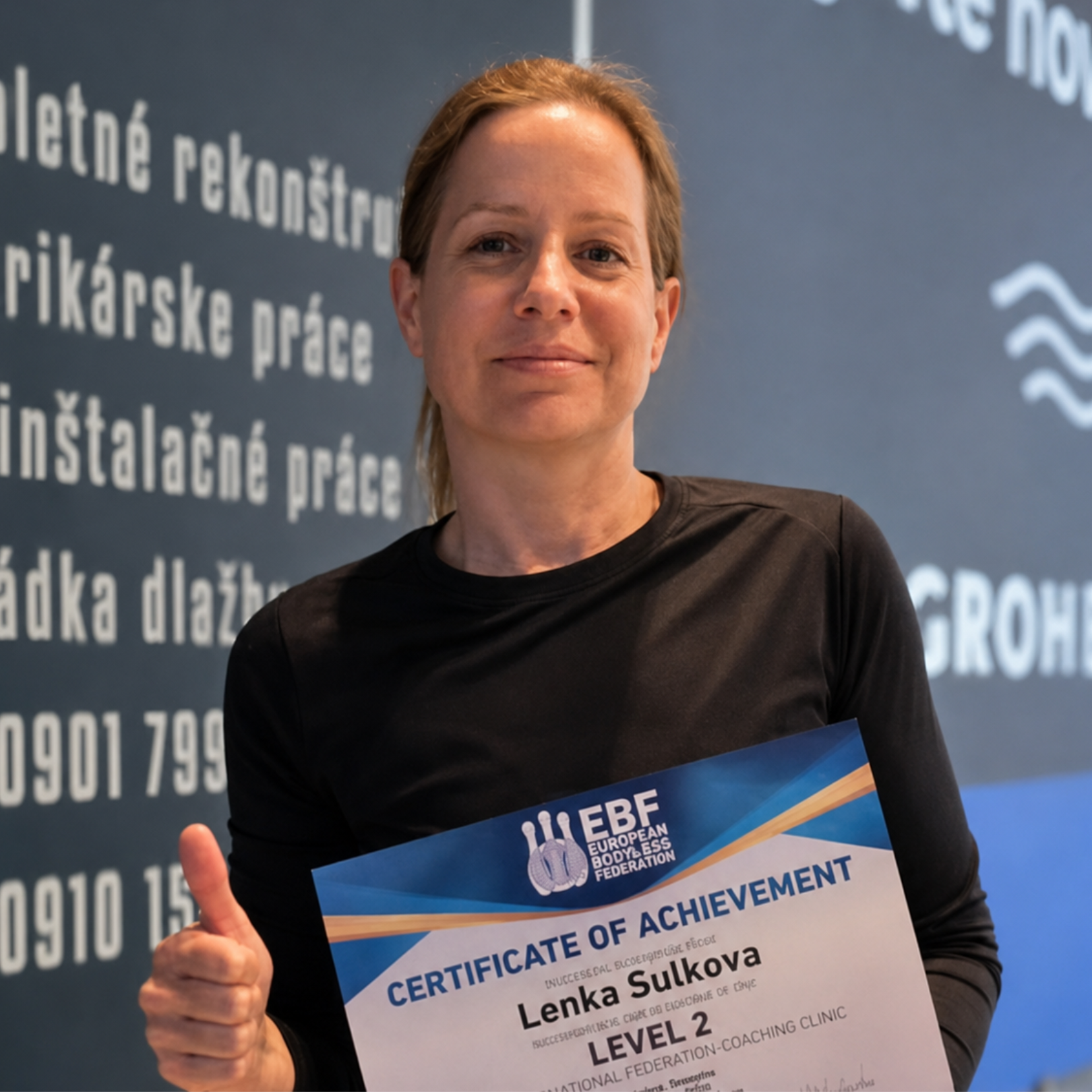
About the Author Lenka Sulkova
Lenka Sulkova is an active national team athlete from Bratislava,
Slovakia.
She is an EBF Level 2 trained coach, co-founder and coach of the youth
bowling club BYC, and a youth tournament manager.
Her background also includes national and international tournament
experience, along with several courses in sports psychology and pedagogy.