Written by:Panagiotis Vardakis, EBF Level 3, USBC Bronze, and National Coaching School Cat C coach
Every week, I receive many bowling videos for analysis. They come from athletes training on their own, young bowlers, and competitive amateurs looking for feedback. And in most cases, my first reaction has nothing to do with footwork or release. It has to do with the camera.
Today, bowlers can easily upload videos and get advice from coaches all
around the world. The problem is that many of those videos are not filmed with
analysis in mind, making them difficult to evaluate. This often slows the
whole progress, as the player must go back to the bowling center to re-film
his bowling before any coaching can start.
When a video clearly
shows what matters, video coaching becomes a powerful and reliable way to
improve performance.
Over the years, I have learned that just a few simple and consistent camera setups provide nearly all the information needed to help an athlete improve.
In this article, I explain the camera angles I prefer, why I ask for them, and what I look for in each view as a coach.

Camera Straight From Behind – My Starting Point
This is usually the first angle I ask for.
How I Like It Set
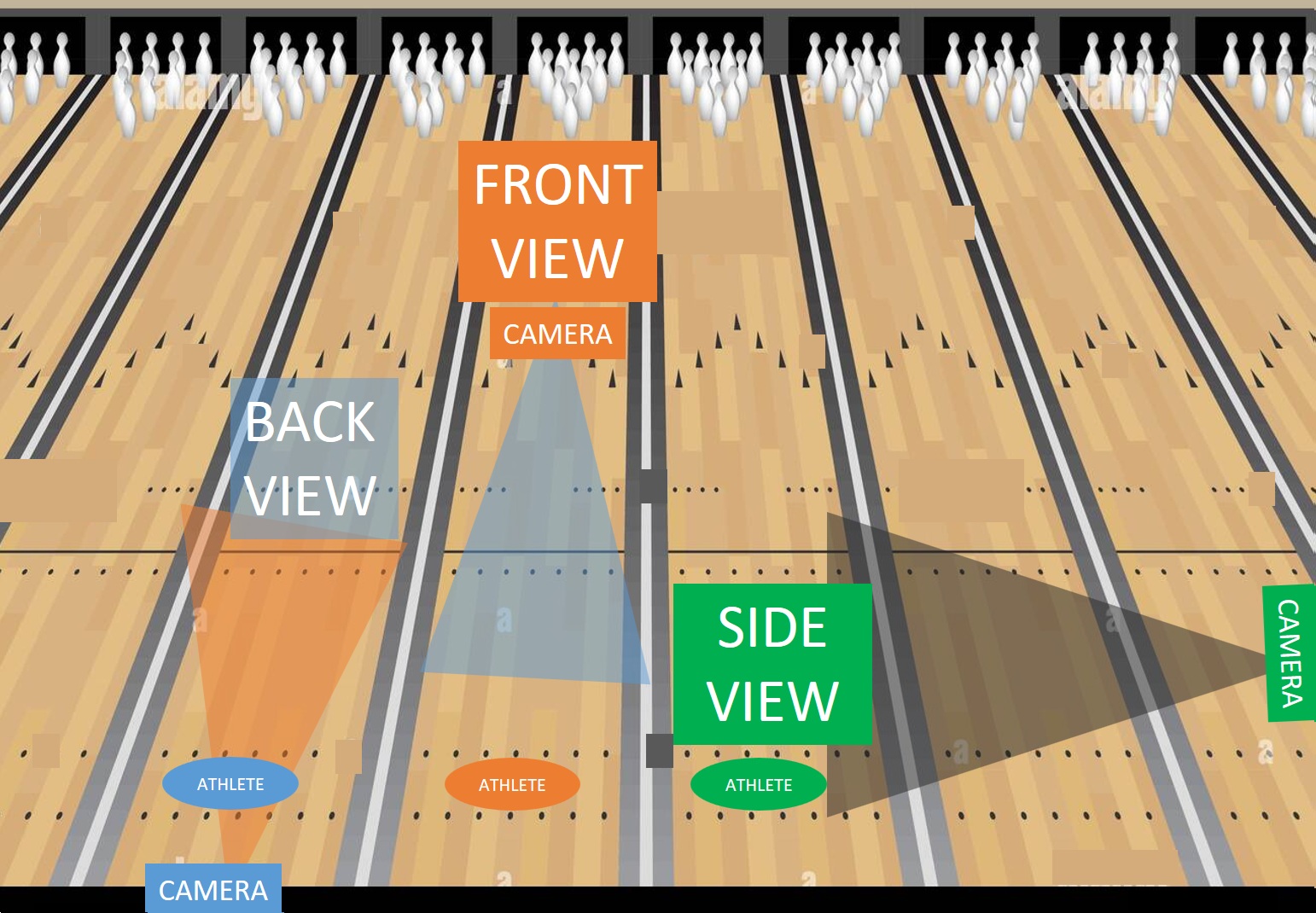
The camera should be placed directly behind the bowler, centered with the body, and completely stable. The full approach, release, and ball path must be visible, with no zoom. The entire body should be shown from the stance through the finish.
Why I Ask for This Angle
From behind, I can clearly see how the body and the swing work together. This angle gives me a strong overall picture of coordination and movement.
What I Look For
I focus on shoulder alignment during the approach, spine tilt and posture consistency, and whether the swing stays under control or wraps around the body. I also evaluate timing between footwork and swing, the release point relative to the ankle, and whether missed shots come from body position rather than targeting.
Many bowlers believe they miss because of aim. Very often, the miss actually begins two steps earlier.
Camera Straight in Front – What the Release Tells Me
This angle gives me information I cannot get from behind, and it is often my favorite one.
How I Ask Athletes to Set It
The camera should be placed near the arrows, in the middle of the lane,
facing the bowler.
It must remain stable and level while
recording the approach, release, and follow-through.
Bowling
center rules and safety should always be respected when filming from this
position.
Why I Ask for This Angle
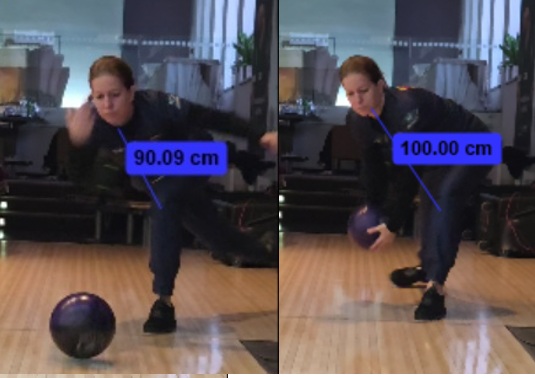
From the front, the release becomes very clear. Small details that remain hidden from other angles are easy to identify.
What I Look For
I observe the arm swing path, whether it is free or forced, elbow position at the bottom of the swing, wrist stability, and hand position. I also look at head movement, eye control, balance at the foul line, and consistency of release height.
From this angle, I can quickly tell if an athlete is fighting the swing or allowing it to work naturally.
Full Approach – The Most Important Angle
Landscape video of the full approach is the angle I request most often, and the one athletes misunderstand the most.
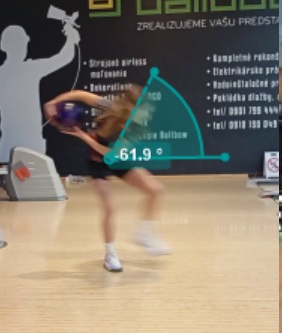
How Coaches Want It Filmed
The video must be filmed in landscape format.
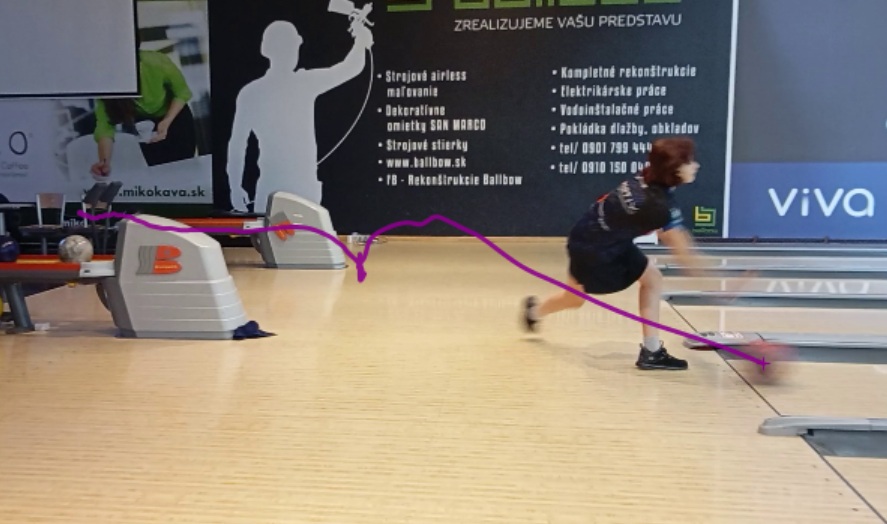
The camera should
be placed about two to two and a half lanes away, positioned roughly in the
middle of the approach.
Once the recording starts, the camera must
remain completely still.
There should be no panning, no zooming,
and no movement during the approach.
Why This Angle Is So Important
This view shows tempo, timing, and repeatability, which are the foundations of consistency.
What Coach Look For
I evaluate footwork rhythm and cadence, tempo control, and the relationship
between steps and swing.
I also look at starting position
consistency, whether the athlete rushes or accelerates smoothly, stability
in the pre-shot routine, and balance at the foul line.
If the camera moves, reference points are lost. Without reference points, real analysis is not possible.
Common Filming Issues Athletes Need to Fix
Very often, I ask athletes to re-film their videos because the camera follows the shot, the video is filmed too close, or zoom is used. Other common issues include cutting the video before the finish or sending only strike shots.
Missed shots are extremely valuable. They often explain areas for improvement much better than perfect ones.
Video Checklist (Save These For Later)
General Rules
- Full body visible at all times
- Camera never moves
- No zoom
- Full shot recorded from start to finish
- Multiple shots included, not just strikes
Behind the Bowler
- Camera centered with the body
- Stable and straight
- Full approach included
- Ball path clearly visible
Front View Checklist
- Camera facing the bowler
- Positioned near the arrows
- Stable and level
- Release clearly visible
Full Approach Checklist
- Landscape (horizontal) video
- Camera placed 2 to 2.5 lanes away
- Fixed camera position (no movement, no zoom)
- Rhythm and timing clearly visible
- Full body shown from start through follow-through
Video coaching helps athletes improve faster only when filming is done with intention.
A good video allows coach to provide more precise feedback, identify issues earlier, and design more effective training programs. It also helps athletes understand not only the outcome of a shot, but their own movement.
A good shot does not make a good video - it shows the truth of the motion.


About the Author Panagiotis Vardakis
Panagiotis Vardakis is an experienced bowling coach and educator whose
involvement in the sport spans more than two decades. His work combines technical coaching, long-term player development, and
equipment knowledge, supported by his experience as a professional coach and
pro shop specialist.
Throughout his coaching career, he has guided athletes to national and
international success across European competitions, coaching players from
Greece, the United Kingdom, Malta, Slovakia, Cyprus, and Bulgaria.
A significant part of his work is dedicated to youth development, where he focuses on structured training environments that support both athletic progress and personal growth.
Vardakis is currently involved in youth-oriented projects through BYC in Slovakia and continues to work with athletes, clubs, and organizations through coaching programs, clinics, and educational initiatives across Europe.
For coaching-related questions or inquiries, Coach Vardakis can be contacted via email at p.vardakis@gmail.com or visit www.byc.sk