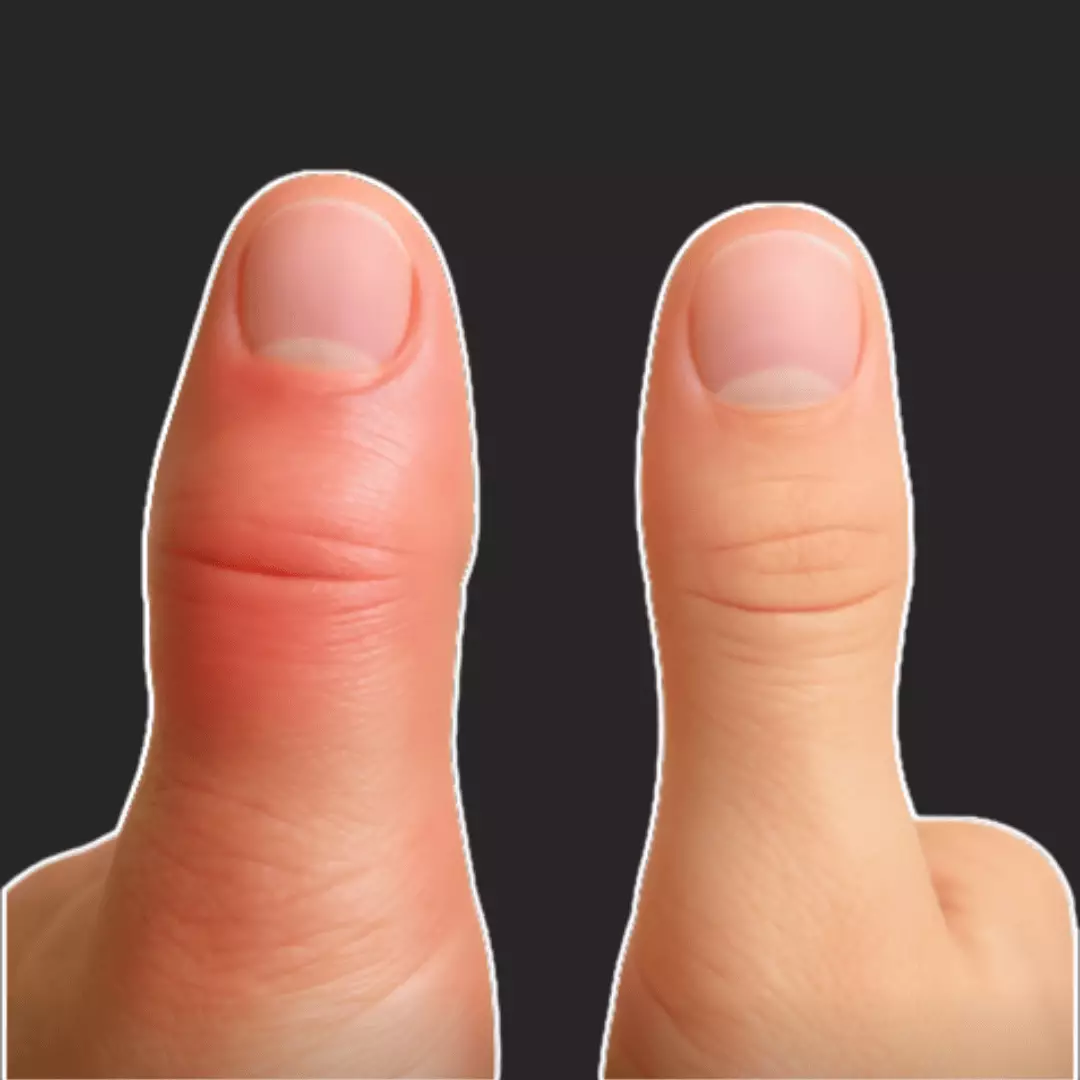
Sometimes you can spot a bowler before they even pick up a ball. A thicker thumb, a bigger forearm or one sleeve that fits a little tighter can even give away which hand they bowl with.
You don't have to look far. If you bowl, the thumb, forearm and bicep of your bowling hand are probably visibly bigger than on the other side. At least mine are.
Bowling asks the two sides of your body to do very different jobs. You swing the ball on the same side and slide on the same foot, shot after shot. Repeat that for years and some muscles can develop more on one side than the other.
But how much does that muscle imbalance matter? Could it explain why one side aches after league night or raise your risk of injury over time? We took a look at what the research says and when those differences deserve your attention.
Where bowling can build an imbalance
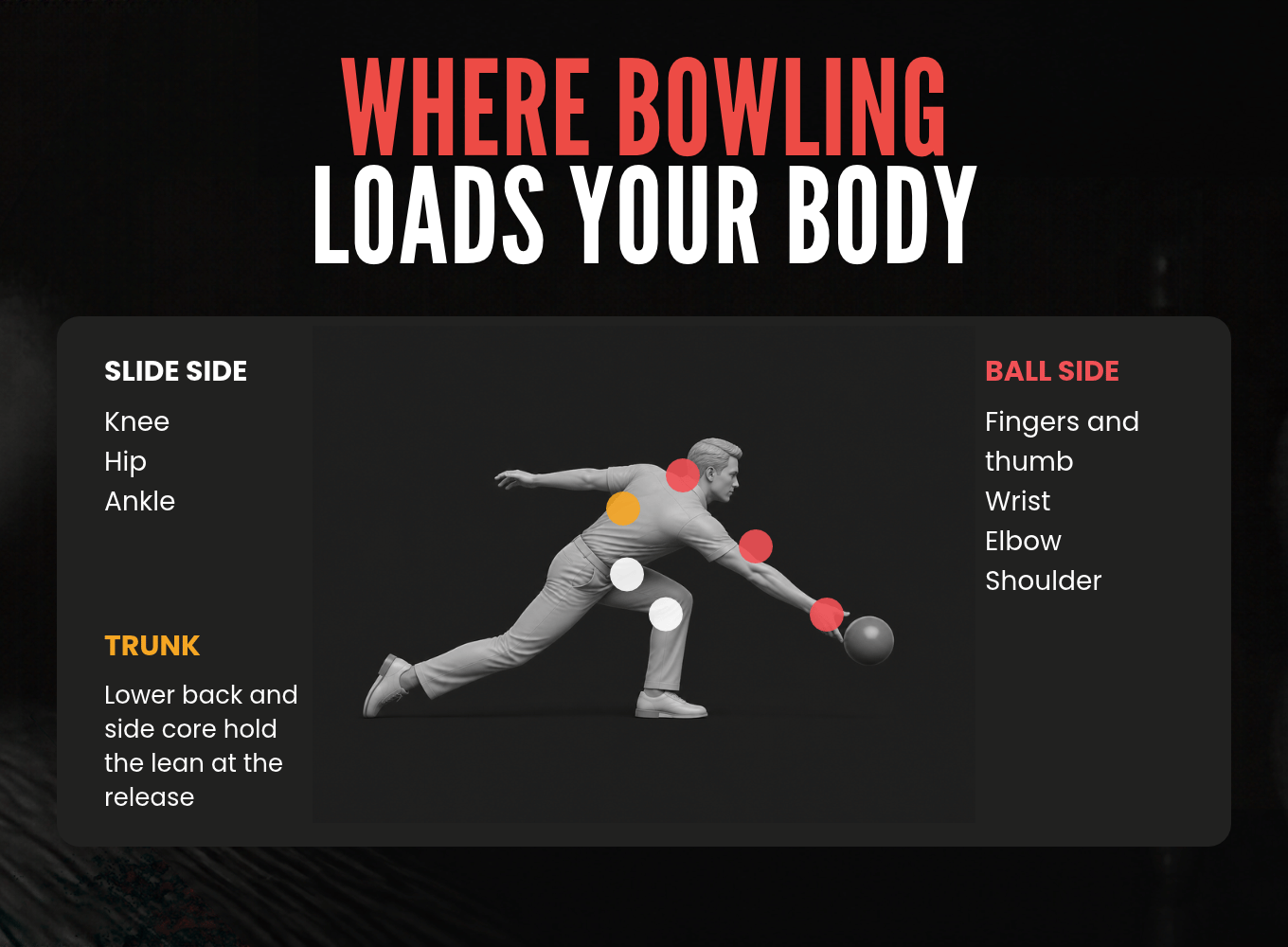
Watch a right-hander from behind. It’s easy to follow the right arm through the swing and miss what the left leg is doing. On every delivery, that knee bends into the slide while the hip helps steady the bowler. Meanwhile, the trunk leans toward the ball and the trailing leg helps hold the finish. Reverse the picture for a left-hander.
Every bowler has a release side and a slide foot. Both sides of the body work hard, just at different jobs. That’s why a bowler can have a bigger forearm on one side and better single-leg control on the other.

Is that bad for your health?
A longstanding difference in size can be an ordinary response to years of sports. Take tennis and squash. A study of female players found 8.5% to 16.2% more bone mineral content in the playing arm, depending on the site measured. Among non-players, the difference was about 3% to 5%. The gap was greatest among players who started young.
Muscle can tell a less obvious story. In MRI scans of professional tennis players, a group of abdominal muscles was 18% larger on the side opposite the racket arm. Neither measurement, on its own, tells you that anything hurts or needs fixing.
For a bowler, the useful question is whether something has changed. A forearm that has looked bigger for years is one thing. A new loss of grip strength, a hip that no longer moves comfortably into your slide, or wrist pain that returns every league night is worth getting checked. If pain keeps returning or starts changing your delivery, speak to a sports physical therapist or doctor.
Does the imbalance make you more likely to get injured?
The clearest bowling evidence comes from 39 Malaysian national-team players. Twenty-six reported symptoms in their bowling wrist. Only one reported symptoms in the opposite wrist. Clinical tests also found signs of de Quervain’s tenosynovitis, a tendon condition on the thumb side of the wrist, in 21 players. The researchers examined symptoms and hand conditions. They didn’t measure whether the affected bowlers had greater muscle imbalances.
Cricket researchers did measure both sides, with revealing results. Among 51 young fast bowlers, those who developed a particular lower-back stress injury had a greater size difference in a deep back muscle. In a study of 23 adult fast bowlers, the players without low-back pain had the larger differences. A review across sports likewise found little support for using asymmetry alone to predict injury.
Now think about a wrist that feels fine on league night but aches after a full tournament weekend. Your arms looked much the same on Friday as they did on Sunday. What changed was the number of shots and the rest between them. Korean club bowlers identified long practices, overexertion and skipped warm-ups as possible contributors to their injuries. It’s worth looking at recent workload and, if you’ve started squeezing the ball, asking your pro shop to check the fit.
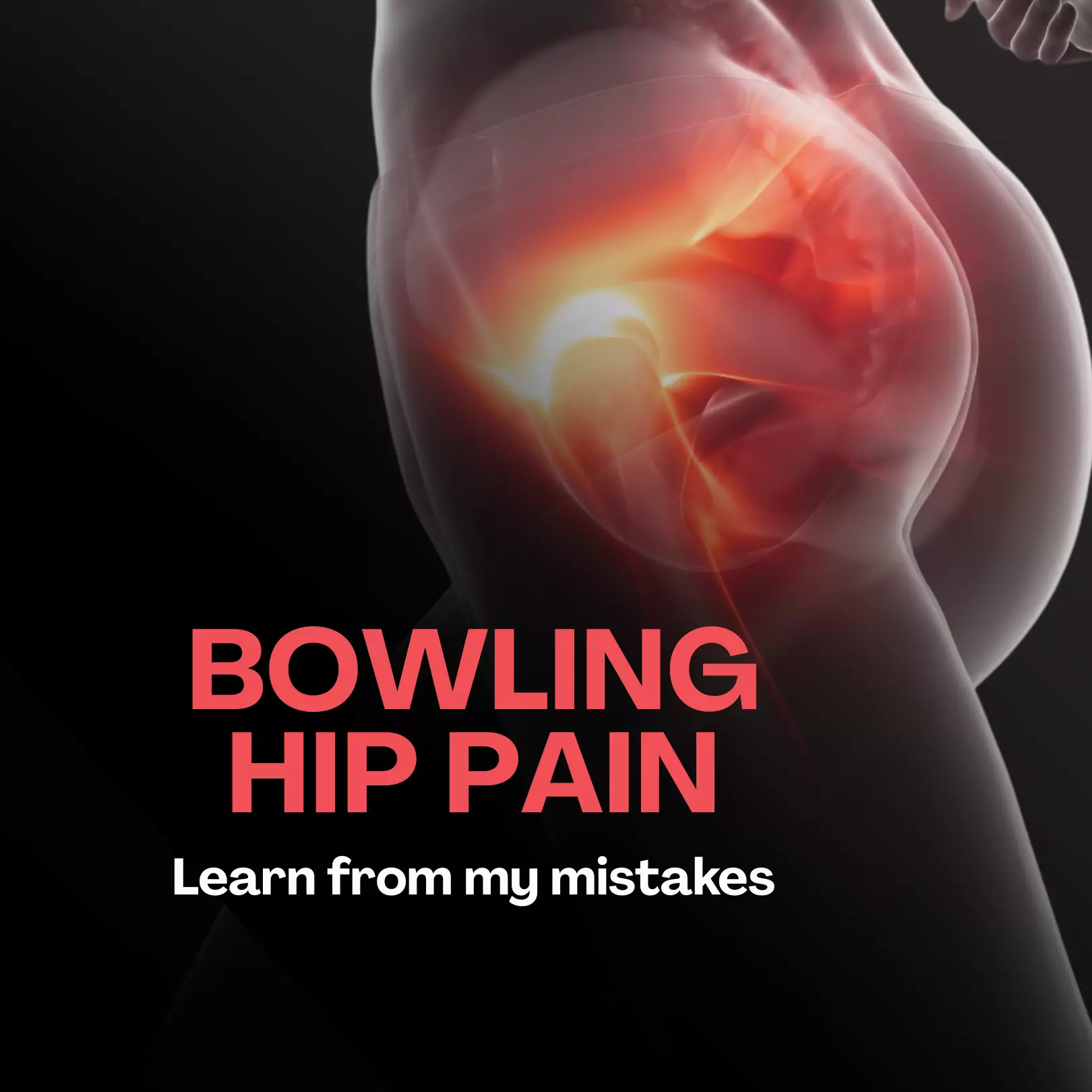
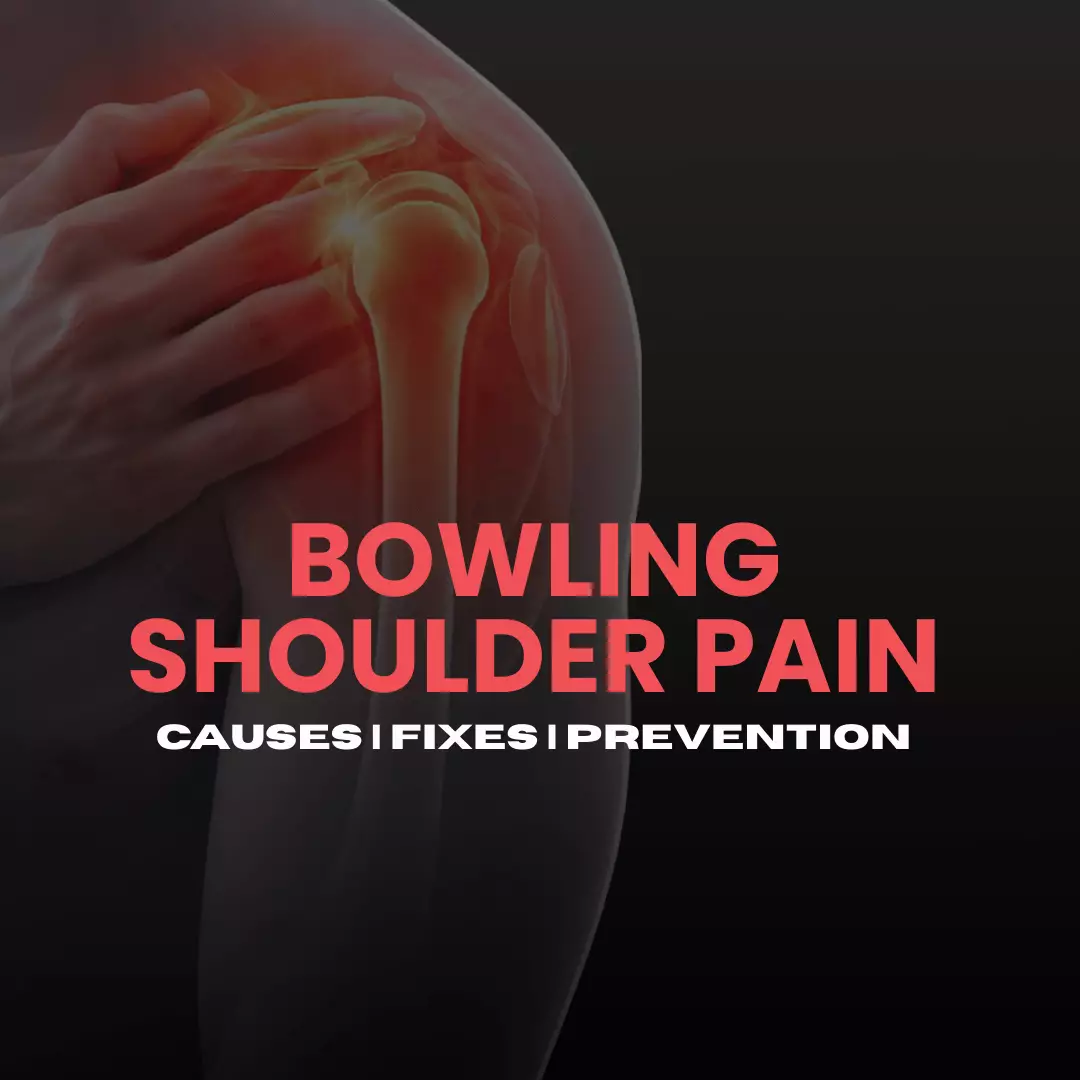
Around the lanes, the complaints I hear most are about the bowling elbow, the bowling shoulder and the hip. I also know several bowlers who have had knee surgery because of bowling.
For symptoms in a particular area, see our guides to thumb swelling, bowler’s thumb, elbow, shoulder, hip, knee and back pain.

What should a bowler do about muscle imbalance?
Start by giving both sides some work outside the bowling center.
In a survey of 101 US collegiate bowlers, players reported 235 injuries, including recurrences. Injury prevalence was 87%, and the reported recurrence rate was 75%. Injuries were more frequent among bowlers without a conditioning program. The survey couldn’t prove conditioning prevented injuries.
Off-lane training is still a weak spot in our sport. Even at the highest level, I rarely see bowlers stretch before they compete, and only a minority of elite players pay real attention to strength and mobility work. That is slowly changing, with more bowlers now looking after their physique, nutrition and sleep.
There’s stronger evidence for strength training across sports. A review of 25 trials involving more than 26,000 participants looked at several types of exercise. In the strength-training trials, injury risk was about a third of that in the comparison groups. Stretching alone showed no clear preventive effect. For bowlers, these are sensible ways to put strength work into practice:
- Train each leg. Lunges and split squats give both legs practice supporting your weight with a bent knee. USBC’s fitness guide includes squats and lunges.
- Work both arms. Single-arm rows and light wrist curls or reverse curls let each side do its own share. Start with a load you can control comfortably.
- Practice staying steady. Try a side plank on each side, or press a resistance band straight out while it pulls you sideways. Keeping your chest facing forward is the point.
- Try your opposite hand. You can even bowl with your other hand for at least 10 minutes of your practice.
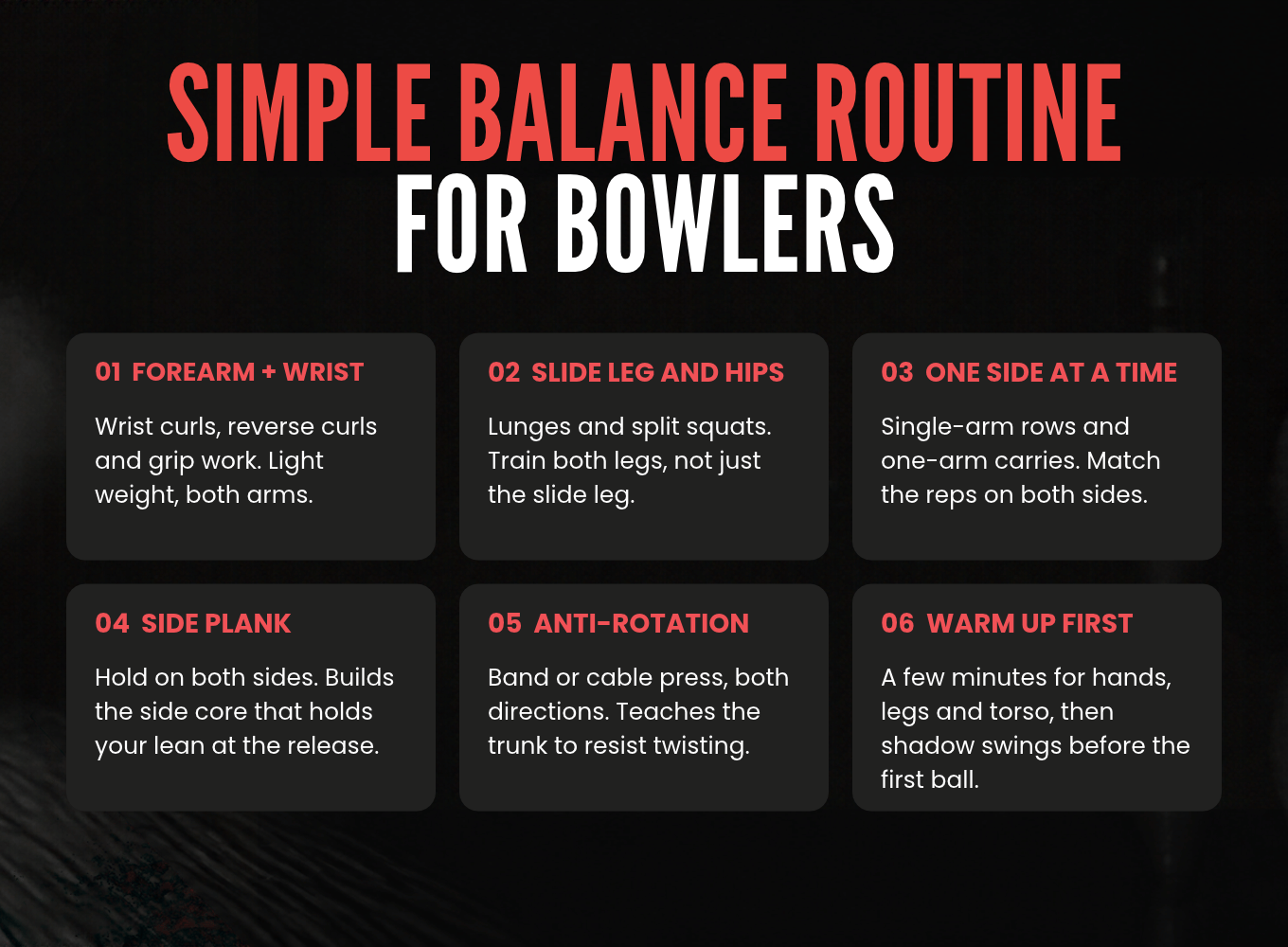
Before your first practice ball, spend a few minutes warming up your hands, legs and torso. My own routine is nothing fancy: regular gym work, stretching, and a few basic stretches before I bowl. Coming back from a break, it also makes sense to build up your games before committing to a long tournament weekend. We’ve covered nutrition, recovery and the health benefits of bowling separately.
FAQ
Can bowling cause muscle imbalance?
Yes, the repeated delivery can develop strength and control differently on each side. How pronounced that difference is varies by bowler. Appearance alone tells you little about strength or mobility.
Is it normal for my bowling arm to be bigger?
Yes. A size difference that has built up over years is a normal response to a one-sided sport, much like the playing arm in tennis. New pain, or a new loss of strength or movement, matters more than size.
Can muscle imbalance lower my bowling average?
The available studies don’t show that a difference in muscle size predicts bowling scores. A change that makes it harder to hold your finish or repeat a comfortable release is more useful to investigate.
Does bowling muscle imbalance cause injury?
Bowling studies show that some symptoms are much more common on the playing side. They haven’t established that unequal muscle size causes those injuries. Recurring pain or a new loss of strength or movement is worth having checked by a professional.
Should I train my non-bowling side?
Yes. Work both sides, including the leg you slide on and the muscles that steady your trunk. Aim for the strength and control your delivery requires.
Your Weekly Bowling Digest
The latest bowling news, tips, and gear reviews, all wrapped up in a quick 3-minute read delivered straight to your inbox.