The Quick Definition
Bowling hip pain occurs when the joint is forced to absorb more slide force, rotation, and balance work than it is physically conditioned to handle. This is especially common after time away from the lanes—a situation where your timing remembers how to bowl, but your body lacks the immediate tolerance for the load.
That is exactly what happened to me.
After a longer break from bowling, I was
so excited to get back on the lanes. I had my bowling balls with me, bought
some new grit pads, did the surfacing, packed everything, and spent the whole
day looking forward to the evening. You get the idea - I was hyped.

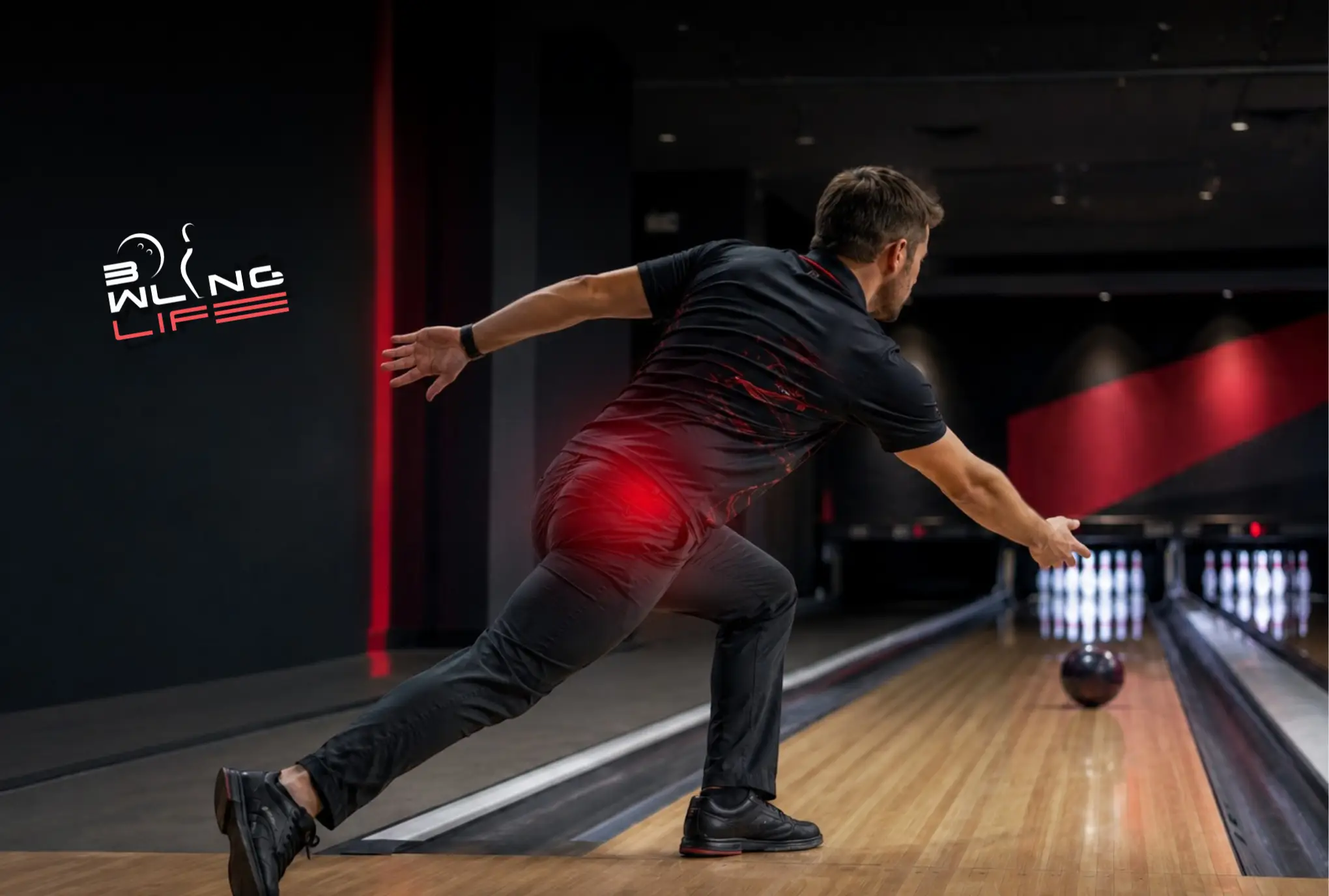
It was supposed to be the night of the month. Instead, after the first few shots, I started feeling soreness on the outside of my left hip.
The pain was not sharp. It felt more like a dull numbness. It was not getting better or worse with every frame, but it was just there, uncomfortable enough to make me aware of it every time I made a shot.
Naturally, once my body felt the pain, it started protecting the hip from movement. That compensation mechanism affected my slide, my balance felt different, and my timing started drifting.

Then came the full domino effect - poor slide, poor timing, poor release, poor scores. And, of course, poor mood.
The hip pain lasted for a couple of days after bowling. I have not bowled since then, so it has been about three weeks. The pain slowly disappeared, and now I feel nothing at all. But since we had agreed to bowl once a month, I knew I had to figure out what had happened and how to prevent it from happening again.
So I dug into the topic deeper, trying to understand what causes bowling hip pain, what hip pain after bowling can mean, and how bowlers can prevent it in the long run.
How the Hip Is Built
To understand the topic better, we first need to know the basic anatomy of the hip.
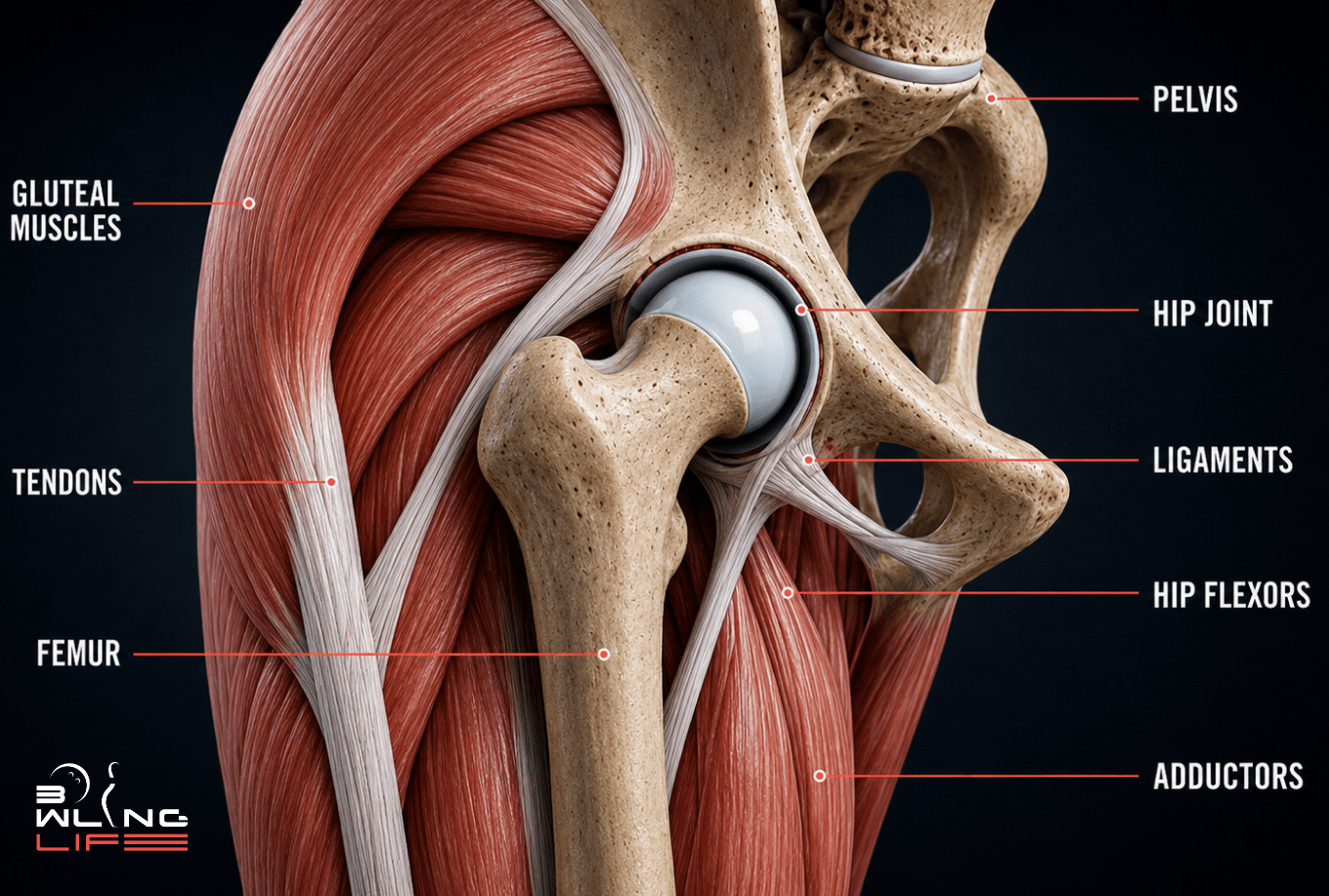 The hip is a ball-and-socket joint. The “ball” is the rounded top of the
thigh bone, called the femoral head.
The hip is a ball-and-socket joint. The “ball” is the rounded top of the
thigh bone, called the femoral head.
The “socket” is part of the
pelvis, called the acetabulum. These two parts fit together to create a strong
joint that can move in many directions.
The hip is surrounded by
ligaments, tendons, and muscles.
Ligaments connect bones to other
bones and help keep the joint stable. Tendons connect muscles to bones and
help transfer force when the muscles contract.
Several muscle
groups control hip movement. The glutes, located at the back and side of the
hip, help extend and stabilize the hip. The hip flexors, located toward the
front of the hip, help lift the thigh and bring the leg forward.
The adductors, found on the inner thigh, help move the leg inward. The abductors, found on the outside of the hip, help move the leg outward and keep the pelvis stable.
The hip also works closely with the pelvis and lower back. That is why pain around the hip can sometimes come from nearby structures and be easily mistaken with the hip pain.
The Hip’s Job in Bowling
Your hip is one of the body’s main load-transfer joints and is working hard through every phase of the approach. In bowling, the hip gets the biggest load at the moment of the slide and release. The slide-side hip has to absorb force, stabilize the pelvis, and support the body while the upper body rotates through the shot.
After the release, the same hip still has work to do. It helps you hold your finish position, stay balanced, and avoid falling off the shot.
Your Weekly Bowling Digest
The latest bowling news, tips, and gear reviews—all wrapped up in a quick 3-minute read delivered straight to your inbox.
Why Bowling Hip Pain Happens
Bowling hip pain usually appears when the hip and the muscles around it are weak, overused, or asked to handle more load than they are ready for.
That can happen after a long break, like in my case, when the body has lost some of its bowling-specific tolerance. It can also happen when the slide is not controlled well - either too slippery or, more commonly, too sticky.
Repetition matters too. One shot may not feel like much, but bowling is shot after shot, frame after frame, game after game. If the hip is already slightly overloaded, that repeated stress can build into soreness during bowling or hip pain after bowling.
Weak glutes or poor hip stability can also play a role. If the hip cannot stabilize well, the bowler will probably compensate it through the lower back. Tight hip flexors can also contribute, especially after a long final step or too deep lunge.
In simple terms, bowling hip pain can come from the hip itself, from the muscles around it, or from the way the whole body moves around the hip.
Similar Articles
Hip Pain Might Occur in Different Locations
Not all hip pain feels the same, and the location can give useful clues.
Pain in the front of the hip (groin area) often involves hip flexors, joint irritation, or structures deep inside the hip. Bowlers who feel pain here may notice discomfort when stepping forward, or holding a low finish position.
Pain on the outside of the hip may involve the glute tendons or structures that help stabilize the pelvis. This type of pain usually appear during the slide, or when the body weight shifts onto the leg in finishing position.
Pain in the back of the hip or upper glute area may sometimes be connected to the lower back, sacroiliac joint, or deep glute muscles. Bowlers who feel pain here may notice it more after bowling than during the actual shot.
How to Reduce the Risk of Hip Pain
The good news is that most bowling hip pain is not permanent. It’s a signal from your body to improve your preparation and movement quality.
Manage Your Load
If you have taken time off, do not treat the first session back as a normal night. Reduce the number of games and focus on smooth timing instead of raw power.
Activate & Mobilize
Always warm up. A few minutes of hip mobility work, light glute activation, and controlled lunges prepare the joint for the stress of the slide position.
Check Your Slide
Make sure your slide sole matches the approach conditions. A controlled, smooth slide significantly reduces sudden braking forces that jar the hip joint.
Build Stability
Glute strength is vital. Incorporate split squats and step-downs into your routine to improve your single-leg stability and hip control over time.
Strategic Recovery
If your hip feels irritated, give it space. Light movement and avoiding repeated overload for a few days allows the tissue to settle and recover properly.
When to Seek Professional Help
Many mild cases settle with rest, load adjustment, and better preparation. However, sharp pain, pain that does not improve over time, pain that limits normal walking, or pain that keeps returning should be evaluated by a medical professional.
Final Thoughts
Bowling hip pain is usually a sign that the hip was asked to handle more load than it was prepared for. In my case, the pain was temporary. But it was also a reminder.
The body adapts to what you do consistently. If bowling is occasional, the hip may not stay fully adapted to bowling stress.
Understanding where it hurts, why it hurts, and how the hip works in the bowling motion makes it easier to respond intelligently. Because sometimes the first missed shot of the night is not about the lane. It is about the joint quietly asking for better preparation.
Key Takeaways
- • Root Causes: Pain often stems from excessive load, poor slide mechanics, or returning to the lanes too quickly after a long break.
- • The Slide Side: The lead hip absorbs the majority of the force during release; it requires a balance of both strength and mobility to stay healthy.
- • Pain Location Matters: Where you feel the discomfort (front, side, or back) is a roadmap for identifying specific movement or technique issues.
- • Listen to Your Body: Even mild pain should not be ignored if it forces you to alter your natural mechanics to compensate.
- • Long-Term Strategy: Reducing risk involves a gradual return to play, a dedicated warm-up routine, and consistent hip-strengthening exercises.