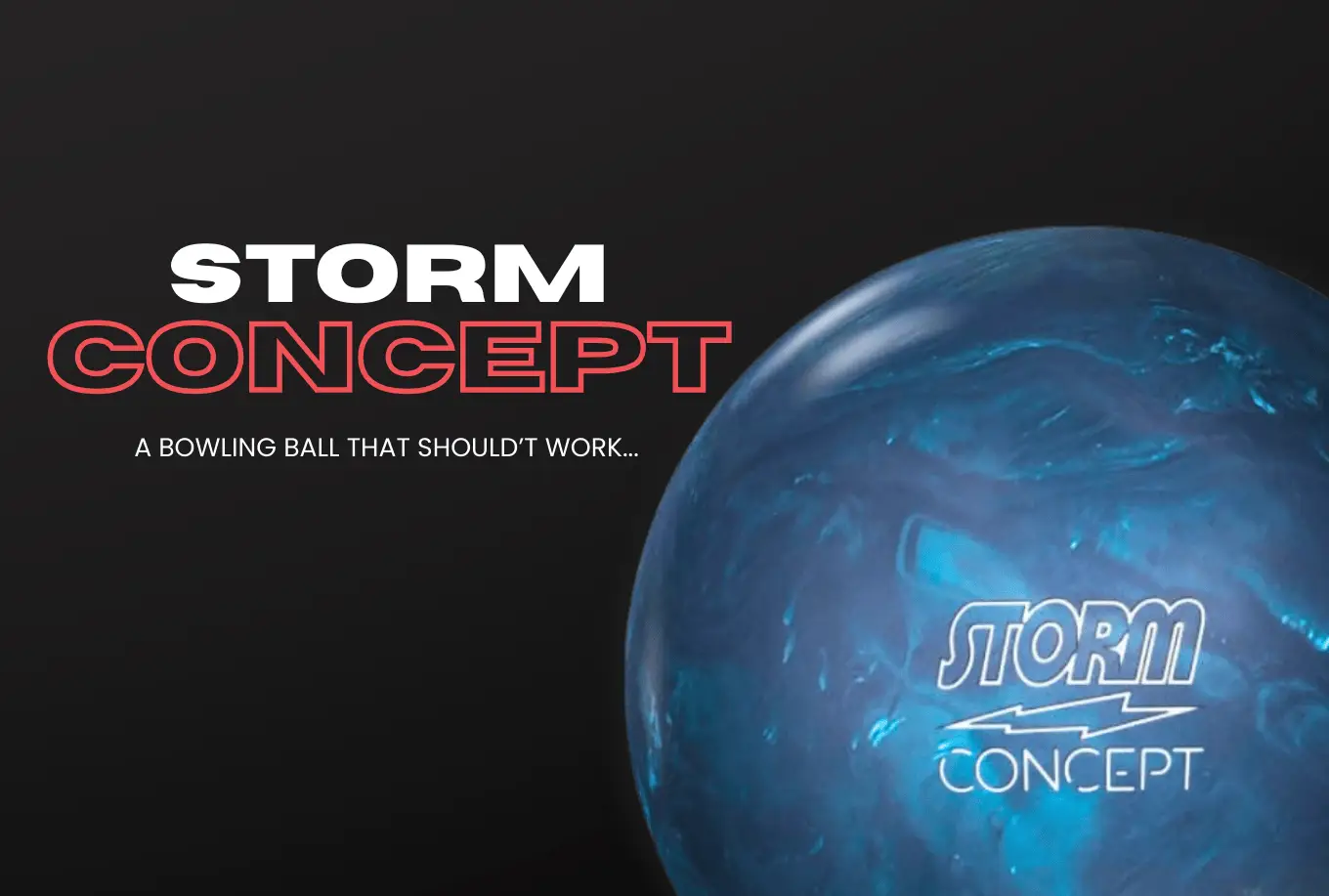
One thing for sure - Storm does not release LAB Series equipment by accident. Every LAB release tests boundaries. First it was Storm Level, but now the Storm Concept might be the boldest experiment yet.
In this Storm Concept review, we look at a ball that flips traditional design logic upside down. Instead of relying on the core to create motion, Storm built this ball around the cover. That alone makes it different.
Please note that some links in this Storm Concept review may be affiliate links. If you make a purchase, we may earn a small commission at no extra cost to you. This helps us cover the costs of creating better content for you.
First Impressions - Storm Concept Review
The Storm Concept does not look extreme. It does not scream backend monster. It looks controlled and purposeful.
During testing for this Storm Concept review, the first thing we noticed was how little oil the ball carried back. After multiple frames, the surface still looked fresh. That is rare.
This ball pushes very far downlane. It stays square longer than expected. Then it makes a calm, controlled move through the pins.
Want something that behaves differently than most reactive balls and mimics urethane motion? Check the Storm Concept on Amazon.

Core and Coverstock Design
At the heart of this release sits the Radius Weight Block, a very mild symmetric core. It features a high RG of 2.59 and a very low differential of .020 in 15 pounds.
That combination normally reduces hook potential. But the ARC Reactive Pearl cover changes everything.
The ARC cover pushes friction and oil absorption close to USBC limits. It acts as both engine and traction system. The core simply stabilizes the motion.
The 1000 grit Abralon finish gives the Concept surface bite without making it jumpy. The thick resin shell in 14–16 lb versions increases energy transfer and improves pin action.
In this Storm Concept review, we saw how the strong cover and mild core work together. The ball never wants to roll forward too early. It keeps its shape and continues through the pins. Just like urethane, but in its own way.
Lane Performance
On medium-dry conditions, the Storm Concept feels different from anything else in Storm’s lineup. It pushes through the front part of the lane with almost no effort.
During our Storm Concept review, we tested it against the Storm IQ Tour 78/U and Storm Level. The difference was clear.
Traditional urethane like Storm IQ Tour 78/U hooks earlier and rolls forward sooner. Meanwhile, Storm Level reacts later, but with much more aggressive backend motion. But during the Storm Concept review, it appeared straighter and cleaner, and it does not dump energy too soon.
Unlike classic urethane, it does not destroy the oil pattern after a few shots. It keeps the lane more stable. That helps players stay in the same zone longer.
Storm Concept allows you to stay square to the lane. It gives control without sacrificing carry. That balance stood out throughout this Storm Concept review.
Who Should Use the Storm Concept?
The Storm Concept suits players who hook the ball a lot and need a calmer option. It works well on shorter or medium patterns where control matters most.
League players will appreciate how long they can stay in the same spot. Tournament players will like how close to urethane the Concept is, but keeps oil patterns intact more.
If you love classic urethane shape but want less carrydown and more consistency, this is worth serious consideration.
In this Storm Concept review, the biggest takeaway was control. This ball does not overreact. It does not surprise you. It simply does its job.
Pros and Cons
Pros:
- Extremely clean through the front
- Maintains surface and resists oil carrydown
- Smooth, predictable motion
- Strong continuation for a low-diff ball
Cons:
- Very low hook potential overall
- Not ideal for heavy oil and long patterns
- May feel too smooth for players seeking angle

Final Thoughts of Storm Concept Review
The Storm Concept is not built for massive hook. It is built for discipline.
In this Storm Concept review, we saw a ball that rewards precision and straight angles. It behaves like urethane but avoids urethane’s weaknesses.
If you want maximum control on medium-dry lanes, the Storm Concept deserves a place in your bag.
Purchasing Storm Concept Bowling Ball?
You might also consider these besties!